
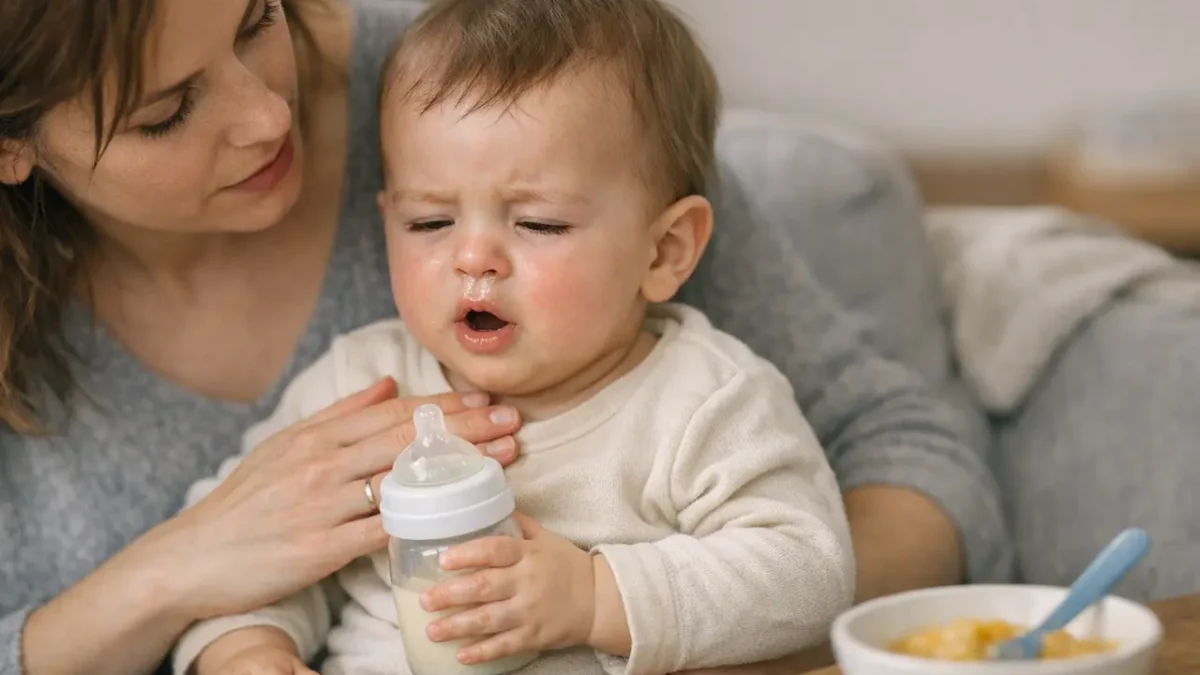
Bronchiolitis can start like a cold, but certain signs should prompt medical advice. On the Instagram account of @lamaisondesmaternelles, pediatrician Jules Fougère gives a tip for monitoring your baby with a simple memo: TRACE.
Bronchiolitis: what should change your level of alertness
In infants, bronchiolitis can start like a common cold : runny nose, mild cough, sometimes little or no fever. It is when the cough intensifies, when breathing becomes faster, wheezing or difficult, or when the baby feeds less well, that we need to be extra careful.
In the video, the pediatrician suggests remembering the word TRACE. This is not an official medical score, but a useful mnemonic to remember the main points of home monitoring. It does not replace medical advice if you have any doubt, especially in a very young infant.
- T for work of breathing : baby seems to be making efforts to breathe, his skin hollows between the ribs, under the ribs or above the collarbones;
- R for speed : his breathing seems much faster than usual, even when he is calm, or becomes irregular;
- A like power supply : he drinks significantly less, has difficulty suckling or taking his bottle;
- C for color : he becomes very pale, or his lips or fingers take on a bluish color;
- E for general condition : he is unusually sleepy, unresponsive, “limp”, difficult to wake up or no longer plays as usual.
The point about diet is particularly important: a baby who takes less than half of its usual amounts over three consecutive dosesor who is unable to breastfeed, should be assessed quickly. You can also consult our article on the symptoms of bronchiolitis in babies to better understand the usual course.
When to consult, and when to call emergencies
You should seek medical advice quickly if your baby has breathing difficulties, drinks significantly less than usual, seems abnormally tired or if his general condition worries you. At a baby less than 2 months oldeven signs that seem insignificant should lead to rapid medical advice, with a consultation during the day.
On the other hand, certain signs are urgent: breathing pauses, bluish discoloration of the lips or fingers, major difficulty breathing, very pale baby, very sleepy or difficult to wake up. In these situations, you should call
15 or 112. 114 is the emergency number accessible to people who are deaf, hard of hearing, aphasic or dysphasic.
At home, useful actions remain simple, while waiting for or in addition to medical advice: declutter the nose regularly of the infant, especially before meals, and offer feeding in more divided doses if the child becomes tired. Bronchiolitis is not a matter of self-medication: cough suppressants and bronchial thinners should not be given to young children
in this context.
If you are unsure between monitoring, same-day consultation or emergency, it is better to seek advice from a healthcare professional. Parents can also rely on a clear list of signs that should lead to the emergency room in the event of bronchiolitis, in order to react at the right time without waiting for the baby to become exhausted.