
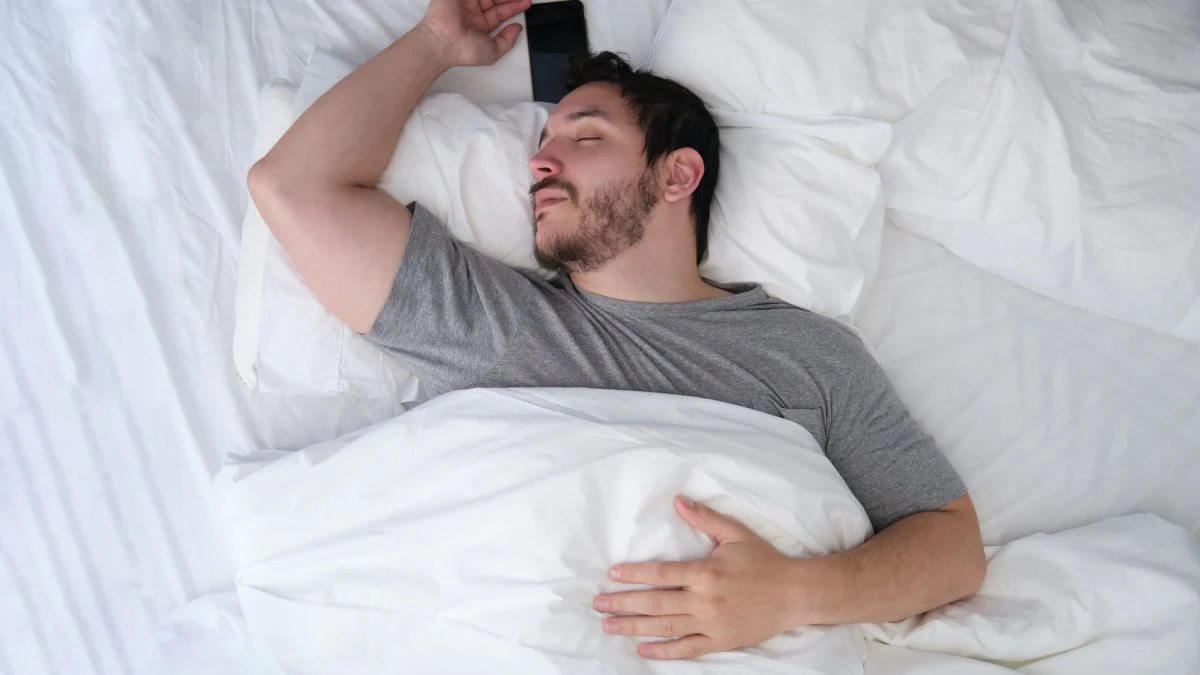
In the bedroom, the problem sometimes seems very concrete: a snoring that wakes up the other, broken nights, then the search for a spray, a ring or an accessory finally promising silence. The reflex to remember is, however, simple: before trying to silence the noise, you must ask yourself if it is not hiding a sleep breathing disorder.
Not all snorers have sleep apnea. But observed pauses in breathing, waking up with a feeling of suffocation or marked drowsiness during the day should lead to consultation. In this case, the objective is no longer just to preserve the couple’s sleep: it is a question of checking that breathing remains correct during the night.
Does snoring necessarily mean sleep apnea?
Snoring is vibrations of the throat tissues as air passes during sleep. It can be caused by nasal obstruction, lying on your back, drinking alcohol in the evening, being overweight, smoking, certain medications or anatomical features.
In many situations, it is mainly a sound problem, sometimes very distressing for those around you. But snoring can also be associated with obstructive sleep apnea-hypopnea syndrome: the airways close partially or completely repeatedly during the night, which disrupts sleep.
The nuance is important: isolated snoring is not enough to make a diagnosis of sleep apnea. Conversely, trivializing a long-standing, very loud snore, punctuated by respiratory arrests, can delay useful treatment. A phone application, an audio recording or the spouse’s testimony can help document what those around you observe, but they do not replace a medical assessment.
What signs should really alert you?
The first signal often comes from the person sharing the bed: they hear pauses, then a noisy resumption of breathing. This type of observation deserves to be reported to the doctor, especially if it is repeated.
Another sign not to be overlooked: waking up suddenly with the feeling of running out of air, choking or having to catch your breath. You also need to be aware of daytime sleepiness: falling asleep easily in front of the television, in meetings, on transport, or struggling to stay alert while driving is not trivial. If you experience significant drowsiness, particularly while driving, you should speak to your doctor quickly and avoid driving until the risk has been assessed.
Persistent fatigue upon waking up, morning headaches, difficulty concentrating, irritability or frequent nocturnal awakenings can also lead to poor quality sleep. It is therefore not the noise disturbance alone that prompts consultation, but the association of snoring with signs of echoing or poor nighttime breathing.
The doctor will be able to look for contributing factors, examine the nose, throat or jaw, assess symptoms and decide whether sleep recording is necessary. Depending on the case, this may involve a ventilatory polygraphy or a more complete sleep examination.
Should we be wary of anti-snoring accessories?
The anti-snoring market is vast: sprays, nasal strips, pillows, rings, orthotics, connected objects, etc. Some can possibly relieve a contributing factor, for example nasal obstruction, but they should not be presented as treatments for sleep apnea. An accessory supposed to reduce noise does not replace the balance sheet when there are pauses in breathing, waking up with choking or drowsiness during the day.
Treatment then depends on the cause. Lifestyle measures can be proposed in certain cases: limiting alcohol in the evening, avoiding sleeping on your back, treating a nasal obstruction, reducing smoking, taking action on weight when relevant. Other situations require specific treatment, for example a mandibular advancement orthosis or continuous positive airway pressure in cases of confirmed sleep apnea.
Even a gutter is not chosen at random. It must be adapted to the mouth, take into account the condition of the teeth and gums, and be monitored. A poorly fitted solution can be ineffective, uncomfortable, or even cause dental problems.
Last point of vigilance: do not change a sleeping pill or other treatment on your own in hopes of making the snoring go away. Certain treatments can influence sleep or breathing, but any adaptation must be made with the prescriber.
If the snoring is recent and unusual, very intense or persistent, associated with pauses in breathing, waking up choking or unusual drowsiness, it is better to consult before purchasing. The right goal is not just to sleep in silence: it is to find restful sleep, with effective breathing and normal alertness during the day.