
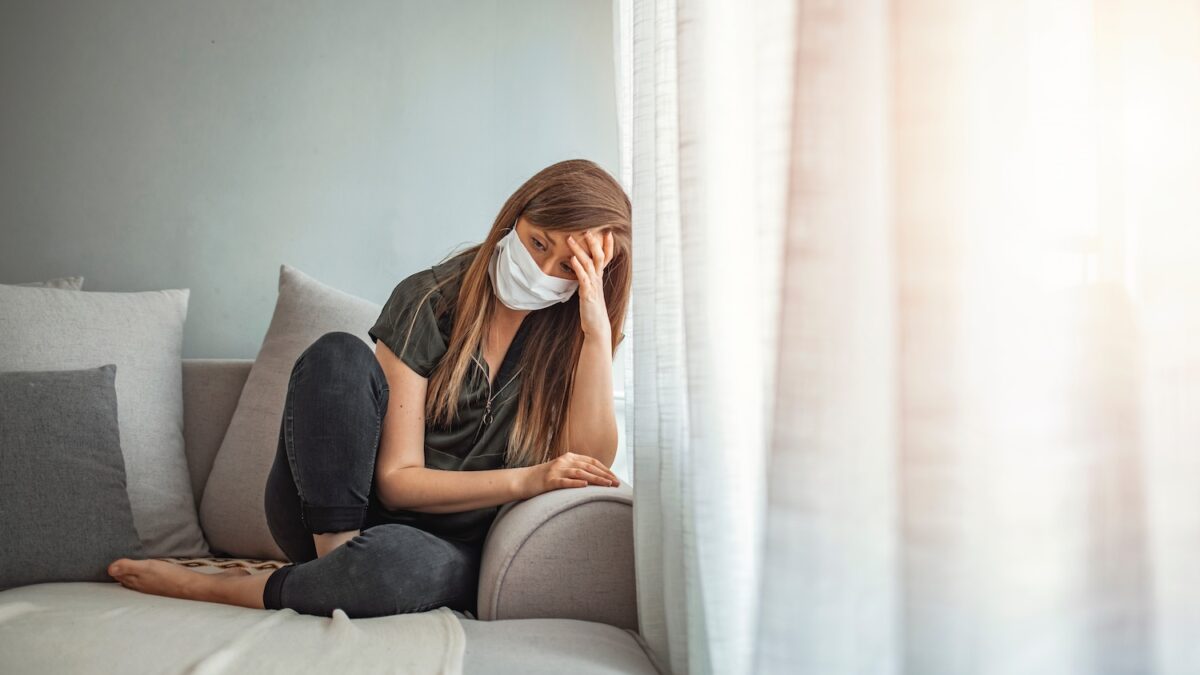
A pain in the chest, then the phone screen offering worst-case scenarios. Hollie Sharman, 25, told the BBC that for a long time she thought she was seriously ill, to the point of believing she was going to die. She says she was eventually diagnosed withhealth anxiety and health-related obsessive-compulsive disorder.
His story does not replace medical advice, but it helps to recognize a cycle: a real sensation, intense fear, then checks which reassure for just a few minutes. In France, sudden chest pain, radiating towards the arm or jaw, with discomfort, sweating or shortness of breath, or sudden neurological signs, requires treatment.call 15 or 112.
What does his journey tell us?
In the BBC article by Emily Holt, Hollie Sharman describes severe chest pain and repeated visits to hospital, sometimes “four to five times a week”. She said she waited in the emergency room for up to 13 hours, with repeated examinations which did not find a serious illness explaining her symptoms.
However, the anxiety returned with the next symptom. She might feel weakness in her legs, search Google, ChatGPT, or other sources, come across a worrying possibility like heart failure, and then return to the hospital. The story is based on an individual testimony and the opinion of a clinical psychologist; it is not a study and cannot be used to generalize to all those affected.
Hollie Sharman also explains that this worry existed since childhood. One episode marked her: during her 22nd birthday meal, she says she spent part of the evening in the restaurant toilets, overwhelmed by what she describes as the worst panic attack of her life. Little by little, fear took over more and more space, until it isolated him from those close to him.
What does health anxiety look like in everyday life?
Interviewed by the BBC, clinical psychologist Dr Kirren Schnack describes health anxiety as a constant worry about being seriously ill, or becoming seriously ill, when no serious illness is identified. In France, this expression is relevant to the general public, but professionals can also mention, depending on the case, hypochondria, an anxiety disorder, anxiety linked to illness, OCD or a panic disorder.
The common point described in this type of situation is the place taken by the verification behaviors
: examine your body, monitor your temperature or blood pressure, research symptoms online at length, constantly ask for reassurance. Relief sometimes exists, but it does not last.
For other people, fear takes the opposite form: avoiding looking at your body, postponing a medical appointment, stopping physical activity or behaving as if you were already sick. The slightest physical signs are misinterpreted by the hypochondriac person as symptoms of a serious, potentially fatal illness. Often, the fear of being sick itself generates certain physical reactions (feelings of suffocation, breathing difficulties, dizziness, heart pounding in the chest, increased heart rate, sleep problems, etc.). This excitement can lead to an acute anxiety attack or panic attack.
This can narrow social, family or romantic life. But recognizing this mechanism never means trivializing a symptom: only a health professional can assess what constitutes an emergency, a physical problem or an anxiety disorder.
How to ask for help without feeding the spiral?
Hollie Sharman says she was helped by support from her family and partner, as well as anxiety management techniques. One was to write down her symptoms as they occurred, then write later that she was fine. During a following episode, this trace allowed her to remember that she had already feared the worst without this scenario coming true.
The psychologist cited by the BBC also suggests questioning disaster scenarios, limiting requests for reassurance to defined moments, or using short movements, slow breathing or strong sensations, such as holding an ice cube, to refocus. These tools can help some peoplebut they do not alone constitute a validated treatment for every situation.
In France, Health Insurance reminds that the diagnosis of an anxiety disorder must be made by a doctor, because certain physical symptoms can also exist in other illnesses. It also indicates that psychotherapy is part of the management of anxiety disorders, and that cognitive and behavioral therapies are recognized as effective when anxiety is significant.
The right benchmark is therefore not to choose between “check everything” and “no longer listen to anything”. If worry about health invades days, relationships or decisions, it is useful to talk to your doctor, a psychologist or a psychiatrist. And if a symptom is acute, sudden or unusual, the priority remains to request a medical evaluation without delay.