
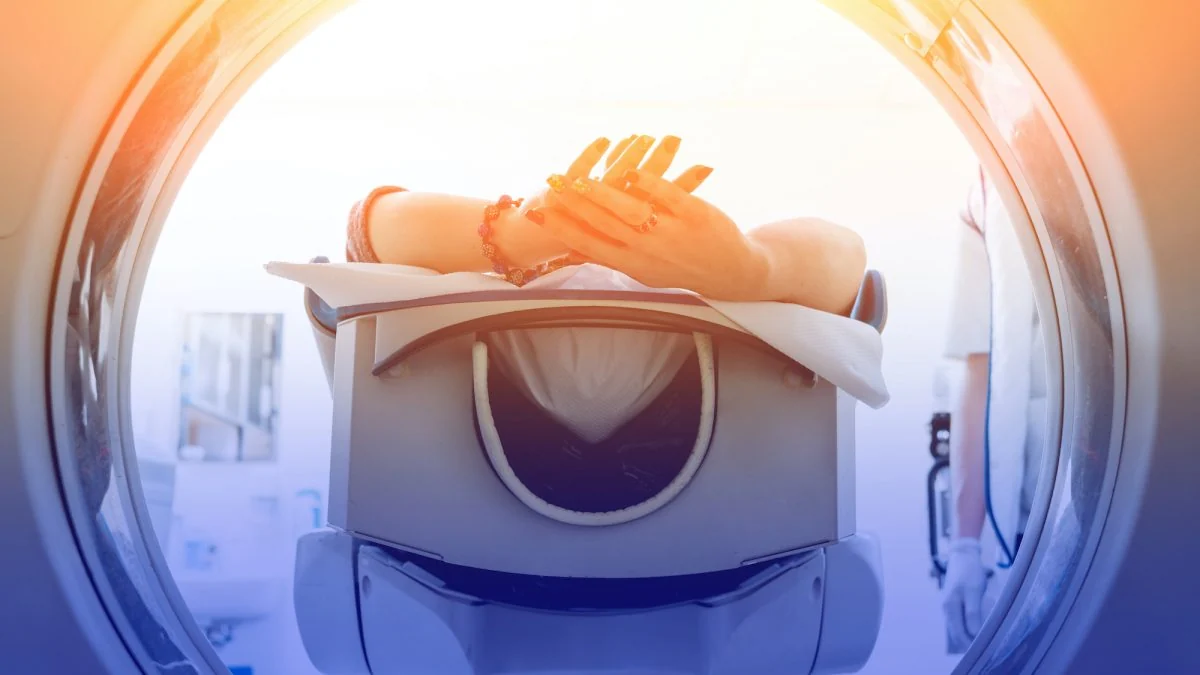
Scanners may be responsible for 5 percent of all cancers each year, according to a distressing new study from UC San Francisco. Which over one year could cause more than 100,000 cancers in the United States.
Greater risk estimated in younger patients
The study, funded by the National Institutes of Health, thus “estimated” the total number of lifetime cancers associated with radiation exposure in relation to the number and type of CT scans performed in 2023. Computed tomography (CT) is essential and widely used to detect tumors and diagnose many diseases. But scanners expose patients to ionizing radiation, which is potentially carcinogenic.
Researchers analyzed 93 million exams performed on 61.5 million patients in the United States. The number of exams increased with age, peaking among adults aged 60 to 69. Children represented 4.2% of examinations. (The researchers excluded tests performed during the patient’s last year of life because they were unlikely to lead to cancer). Several observations were made:
- Adults aged 50 to 59 had the highest number of projected cancers: 10,400 cases in women, 9,300 in men;
- The most common cancers in adults were lung, colon, leukemia, bladder and breast;
- In children, the most frequently suspected cancers were those of the thyroid, lung and breast;
- Projected cancer risks were highest among people who had a scan before age 1. These people were ten times more likely to develop cancer than other study participants.
“Given the large volume of CT use in the United States, many cancers could occur in the future if current practices do not change,” said study author Rebecca Smith-Bindman. “Our estimates place MDD on par with other important risk factors, such as alcohol consumption and being overweight.”she said.
Why does this study seem exaggerated?
The study is scary and seems to burden us with a new risk. However, for oncology researcher Ivan Pourmir, it resonates much more dramatically than his data allows. Indeed, the researcher criticizes an observational study which is based on a coincidence (who received a scan and who subsequently developed cancer) and not an established cause and effect link. While mixing up all the data a little while the contexts are different from one patient to another. “Having estimated the effect in terms of the occurrence of cancer through a standardized dose of radiation is very slight, even though it is not the same radiation, not the same context, not the same period of exposure, nor even the same part of the body in all the patients studied.” It is difficult in these conditions to draw conclusions.
The expert also criticizes a “confusion factor” linked to the fact that scanners are used to diagnose… cancers.
“There are many people in whom we will not find cancer if we do not do a CT scan. And conversely, if they are diagnosed with cancer, it is surely largely because they had a CT scan.” The scanner can therefore artificially increase the incidence of cancers in them… because they would not have been discovered otherwise.
The importance of benefit-risk underlined by all
Where our expert joins the study is probably on the benefit-risk balance which becomes essential. But that shouldn’t make you miss a scan.
“If it is a situation where the person expects a lot from this scan, because it will allow a very useful diagnosis and then treat or prevent a very serious illness, the calculation is easily made, it is worth doing the scan anyway” says Dr. Pourmir.
“Conversely, if the indication for the scanner, that is to say the diagnosis we seek to make, the screening, is based on very light arguments, and there is little chance that it will bring anything to the patient, well, then, we can say to ourselves, yes, be careful, it is possible that the balance between the benefit and the risk becomes unfavorable”.
Ultimately, the scanner is not your enemy. But it should not be undertaken without the indication being obvious.