
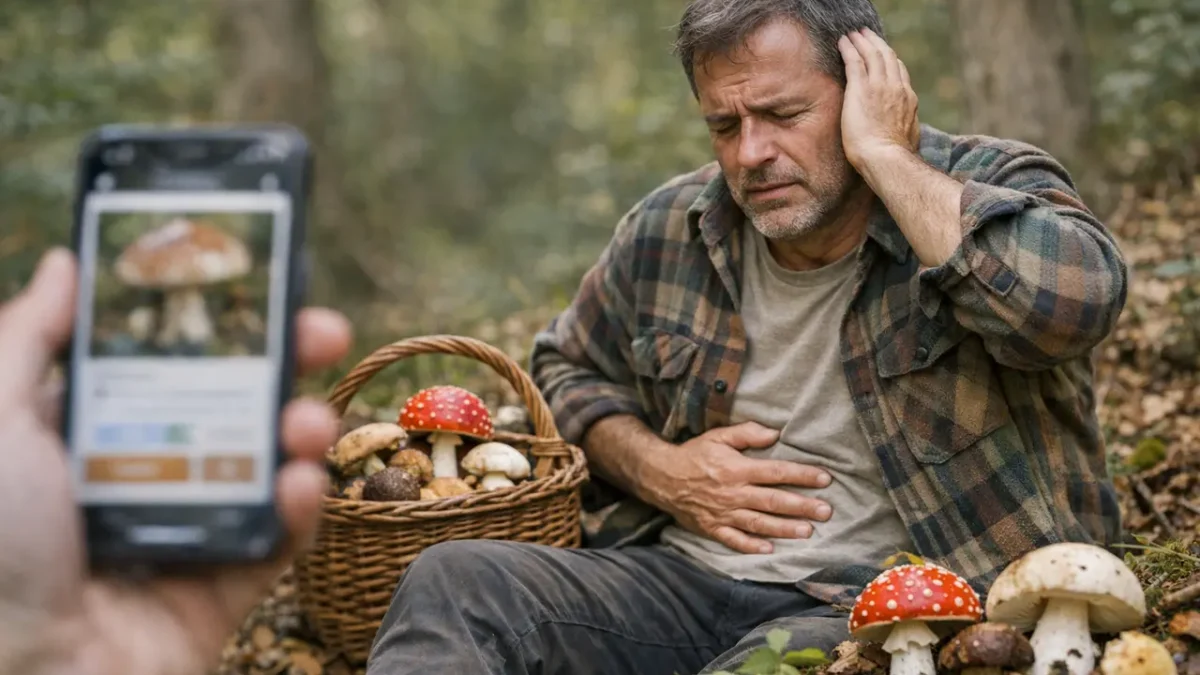
Vomiting, abdominal pain, dizziness or vision problems: after eating mushrooms picked in the forest, certain symptoms require you to react without delay. And before even sitting down to eat, it’s better to be wary of recognition applications and artificial intelligence.
After picking, never minimize these symptoms
Everything seemed normal at mealtime. Then comes nausea, stomach pain, vomiting or diarrhea. Faced with these signs, the temptation may be to wait, hoping that they will disappear on their own. It is precisely this reflex that must be avoided.
After consuming mushrooms, digestive symptoms may indicate poisoning. But the manifestations are not limited to the stomach: dizziness, tremors, visual disturbances, fever, skin rashes or neurological disorders can also appear.
If you experience symptoms after eating mushrooms, immediately contact a poison control center or call 15. Make it clear from the outset that you are eating mushrooms. Do not wait for the signs to worsen: their intensity at the beginning does not, in itself, allow you to assess the seriousness of the poisoning.
It is important to note the time of the meal, the time of onset of symptoms, the quantities consumed and the number of people who ate the harvest. If possible, save some leftover mushrooms and take photos of the harvest to help professionals identify the species in question.
Because behind sometimes seemingly trivial problems, serious complications can hide, particularly liver or kidney damage. Some poisonings require hospitalization and, in the most severe cases, a liver transplant.
The phalloides amanita, a danger that does not always look like what we imagine
The risk sometimes lies in a misleading resemblance. Some toxic mushrooms can be confused with edible species, even by foragers who think they know their subject well.
The phalloides amanita is one of the most formidable examples. Unlike the image of a red mushroom with white spots that comes to mind, it does not necessarily have a spectacular appearance. However, it can cause fatal poisoning: the ingestion of a single specimen can be enough to cause a potentially lethal dose.
The figures remind us that the danger is not theoretical. According to data from health authorities, more than 1,300 mushroom poisonings were reported to poison control centers in France in 2025. While the majority caused digestive disorders without major severity, 3% of cases were considered serious. One patient died and three others had to receive a liver transplant after phalloid syndrome, characteristic of certain poisonings by mushrooms containing amanitins.
In 2026, vigilance remains essential. Nearly 500 poisonings linked to picking and consuming mushrooms were reported in September, then more than 200 since the beginning of October, according to health authorities.
These accidents are not solely the result of confusion between species. Poor storage, damaged mushrooms, insufficient cooking or excessive consumption can also be the cause. In other words, even a harvest that seems familiar is worth keeping under surveillance.
Applications and artificial intelligence: why a photo is not enough
Before cooking his harvest, the picker may be tempted to photograph a mushroom and ask his phone to identify it. In a matter of seconds, an app or artificial intelligence tool can come up with a name, sometimes with misleading assurance.
But this ease carries a risk: two visually close species can be confused, and incorrect identification can wrongly give the impression that the mushroom is edible.
A study published in 2023 in the journal Analytical and Clinical Toxicology, signed L. Hazard and his colleagues, focuses precisely on the limits of smartphone applications dedicated to the identification of mushrooms. Its message echoes that of the health authorities: the visual alone does not constitute a sufficient guarantee for deciding to consume a harvest.
A photo can be useful to document a collection or contribute to the work of health professionals. However, it does not replace the expertise of a person competent in mycology. The same caution is required when faced with responses generated by artificial intelligence: these tools must never be used to validate the edibility of a mushroom.
If in doubt, it is better to give up. One meal is not worth the risk of potentially serious poisoning.
4. Good reflexes before sitting down to eat
Prevention begins in the forest, well before any symptoms appear. ANSES recommends only collecting mushrooms that you know perfectly well and having the harvest checked by a specialist – for example a pharmacist competent in mycology or a specialized association – if there is the slightest doubt.
A few precautions also help to limit the risks:
- Separate species when picking and do not collect damaged specimens;
- Photograph your harvest before cooking and, if possible, keep any leftovers in case of poisoning;
- Never feed picked mushrooms to young children;
- Cook the wild mushrooms for at least 20 minutes, in accordance with ANSES recommendations;
- Do not use an app to decide whether a mushroom is edible: if in doubt, seek professional advice or refrain.
These actions are not excessive caution. They simply remind us that when it comes to mushrooms, appearance, habit or the impression of knowing a species well are not enough.
Picking can still be a pleasure, as long as you don’t let confidence take precedence over vigilance. And if symptoms appear after the meal, the good reflex is always the same: do not wait, and immediately contact a poison control center or 15.