
Seeing hairs accumulating at the bottom of the shower makes you feel anxious, especially when you count them mechanically one by one. For a Spanish dermatologist, this little everyday scene nevertheless tells the opposite of baldness: a scalp that works, that renews itself. During a TV show in 2025, he even threw a radical sentence at our heads.
This specialist is Ramón Grimalt, dermatologist and professor of trichology, guest on the Catalan show Tot is soft. Facing the camera, he recalled that the hair renewal cycle is permanent and summed up the situation this way: “In four years, we won’t have a single hair that we have today. They will all have fallen out and grown back,” he said. In other words, the question is not about losing hair, but about how it comes back.
Why hair renewal in 4 years is a healthy phenomenon
For Ramón Grimalt, each hair follows its own clock. The lifespan of a hair is between two and six years, according to work cited in the Spanish press, then it falls out to let the hair follicle produce a new hair. According to him, a person can lose between 80 and 100 hairs per day without this being abnormal. This regular rotation explains why, over approximately four years, all visible “stock” is replaced.
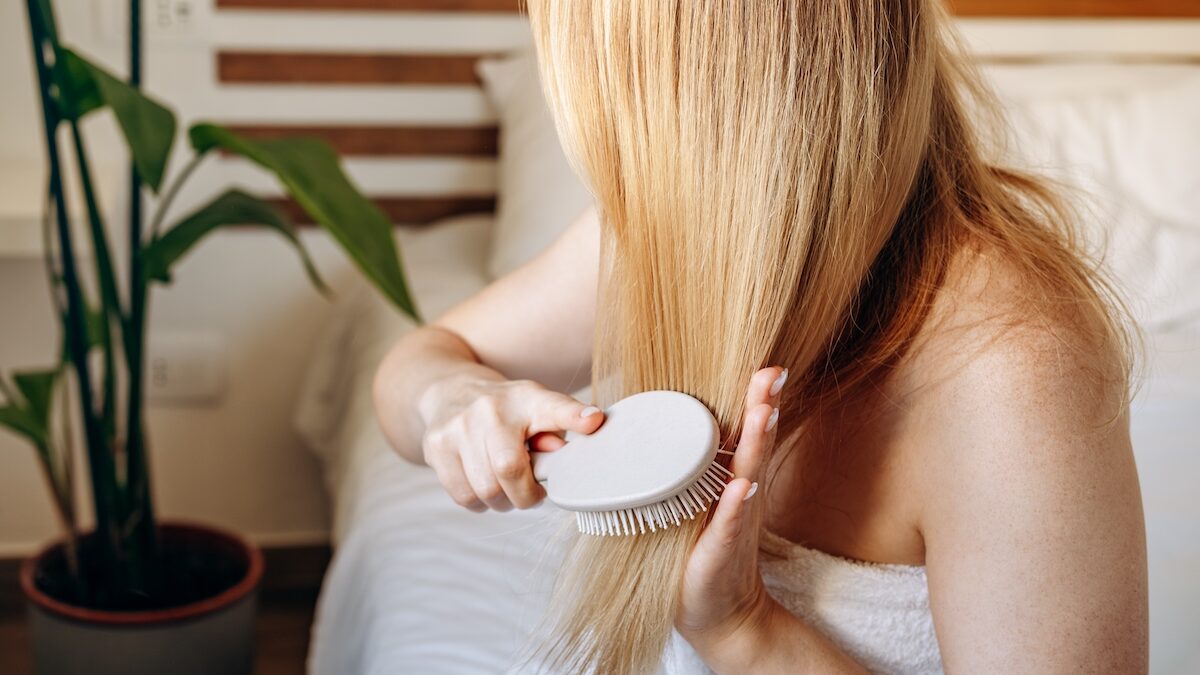
When we see bits in the siphon or on the brush, we are simply observing the result of this rolling. People with long hair have the impression of a slaughter, because each fiber is more visible, while those who wear short hair notice the loss less. “Cutting your hair does not strengthen it,” warned Ramón Grimalt. The cut only shortens the hair, it does not change the work of the follicle.
Losing hair or starting alopecia: the real warning signal
For this dermatologist, the border lies elsewhere: in the
root miniaturization. It describes a phenomenon where the new hair grows back thinner, more fragile, and takes up less space on the scalp. Over time, the volume decreases, the lines widen, the skull becomes more visible. This is the typical mechanism of androgenetic alopecia, the most common hereditary form of baldness.
According to a Medihair study cited by the press, 44.5% of Spanish men have some degree of alopecia, which would place Spain at the top of the baldest countries. Ramón Grimalt recalls that genetics, age, but also diet or stress directly influence this tendency. In this context, maintaining good density becomes almost as closely monitored as skin or weight.
When to see a dermatologist if your hair is changing, according to Ramón Grimalt
For Ramón Grimalt, seeing 80 to 100 hairs per day in the siphon remains compatible with a healthy scalp as long as the overall density does not change. The alert comes when the regrowth appears finer and the mass decreases. At this point, a dermatologist can confirm or not that you have incipient alopecia.