
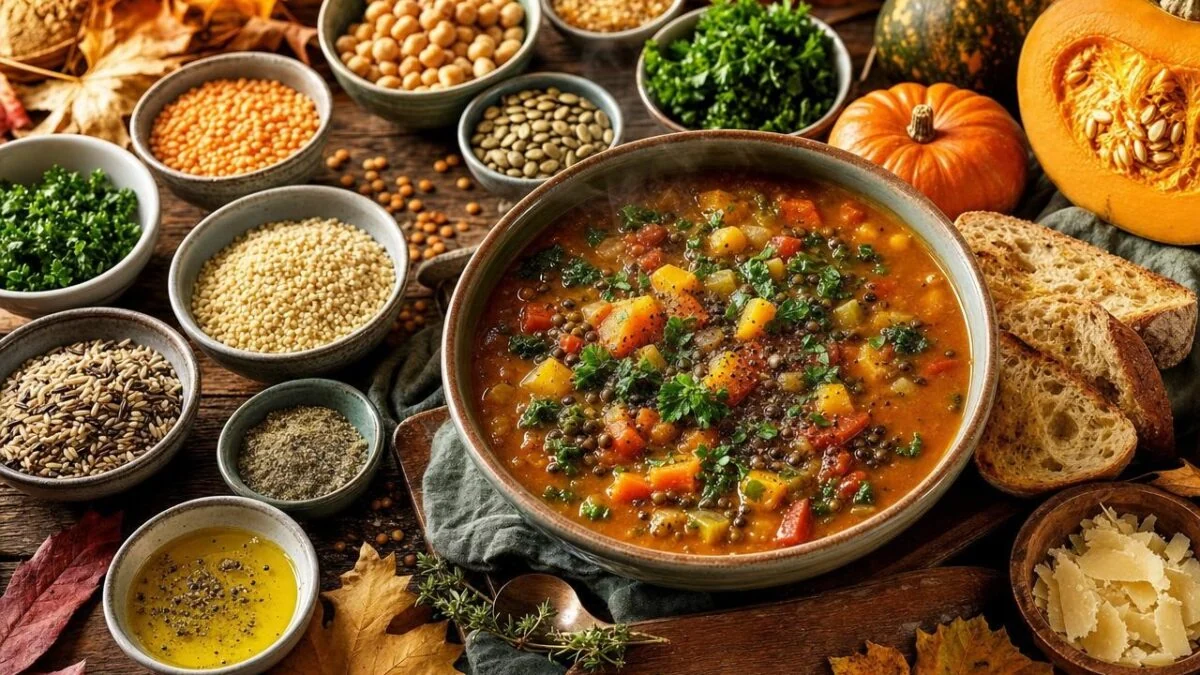
A nice fall soup can leave you wanting more if it only contains water and a few pieces of vegetables. For it to really fit the body, dietitians point out that the portion must provide volume, fiber, protein and a little fat. We recommend around 250 to 300 g of vegetables and 400 to 500 ml of liquid per person for a bowl that holds.
The idea is therefore not to drown everything, but to transform this bowl into a real soup meal by playing on five simple bricks: vegetables, starch, protein, good fat and gourmet finish. This composition adapts perfectly to autumn products such as squash, leeks or mushrooms.
Autumn soup: the 5-brick formula for a soup meal
The base remains vegetables, around 50 to 60% of the content: squash, carrot, leek, broccoli, beetroot or Jerusalem artichoke create color and fiber. Then comes the starch which gives density: potato in small quantities,
sweet potato melting or
chestnut mixed for a very autumnal velvety texture. Be careful not to exceed around 15% potato to avoid the “potato soup” effect.
For satiety, add a protein. THE
legumes are practical: a 100 g portion of lentils provides around 2.5 mg of iron, valuable in case of fatigue. White beans, chickpeas, but also poached egg, diced salmon or a few shrimps transform a soup into a complete dish. On the “good fats” side, a spoonful of olive or walnut oil, a little mixed avocado or a touch of cream are enough to add creaminess and aromas.
Something other than water: broths and fermented products
To replace plain water, the simplest is still a
broth homemade or lightly salted, with gently sautéed onion, leek and celery. This base concentrates the taste without overloading with salt. You can even use a hot vegetable broth mixed with avocado for a velvety texture, or with oysters for a zinc boost.
THE
fermented products also change everything. A natural yogurt or fermented milk mixed at the end of cooking gives a light velvety texture, where the cream is richer. Prefer the combination of leek plus yogurt, or beetroot plus yogurt, which combines sweetness, acidity and protein. Buttermilk, kefir or even a little coconut milk work well with squash, carrots or sweet potatoes.
Proteins, toppings and spices: good autumn reflexes
As for vegetable proteins, white or red beans provide iron, zinc and magnesium. Around 150g of beans per week covers a quarter of the magnesium needs. To make them digestible, it is advisable to soak them overnight, cook them without salt then salt them after cooking, and blend them into soup. A soft-boiled egg, a few cubes of cheese or grilled tofu added at the last minute create a real meal feeling.
For the final touch, we play with the
toppings and the spices. Pumpkin seeds, walnuts, hazelnuts, almonds or sprouted seeds provide crunch and good lipids. A bowl of pumpkin and red lentils with olive oil and pumpkin seedsa more orange carrot soup seasoned with cumin and yogurt, or a chestnut, hazelnut and hazelnut oil velouté are three very simple examples. Thyme, curry, cumin, cloves or sautéed onion finally allow flavoring without increasing the salt shaker.