
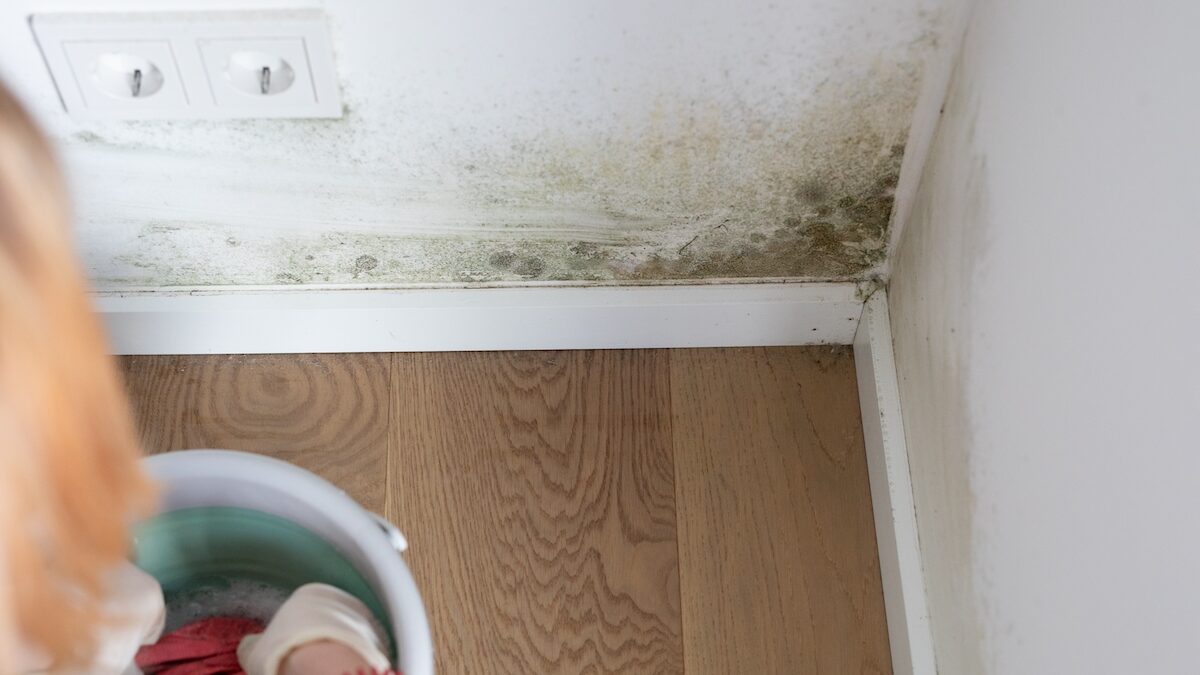
Most homes end up one day with black stains, a musty smell and little marks that eat away at the paint. Many then take out the bleach, convinced that they have the absolute weapon against mold. Except that on a porous wall, this product mainly whitens the surface and leaves the fungi alone deep down. According to Qualitythe risk increases as soon as the humidity exceeds 60% in a room. A homemade spray method, however, does the job much better.
Spray hydrogen peroxide, bicarbonate and salt against mold on walls
The detailed recipe comes from a practical guide published by
Banca Farnese.
The principle is simple: clean, disinfect thoroughly, then prevent humidity from taking over.
To remove mold from walls without bleach, this spray is prepared with basic ingredients. The guide Banca Farnese suggests filling a spray bottle with 700 ml of water, dissolving 2 tablespoons of baking soda and 2 tablespoons of fine salt, then adding 2 tablespoons of hydrogen peroxide. Prefer 3% hydrogen peroxide, sufficient for a painted or plastered wall.
Before applying the product, open the windows wide, put on gloves and an FFP2 mask. Spray the stained wall without soaking it, then blot with a sponge or microfiber after 10 to 60 minutes of application. On a recent stain, one to three applications are enough; for encrusted areas, the Italian guide advises repeating the treatment for 7 to 14 days.
Why bleach works poorly on a wall and can make the problem worse
Bleach mainly acts on the surface on a porous support. It discolors the fungus stain, but the roots remain well anchored in the plaster or matte paint, ready to leave as soon as the room re-humidifies. This product also releases vapors that are irritating to the respiratory tract and can end up weakening the coating or causing the paint to blister.
For small marks or maintenance, white vinegar remains a good option. The site Banca Farnese recommends a simple mixture of half water, half vinegar in a spray, left to act for at least an hour before scrubbing and rinsing. Quality even recommends pure vinegar on certain surfaces, always allowing time for exposure. The acidity limits the proliferation of mold while remaining much less aggressive than concentrated bleach.
Preventing mold from returning: humidity, ventilation and good reflexes
The real treatment then is to reduce the humidity.
Quality aims for a rate between 40 and 60% in the home, monitored with a hygrometer. Ventilate for ten minutes, move the furniture away from the cold walls and put a dehumidifier or coarse salt in the rooms at risk.
If the stains exceed approximately 1 m² or return despite everything, especially with fragile people at home, a professional diagnosis is necessary.