
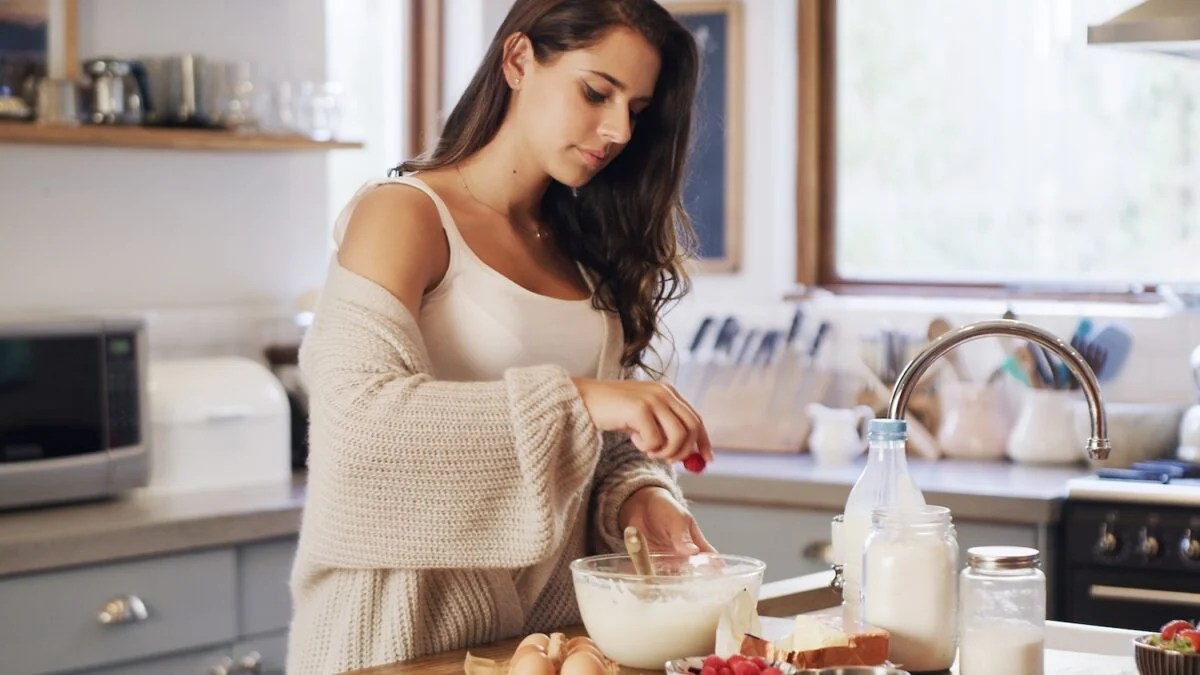
The spoon of cookie dough that we taste “just to check”, the bottom of the salad bowl after pancake batter, the shortbread dough that the children handle before cooking… The gesture seems banal, almost comforting. However, it deserves a real food safety reminder: the risk of raw dough does not come only from the eggs. Flour, too, is a raw ingredient and can contain bacteria that causes food infections.
This point is often surprising, because the flour seems dry, simple, not very “lively”. But quality, well-rated or well-preserved flour is not necessarily sterile. To reduce the microbiological risk, the decisive step remains the same: cooking.
Why can flour be a problem?
Flour is not a ready-to-eat product. As American health authorities, notably the CDC and the FDA, point out, it comes from cereals which can be contaminated in the field, during harvest or during certain stages of manufacturing. Grinding, sifting or blanching are not designed to destroy bacteria.
Possible germs include: Escherichia colisome strains of which can be dangerous, and
Salmonella. ANSES also indicates that flours can be contaminated and that the consumption of raw or insufficiently cooked dough has already been the cause of several epidemics. In other words, raw cake batter can combine two sources of risk: raw eggs and raw flour.
This explains the repeated recommendations around cookie dough, cakes, pies, pancakes or pizzas: they are intended to be cooked. To go further, True Medical also reminds us why eating raw cake batter presents risks, even when the preparation seems fresh and appetizing.
What to change in your cooking habits?
The first reflex is simple, but it requires giving up a very widespread habit: don’t taste the raw dougheven “a little bit”, even if it does not contain eggs and even if it has just been prepared. Cooking according to the recipe or package directions is the step that reduces the risk by destroying heat-sensitive bacteria.
The CDC also recommends separating raw ingredients from ready-to-eat foods. In practice, it is better to avoid flour or raw dough coming into contact with fruit, an already cooked dessert, a clean plate or a work surface on which ready-to-eat food will then be placed.
After preparation, wash your hands and carefully clean the bowl, whisks, spoon, rolling pin, work surface and anything that has touched the flour, eggs or raw dough. This reflex is particularly important with children, who are often tempted to lick the utensils or play with the dough. The FDA also advises against letting young children use raw dough as play dough.
What about pasta sold as “edible” or “to eat raw”? Some may be formulated differently, for example with heat-treated flour and no raw eggs, or with pasteurized eggs. But this must be clearly indicated.
A classic refrigerated dough, cake or cookie, remains intended for baking, unless explicitly stated otherwise on the labeling.
When should you be concerned after eating raw dough?
Most of the time, tasting a little dough doesn’t cause anything. But in the event of a food infection, digestive symptoms may appear: abdominal pain, diarrhea, nausea, vomiting, fever. Certain infections E.coli
Shiga toxin producers can cause bloody diarrhea and, more rarely, serious complications, particularly in young children. True Medical also details why flour should not be consumed raw: dry does not mean sterile.
Public Health France recalls that hemolytic-uremic syndrome, a rare but severe complication, mainly affects children. Health Insurance recommends immediate consultation or emergency services in children in the event of blood or mucus in the stools, fever above 38.5°C, signs of dehydration, repeated vomiting with inability to drink, refusal to drink or eat, or diarrhea that worsens or lasts more than two days.
Fragile people – particularly young children, the elderly or immunocompromised people – should be particularly careful. To limit exposure to infections E.coliprevention recommendations also include avoiding raw or undercooked flour products.
In the kitchen, the pleasure can therefore remain intact: we prepare, we bake, then we enjoy. If the desire for raw dough is really there, it is better to choose a preparation explicitly intended to be consumed without cooking, rather than relying on the appearance or “good quality” of the flour.