
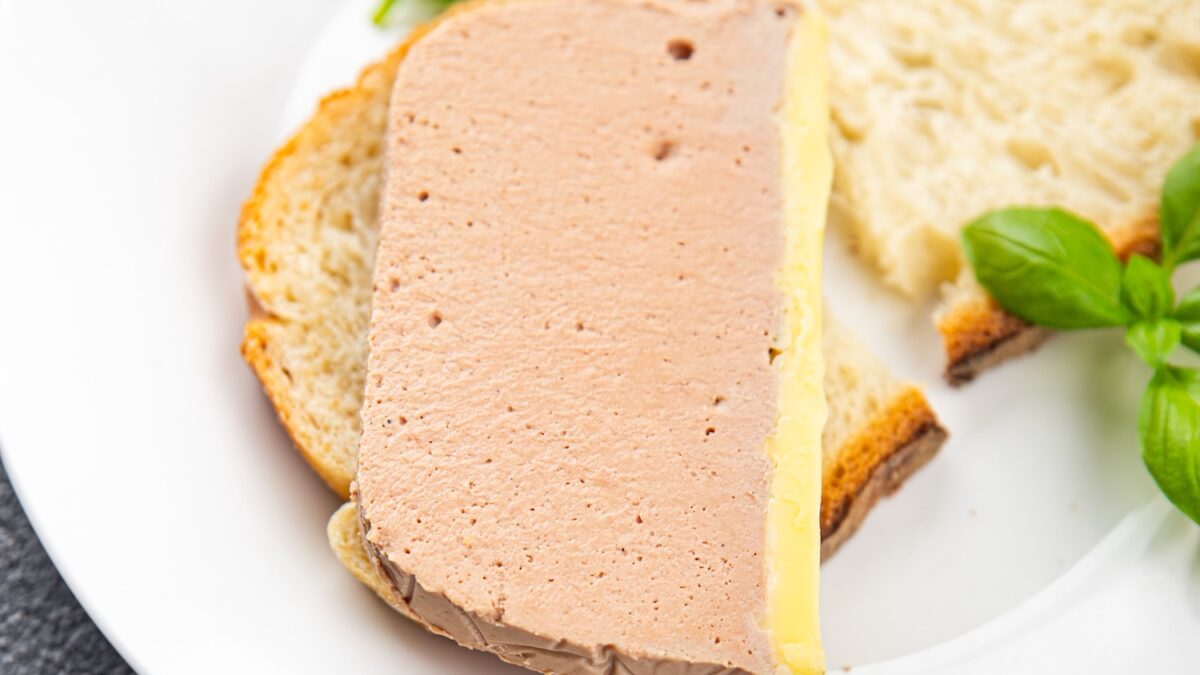
On Instagram, Dr Jean-Michel Cohen dissects the label of a duck mousse. Under this name he finds a rich product, where fat, liver, other meats and several technological ingredients coexist.
What the order of ingredients really helps you understand
First useful reflex when faced with a duck mousse: look at the list of ingredients, not just the name of the product. In Europe, the ingredients of a prepackaged food must be listed in descending order of their weight at the time of manufacture. In other words, the ingredients placed at the top of the list are those used in greatest quantities.
The nutritionist notes that the product shown contains 60% duck, with duck fat and liver. The important point is the order: on this label, fat appears before duck liver. This suggests that it is present in greater quantities than liver at the time of manufacture. On the other hand, without a separate percentage for each element, the label does not say how much fat and how much liver were exactly incorporated.
Another concrete contribution from the expert’s analysis: this duck mousse is not limited to the duck fat-liver couple. The account also identifies chicken liver, crème fraîche, alcohol of wine origin, salt, dextrose, turmeric, additives such as sodium lactate or sodium erythorbate, a natural flavor, as well as a glaze containing in particular duck fat and a coloring. Their presence does not, in itself, imply danger; Above all, it shows that we are faced with a transformed recipe, to be compared with other spreads if we are looking for a simpler composition. To go further, you can also learn to spot additives in the list of ingredients.
We must also avoid frequent confusion: duck mousse, duck liver mousse and foie gras do not mean the same thing. The exact naming changes expectations about the composition. Before parties or an aperitif, it can be useful to clearly distinguish between foie gras, mousse and pâté on the label.
A rich spread, to keep occasionally
The product shown in the video displays 431 kcal per 100 g. This value belongs to the label shown: it should not be generalized to all duck mousses, because the recipes vary depending on the brand. But it goes in the same direction as the nutritional benchmarks available: the Anses Ciqual table indicates, for duck mousse, an average of around nearly 395 kcal and 36 g of lipids per 100 g.
In practice, this classifies duck mousse as a rich, often fatty and salty cold meat. The idea is therefore not to ban it, nor to make those who enjoy the taste feel guilty, but to put it back in its rightful place: an aperitif food to be consumed occasionally, in small quantities, rather than a spread to be trivialized.
Public benchmarks invite limit cold meats to 150 g maximum per week in adults and from 11 years old. A duck mousse enters this family in the same way as other pâtés, rillettes or spreadable charcuterie products.
To choose more confidently, three simple checks are often enough:
- Look at the exact name of the product: duck mousse, liver mousse, pâté, foie gras preparation, etc.;
- Identify the first ingredients, because they are the ones that weigh the most in the recipe;
- Compare values per 100 g, including energy, fat and salt.
The most useful message of this video ultimately comes from reading the label: under an appetizing name, a duck mousse can contain more fat than we imagine, livers other than duck and several added ingredients. But recipes vary depending on the brand : comparing two products remains more reliable than judging an entire category on a single label. To broaden the thinking, True Medical also details the richest aperitif cold cuts to limit.