
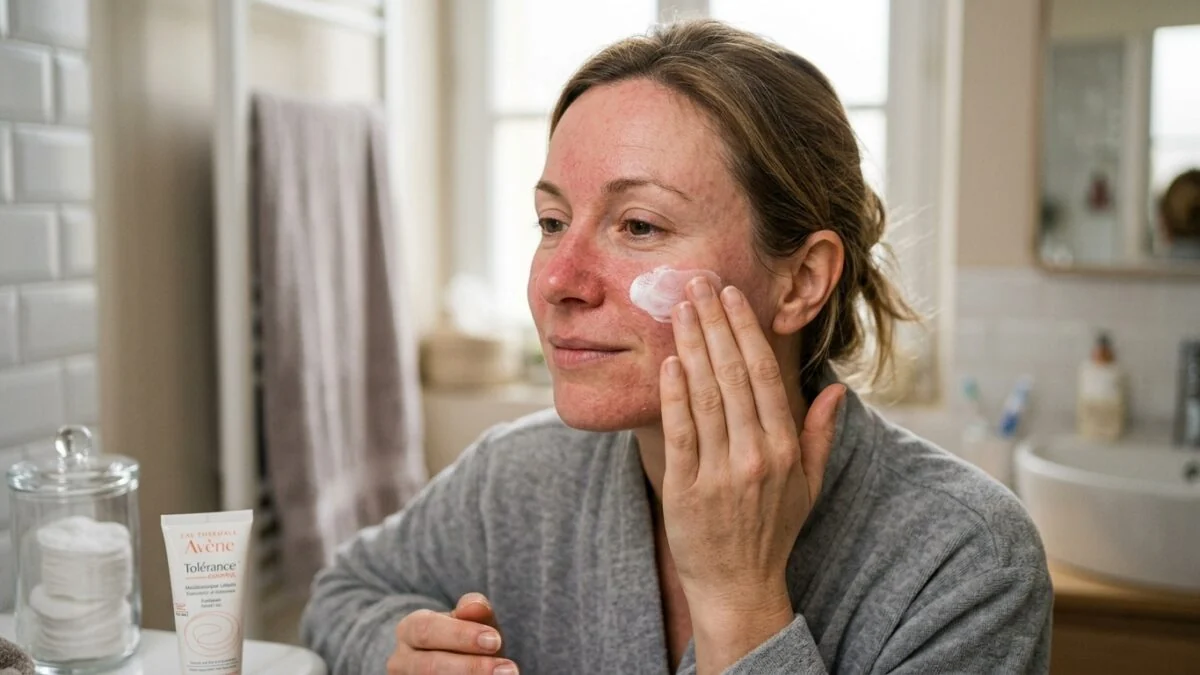
In the bathroom, the two tubes sometimes look the same. However, when faced with a patch of atopic eczema that becomes red and itchy again, they are not useful at the same time. The emollient maintains dry skin on a daily basis; the prescribed topical corticosteroid treats the inflammatory outbreak on the plaques. The good reflex is therefore to start from your diagnosis and your prescription, without improvising with a loved one’s tube.
The treatment of an outbreak of eczema or atopic dermatitis is based on a prescribed local topical corticosteroid, the form, strength, quantity and duration of which depend on the situation. The emollient helps restore the skin barrier and limit dryness between outbreaks.
Emollient: the tube for daily care for dry skin
When you have atopic dermatitis, the skin retains water less well and plays its barrier role less well. This is where the emollient has its place: it hydrates, softens and protects dry skin. It is generally used on dry areas, even when the outbreak seems to have calmed down, according to the advice received. On the other hand, during a flare-up, it is recommended to avoid applying it to the most inflammatory areas, unless otherwise indicated by your caregiver.
“If the skin is dry but there is no active red plaque, the first reflex is the emollient: it is the basic treatment, not the crisis treatment” explains Dr. Gérald Kierzek.
In practice, if a cream stings, burns or accentuates redness, do not insist without advice. Tolerance depends on composition, skin condition and area. Also be wary of “natural” or unidentified products: a persistent plaque should not receive just any cream, as recalled in our article on not applying just any cream to an eczema plaque.
Dermocorticoid: the push tube, according to the prescription
The plaque that becomes red, inflammatory and itchy again often corresponds to a flare-up of atopic eczema in a person already diagnosed. In this case, the prescribed topical corticosteroid is used to calm the inflammation and itching. It is applied to the lesions, under the conditions provided by the doctor: product chosen, quantity, frequency, duration and area to be treated.
“The topical corticosteroid is not an improved moisturizing cream: it is a medication, to be applied to the eczema plaque according to the prescription” recalls Dr. Gérald Kierzek.
Location matters a lot. The face, eyelids, folds, scalp or body are not necessarily treated with the same shape or the same power. Health Insurance, for example, cites different forms depending on whether the lesions are oozing, located in the folds, dry or thickened. The French Society of Dermatology and the Center for Evidence in Dermatology also indicate that the treatment of the outbreak must be adapted to the area.
“Before putting the tube back in, check three things: is it your prescription, is it the right area, and do you know when to stop? If the answer is no, ask the pharmacist or doctor.” advises Dr. Gérald Kierzek.
You should therefore not automatically use a topical corticosteroid prescribed to another person, nor take out an old tube for a new plaque that has never been diagnosed. To review the usual signs, possible causes and treatment options, our article on the symptoms and treatments of eczema can supplement medical advice.
When to seek advice without delay?
An opinion is necessary if the plaque expands, changes appearance or does not improve despite the prescribed treatment. You should also consult quickly in the event of pustules, unusual crusts, fever, change in general condition, marked worsening or if the itching seriously disrupts sleep, morale or daily life. These signs may suggest a complication, an infection or another skin disease.
“A plaque that gets worse, oozes, crusts or prevents you from sleeping deserves an opinion: this is not the time to multiply tubes at random” insists Dr Gérald Kierzek.
The simple benchmark to keep is therefore the following:
the emollient maintains the skin barrier over the long term; the prescribed topical corticosteroid treats the inflammation of the flare-up. The two are complementary, but they are not interchangeable. And if the doubt concerns the area, the duration or the product, the pharmacist and the doctor are the right people to contact.