
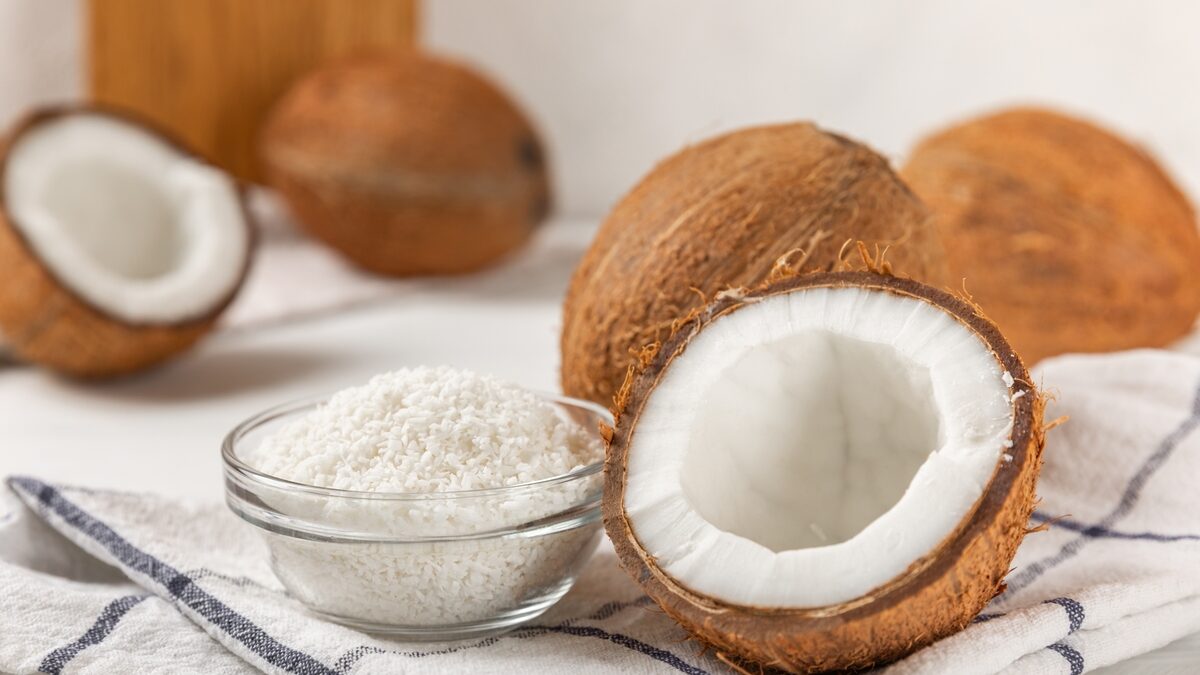
Due to its relatively low glycemic index, coconut sugar has become trendy in recent years, to the point of attracting people with diabetes. But are they right to consume it? Julie Boët, dietician-nutritionist, sheds light on the subject.
What is coconut sugar?
Coconut sugar comes from the sap of coconut palm flowers, which is gently heated to obtain a brown, fragrant sugar. And if its natural origin gives it a very healthy, almost artisanal image (suggesting that it would be “better” for diabetes) in reality, it is all the same… sugar.
“Indeed, from a biochemical point of view, coconut sugar remains essentially a concentrate of simple carbohydrates, mainly sucrose, with traces of glucose and fructose. It also contains trace elements in very small quantities and more fiber than a classic sweetener.
assures Julie Boët.
So, if its slight caramelized taste makes it appreciable in cooking, it should not make us forget that it increases blood sugar levels – like all added sugars.
“Coconut sugar contains the same amount of calories as simple sugar, so replacing white sugar with the latter will not make your preparations lighter.s”, specifies the dietitian.
Diabetes and coconut sugar, a bad combo?
We often hear that coconut sugar has a lower glycemic index than white sugar. But in reality the way it is manufactured plays a big role: from one sugar to another, the impact on blood sugar levels can be very different.
“It is for this reason that specialists remain cautious: a “lower” glycemic index does not mean “safe” for people with diabetes, and especially not if they are consumed in quantity,” warns the expert.
Coconut sugar also contains small traces of minerals and antioxidants. And if, on paper, these seem beneficial, the quantities are so small that they have no impact on health.
“We never consume enough coconut sugar for it to really provide nutrients, and trying to consume more would be counterproductive for our health, because we would have to ingest too large quantities,” warns the specialist.
Today, research has not yet shown that coconut sugar could be “safer” than other sugars for people with diabetes. However, we know that it increases blood sugar, like the others, and that its supposed benefits remain very theoretical.
In summary, even if its marketing remains very attractive, be careful not to rely on it: it is in no way a “health” product.
“Keep in mind that the body responds primarily to the total amount of sugar consumed, regardless of the type, and how you consume it,” recalls Julie Boët.
Coconut sugar can therefore be used for pleasure, but with the same vigilance as for white sugar: in small quantities, occasionally and always integrated into an overall dietary balance.