
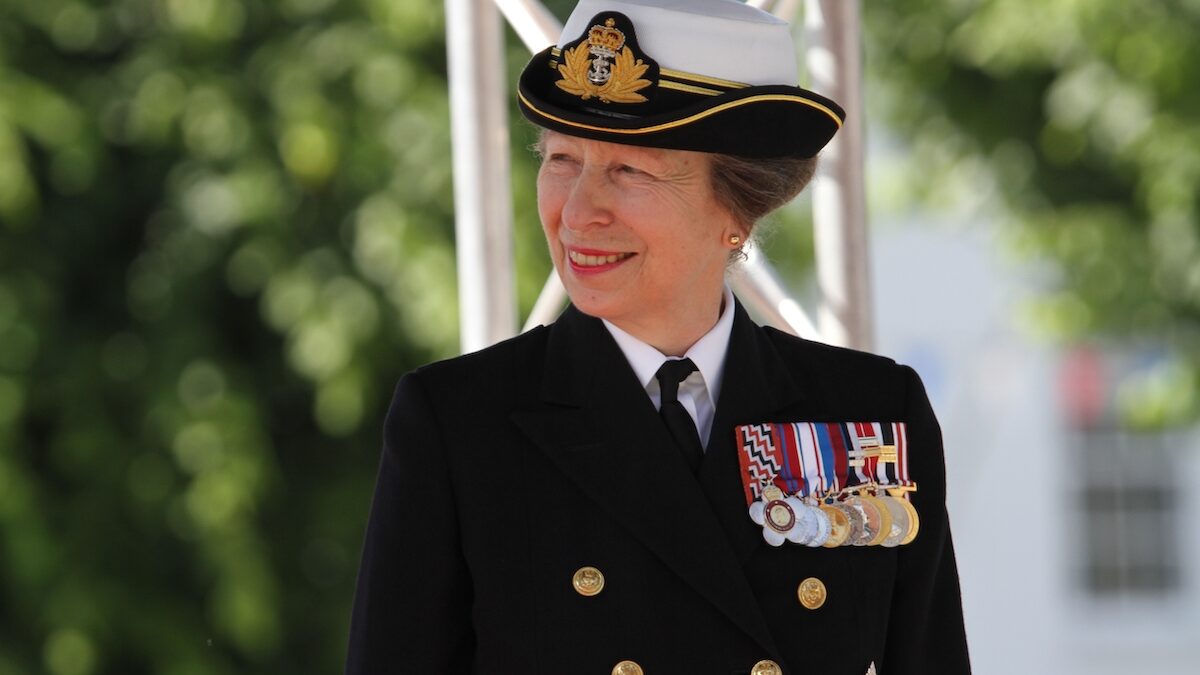
His specialty? Eventing, a particularly demanding discipline which combines dressage, cross-country and show jumping. A passion that took her to the Montreal Olympic Games in 1976, with a rather prestigious four-legged partner: Goodwill, her mother’s horse.
Princess Anne, a true horse riding champion before the Olympics
Princess Anne did not discover horse riding for the needs of her royal duties. She first distinguished herself as a competitive rider, with a particularly remarkable record.
In 1971, she won the title of European champion in individual eventing. Four years later, in 1975, she won two new medals at the European Championships: silver in the individual and team categories.
Results which open the doors to an otherwise prestigious competition: the Olympic Games.
In 1976, she joined the British delegation for the Montreal Olympics. A historic participation, since she became the first member of the British royal family to take part in the Olympic Games.
Goodwill, Queen Elizabeth II’s horse who accompanies her to Montreal
For this Olympic adventure, Princess Anne is not riding just any horse. His partner is called Goodwill and is owned by his mother, Queen Elizabeth II.
The duo represent the United Kingdom in the eventing event. A discipline that requires much more than knowing how to hold on in the saddle: the rider and his mount must demonstrate versatility, precision and endurance.
If this participation marks an important moment in the history of the royal family, it also testifies to Princess Anne’s sporting investment, long before she took on responsibilities in international bodies.
The rest of his career confirms his attachment to the equestrian world. She chaired the International Equestrian Federation from 1986 to 1994, then joined the International Olympic Committee in 1988.
Eventing: three events to put the rider-horse couple to the test
If Princess Anne specialized in eventing, it is no coincidence: this discipline is one of the most versatile in horse riding. It brings together three complementary tests, which allow the abilities of both the horse and its rider to be assessed.
-
Dressage: the couple must perform a succession of precise movements, demonstrating flexibility, control and coordination;
-
Cross country: this event takes place outdoors, on a course dotted with natural or fixed obstacles that the horse must overcome;
-
Show jumping: the rider and his mount must complete a course by crossing obstacles made up of bars, without dropping them.
The final ranking is based on the penalties accumulated during the three events. In other words, an excellent performance in dressage is not enough if the couple encounters difficulties in cross country or show jumping.
A complete discipline, which requires different physical and technical qualities: balance, coordination, endurance and mastery of movements. For riders, it also requires good preparation and real complicity with their mount.
Horse riding, however, is not limited to high-level competition. For amateurs, it can also be practiced in a more peaceful setting, notably through equestrian tourism and walks in the countryside. Another way to enjoy the sensations of practice, without seeking sporting performance.