
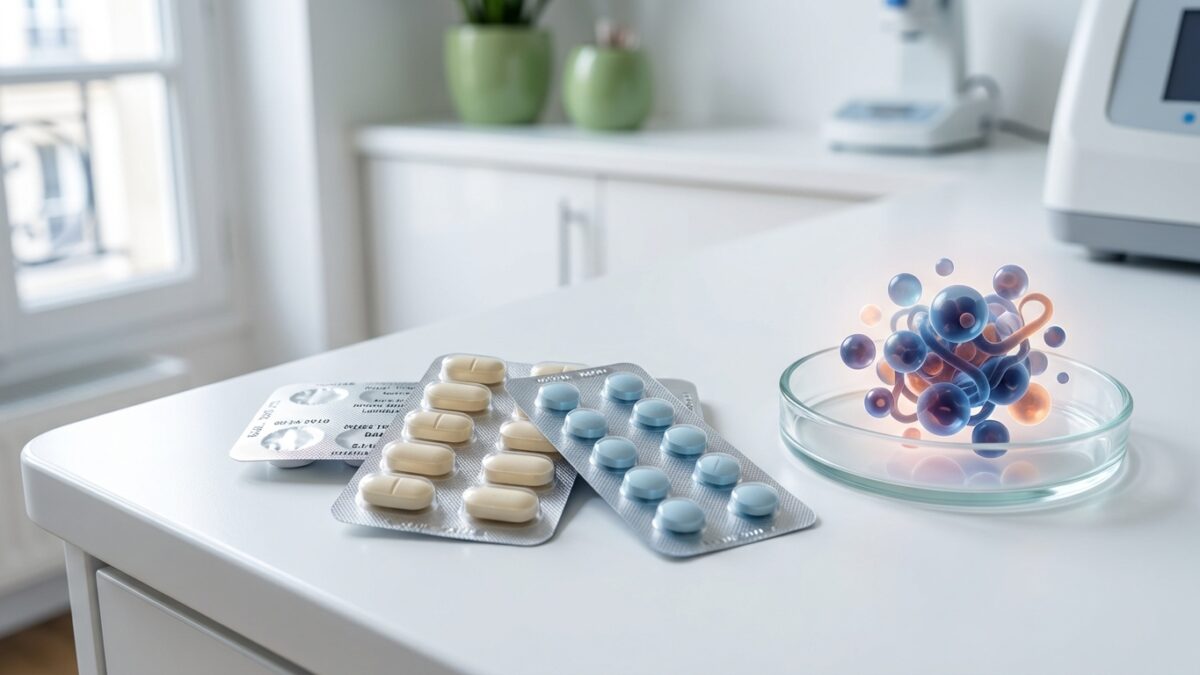
You may keep an old box of antibiotics “just in case” in the medicine cabinet. Or you tell yourself that the subject doesn’t really concern you, since you rarely take it up. This is precisely the preconceived idea that the health authorities want to correct around November 18, European Antibiotic Information Day.
Antibiotic resistance does not mean that your body becomes resistant to antibiotics. These are certain bacteria which acquire, or in which are selected, mechanisms allowing them to survive despite a treatment intended to eliminate them. And these bacteria can then circulate from one person to another, including within a household.
Why can someone be affected without taking antibiotics often?
Nuance is essential. As Health Insurance points out, antibiotic resistance corresponds to the ability of certain bacteria to resist one or more antibiotics. In other words, if an infection is caused by resistant bacteria, the usual treatment may be less effective or even ineffective.
To better understand how bacteria become resistant to antibiotics, we must remember a simple image: the more antibiotics are used inappropriately, the more selection pressure is exerted. Sensitive bacteria disappear, while the most resistant ones can survive and multiply.
But the risk does not only concern the person who took the treatment. A person who takes few or no antibiotics can still be infected with resistant bacteria.if it is transmitted to him by the environment or by another person.
Why can your loved ones also be affected?
Bacteria do not remain attached to the original prescription. They can be transmitted in particular during close contact, through hands, the immediate environment or in certain healthcare contexts. This is why Health Insurance insists that antibiotic resistance can affect the entire population, including people who rarely use antibiotics.
In most situations, this doesn’t mean you should panic at the slightest cold. Antibiotics are not effective against viral infections like colds or flu. Taking it “to speed up healing” does not help, and can on the contrary encourage the appearance of resistant bacteria, in addition to exposing people to undesirable effects.
The national report published by Public Health France on November 17, 2026 also shows a contrasting situation. In community care, the consumption of antibiotics has decreased by 9.6% compared to 2024, and the number of prescriptions by 13.9%. But some resistance is growing, particularly among Escherichia coli for 3rd generation cephalosporins in the city and in nursing homes. Consuming less is good news, but it is not enough to make the problem disappear.
These percentages are population-wide surveillance data: they don’t tell you what your individual risk is, nor do they allow you to attribute the decline to a single measure. Above all, they remind us that antibiotic resistance depends on our uses, the circulation of bacteria and the healthcare contexts.
The consequences can be very concrete: infections that take longer to treat, recourse to other antibiotics that are sometimes more restrictive, sometimes more adverse effects, and in the most serious cases, therapeutic impasse. The risk obviously varies depending on the bacteria, the site of infection and the person’s state of health.
A box left in the cupboard: what to do?
The most telling gesture is often played at home, in front of an opened box. Did you have a urinary tract infection or bacterial throat infection treated a few months ago, and there are still some tablets left? Don’t save them for next time.
- Do not reuse a previous antibiotic treatment without medical advice, even if the symptoms resemble those of a previous infection;
- Never share your antibiotics with a loved one, even if they “have exactly the same thing”: the diagnosis, dose and duration may be different;
- Return unused medications to the pharmacyso that they are disposed of correctly.
This advice is consistent with the rules for the proper use of antibiotics: take them only when prescribed, respect the indicated duration, and do not interrupt or modify the treatment on your own initiative. More broadly, not reusing an old antibiotic treatment is one of the best practices with all medications.
Prevention also involves simple actions: hand washing, vaccination when recommended, compliance with hygiene measures in the event of infection. The WHO recalls that antimicrobial resistance increases the risk of disease spread and serious forms. At the household level, the point of vigilance is more immediate: an antibiotic is neither a rescue medicine nor a treatment to be sharedeven when the box is already there.