
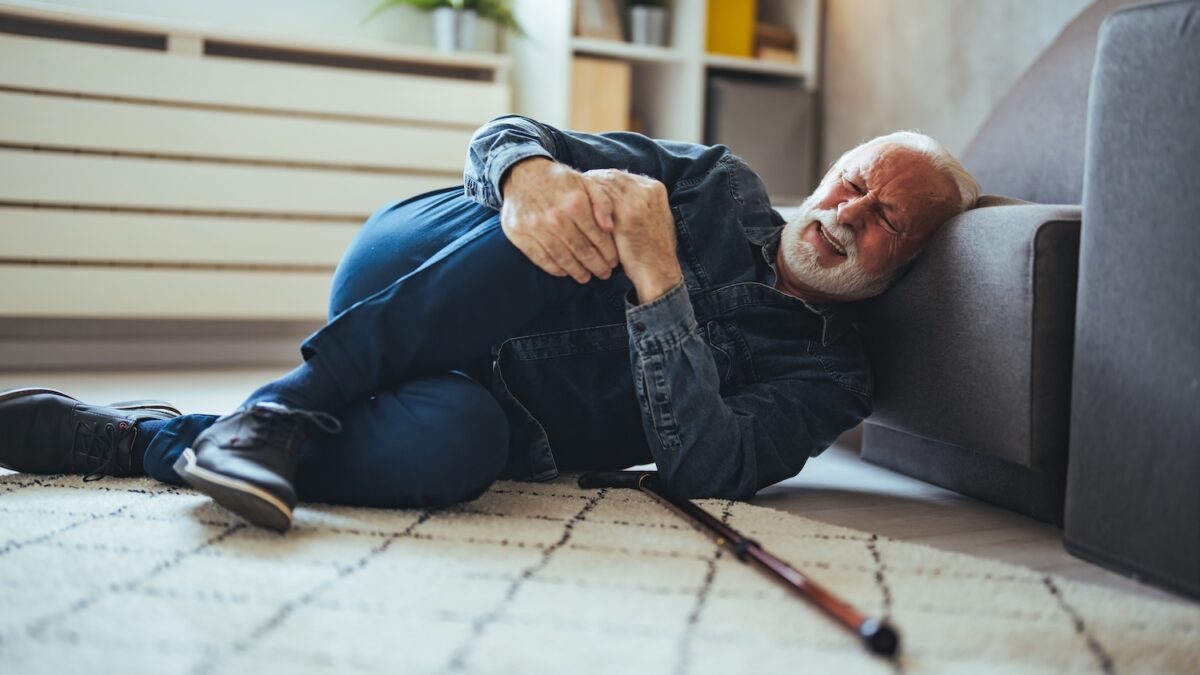
You fell, the pain subsided, no fractures were found. But that’s not necessarily the end of the story.
In an elderly person, even a “serious” fall often merits being reported to the attending physician.especially if it happened without any obvious obstacle, if it repeats itself or if you are afraid to walk again.
The objective is not to multiply examinations “just in case”, but to answer a simple question: why did you fall, and what can be corrected to prevent another fall? Health Insurance recommends talking to the doctor, specifying the number of falls, the circumstances and any apprehension when walking.
“A fall without a fracture is not necessarily a fall without a cause: the assessment is used to understand why it happened and how to avoid the next one” explains Dr. Gérald Kierzek.
When a fall requires rapid consultation
Some situations do not require a simple check-up appointment. You should seek medical advice quickly, or even call for help, in the event of significant pain, inability to get up or walk, discomfort, loss of consciousness, confusion, significant injury, or if the person has been on the ground for a long time. Particular vigilance is also required in the event of anticoagulant treatment, especially after a head shock or at the slightest neurological doubt.
The Haute Autorité de Santé reminds that repeated falls, a recent worsening of balance or a fall without obvious cause must be taken seriously. Another signal not to be overlooked: the fear of falling again. It can lead to going out less, walking less, losing muscle strength… and paradoxically increasing the risk of recurrence.
“After a fall, the right question is not only “Is it broken?”, but also “What has changed in my walking, my balance or my daily life?”” underlines Dr Gérald Kierzek.
What the doctor can check during the assessment
The assessment begins with the precise account of the fall: location, time, obstacle, shoes, possible discomfort, medication taken, ability to get up, injuries. Then the doctor observes the standing posture, walking, turning around, the ability to get up from a chair and overcome an obstacle. Ameli cites, for example, a test consisting of getting up from an armchair, walking 3 meters, turning around and then returning to sit down; a longer time can indicate a risk of falling, but the thresholds vary depending on the tools and the context.
These tests should not be carried out alone if the balance is fragile.
The practitioner can also examine the feet, vision, hearing, look for neurological, cardiovascular or sensitivity disorders, and measure blood pressure. Depending on the context, additional tests may be useful: blood test, ECG, imaging or specialist advice. But the HAS points out that they are not systematic: they depend on the warning signs.
To better understand this type of functional identification, our article on what a chair lift test can indicate also reminds us that an isolated test never replaces medical advice.
“The chair or walking test is not a performance competition: it is a clinical index, to be interpreted with the history of the fall” recalls Dr. Gérald Kierzek.
After the assessment, correct the risk factors
The assessment is only of interest if it leads to concrete measures. Depending on the factors found, the doctor may suggest reviewing the prescription, adapting the footwear, prescribing physiotherapy, working on balance and muscle strengthening, or directing towards a visual, hearing or nutritional assessment. The Fall Prevention Plan for the Elderly, supported by the Ministry of Autonomy, highlights five signals to spot: physical inactivity or sedentary lifestyle, fear of falling, malnutrition, impaired vision or hearing, unsafe housing.
At home, the objective is simple: limit the pitfalls. Slippery carpets, poor lighting, wires on the floor, unsecured bathroom, unsuitable shoes… so many details that matter. Our advice on how to prevent another fall at home can help guide your home.
Finally, unless there is a medical contraindication, remaining active is essential. Adapted walking, balance exercises, gentle strengthening or supervised sessions: the activity must be chosen according to the level of risk, not improvised after a recent fall. You can also consult our guidelines for maintaining appropriate physical activity to limit the risk of relapse.
“The good results do not lead to a ban on movement, but to a secure, progressive and adapted recovery. » insists Dr Gérald Kierzek.
In practice: note the circumstances of the fall, talk to the attending physician, and do not repeat balance tests alone if you feel unstable. A fall without a fracture may be an opportunity to act early, before another fall occurs.