
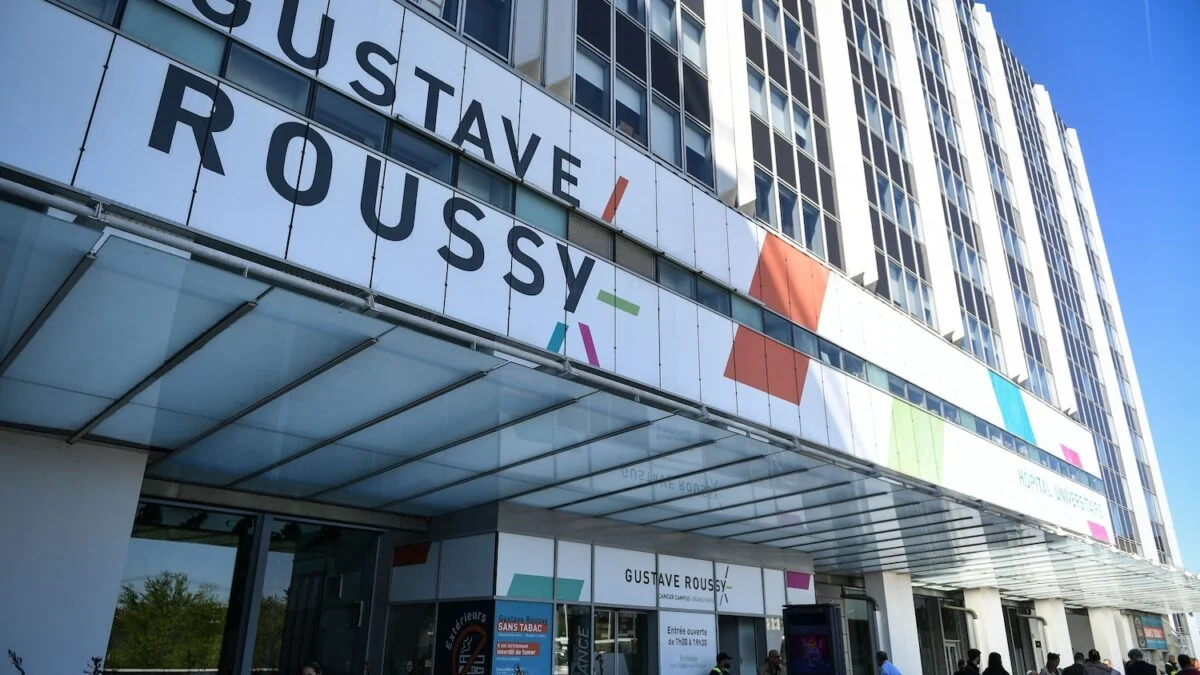
In the emergency room, sudden shortness of breath can raise fears of a pulmonary embolism. For an 81-year-old patient followed for breast cancer, the imaging examination posed a dilemma: she had already had a reaction to an iodinated contrast product. The Gustave Roussy teams report having carried out a pulmonary CT angioscan without iodinated contrast product using a photon counting scanner.
Presented by the Institute as a world first, this situation remains proof of feasibility on a single clinical casepublished in August 2026 in Diagnostic and Interventional Imaging. It opens up an option for very selected patients, without replacing usual practices.
Why was this exam problematic?
The patient was referred urgently after the sudden onset of shortness of breath. In this context, when imaging is necessary, pulmonary CT angiography is a commonly used examination to visualize the pulmonary arteries and look for a clot.
But this examination is most often based on the injection of an iodinated contrast product, which makes the vessels more visible on the scanner. In this patient, the history of severe reaction to an iodinated contrast product greatly complicated this injection.
The team therefore used another strategy: a gadolinium-based contrast agent, a product best known for its use in MRI, associated with a photon counting scanner. Gustave Roussy indicates that this combination made it possible to carry out the desired examination without using the iodized contrast product. This is not, however, a routine substitute for iodized scanner products..
What does the photon counting scanner allow?
A traditional scanner measures the overall energy of X-rays after they pass through the body. The photon counting scanner works differently: it counts photons individually and measures their energy. This approach allows you to obtain very detailed images and to better distinguish certain fabrics or materials.
According to Gustave Roussy, this technology can improve the resolution of images and, in certain situations, help reduce the dose of X-rays or the amount of contrast material needed. The Institute indicates that it has had two photon counting scanners out of the three scanners on its technical platform since September 2026.
In the case reported, the interest is very concrete: the sensitivity of the device would have made it possible to exploit the gadolinium signal in a scanner-type examination. For patients, this innovation above all illustrates an evolution in medical imaging: it can be adapted more finely when usual examinations pose a problem.
What patients should report before an injection
It would be misleading to conclude that gadolinium can simply replace iodinated contrast media. Gadolinate agents have their own limitations and precautions, particularly in some patients with severe renal impairment. Their use must be decided by a specialized team, on a case-by-case basis.
Another essential point: we must not speak too quickly of “iodine allergy”. In a document devoted to delayed hypersensitivity skin reactions to iodized contrast products, the ANSM points out that this expression is incorrect: reactions to iodized contrast products, allergies to fish or shellfish and reactions to certain iodized antiseptics are different situations. What matters medically is the specific history of reaction to a given contrast agentits severity, its onset time and possible allergological assessment.
For iodinated contrast products, the ANSM also recommends checking the necessity of the examination, investigating the history of reactions and considering, if possible, an imaging technique without injection when it can provide the same information. The European ESUR recommendations emphasize, for their part, that patients who have already had a moderate or severe reaction to an iodinated or gadoline contrast agent must be considered at increased risk.
Before an injected examination, always report to the radiology team any previous reaction after a CT scan, an MRI or a contrast injection, even if old. Specify the symptoms, the time limit, the product if you know it, and provide the available reports. After an iodinated contrast product, the ANSM reminds that delayed skin reactions can appear more than an hour to several days after exposure.
This advance reported by Gustave Roussy therefore does not yet transform current care. Above all, it adds a possibility in rare situations, when the useful examination becomes difficult to carry out, on the border between scanner and MRI.