
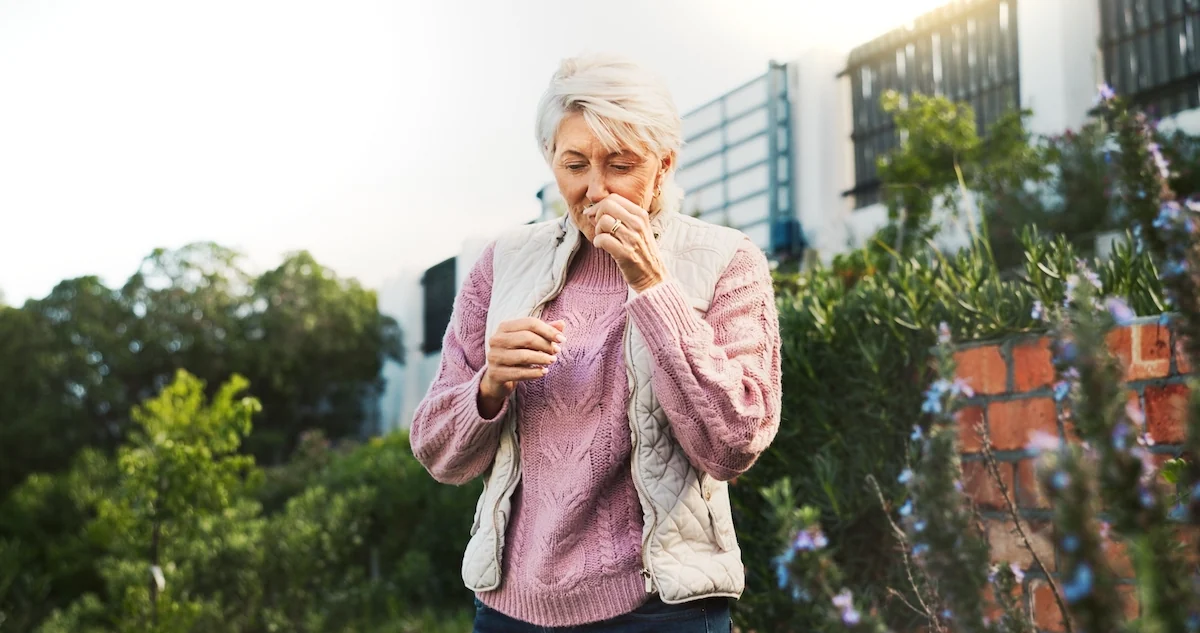
A study published in the journal Frontiers in Aging Neuroscienceand presented on November 13, 2026 by UCLA Newsroom, was interested in this question. Its results invite us to distinguish the evocative power of odors from a possible effect on cognitive performance. Contrary to what one might imagine, breathing lavender does not seem to improve memory overall.
Why do smells trigger memories so easily?
Sometimes all it takes is a scent to instantly rediscover the atmosphere of a place or the emotion associated with a moment in life. This link between smell and autobiographical memory is a familiar experience: a smell can bring back particularly vivid personal memories.
But this ability to retrieve a memory does not necessarily mean that our memory works better. We must distinguish two phenomena: remembering a past experience thanks to a smell and improving our performance when it comes to learning new information or recognizing details.
This distinction is important for interpreting research on the effects of scents. An odor can serve as a trigger for a memory without strengthening general memory skills.
Smell is also of interest to researchers in the field of neurodegenerative diseases. Olfactory alterations have notably been associated with Alzheimer’s disease. They constitute a line of research to better understand certain early changes, but do not, on their own, allow a diagnosis to be made. Nor do they mean that regular exposure to odors could prevent disease.
Lavender and memory: what does the study carried out with 47 adults reveal?
To explore the effects of olfactory exposure on memory, researchers studied 47 healthy volunteers, divided into two age groups:
-
24 adults aged 18 to 35;
-
23 adults aged 60 to 85.
No participant showed signs of Alzheimer’s disease. Before starting the experiment, the researchers also assessed their olfactory function using a standardized test.
The protocol was based on two learning sessions carried out in separate rooms. Each participant was exposed to two conditions: an environment in which lavender essential oil was diffused and another without odor. The order of passage was counterbalanced in order to limit the effects linked to the succession of sessions.
During the exercises, volunteers had to look at images representing common objects. After a short delay and questionnaires, they were asked to recognize different images: some were identical to those already presented, others had been slightly modified and still others were new.
The objective was in particular to check whether the participants were able to spot subtle differences, such as a change in color. The researchers thus evaluated their ability to memorize details, also called memory discrimination, and not just their ability to remember an image overall.
Lavender does not improve overall performance
First observation: in young adults as in older participants, the presence of lavender did not lead to an overall improvement in memory performance compared to the condition without odor.
However, a more nuanced result was observed among older participants. Those who had been exposed to lavender from the first learning block performed better at distinguishing certain details than those who had only encountered this smell during the second block.
This difference was not found in young adults.
The researchers also observed, in older participants, an association between better results and two characteristics: more liking the smell of lavender and less impaired initial olfactory function.
These observations suggest that the relationship between smell and memory could depend on several factors, including age and individual perception of odors. However, they do not allow us to confirm that lavender systematically improves memorization.
We must also take into account the limitations of the work: the study is based on a small sample of healthy volunteers, a main odor and exercises carried out in an experimental environment. It does not demonstrate clinical benefit, does not allow us to conclude that there is a preventive effect on cognitive decline and does not provide information on the possible effects in people suffering from Alzheimer’s disease.
Can smells become a tool to maintain memory?
Scents can have their place in everyday life, without it being necessary to attribute to them properties that they have not demonstrated. A familiar smell can help recall a personal memory, make an environment recognizable or accompany a ritual. It can also be associated with a learning moment.
On the other hand, the available data do not allow us to recommend lavender diffusion as a method to improve memory abilities or prevent their decline.
Caution is also necessary with essential oils. Their natural origin does not guarantee their safety. The National Agency for the Safety of Medicines and Health Products (ANSM) recalls in particular the existence of precautions concerning their oral use. Certain situations require special vigilance, including pregnancy, breastfeeding, childhood, allergies or a history of seizures and epilepsy.
Atmospheric diffusion should also not be considered as a trivial or systematic gesture, particularly in a poorly ventilated space or one shared with vulnerable people.
Finally, if forgetfulness becomes frequent, persistent, unusual or begins to disrupt daily activities, it is better not to rely on odors to remedy it. As Health Insurance points out, the assessment of a possible cognitive disorder is based on a medical approach. The attending physician is the first point of contact and can, if necessary, refer you to a specialist or a memory consultation.