
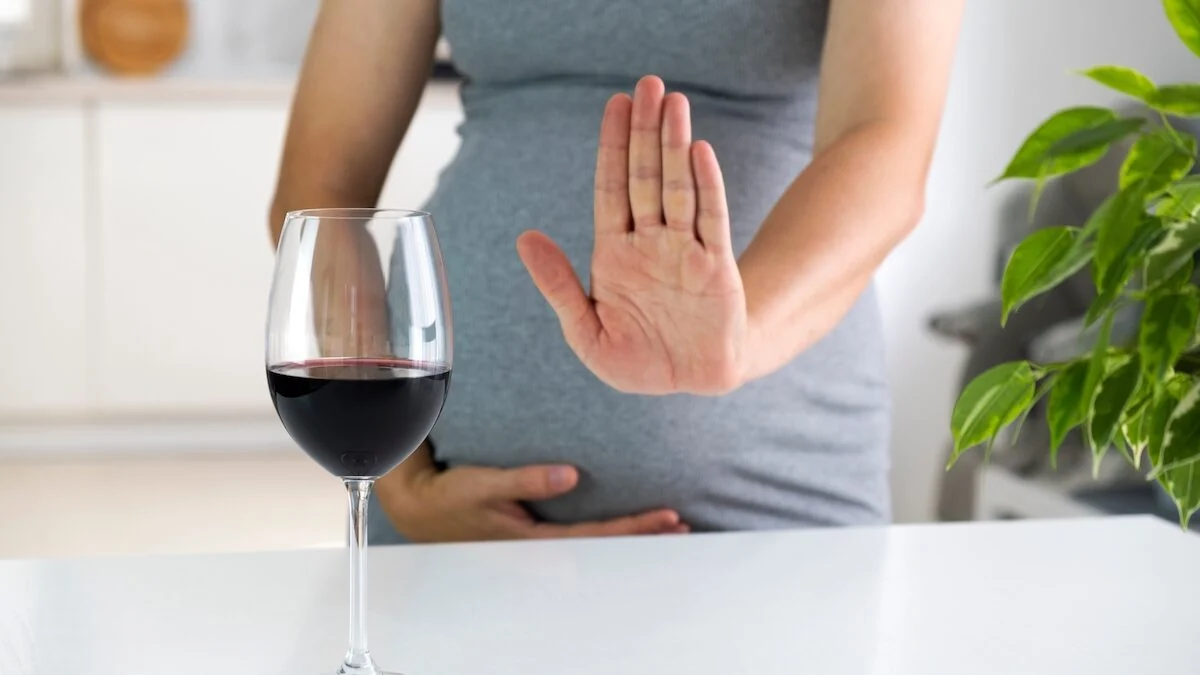
Behind this prevention message, another issue also deserves attention: better support for pregnant women who have difficulty stopping drinking, without making them feel guilty or leaving them alone to face their situation.
Alcohol and pregnancy: why no consumption is considered risk-free
From November 23 to December 31, 2026, Public Health France and the Ministry of Health are deploying a national campaign aimed at future parents and those around them. Posters, publications on social networks, educational videos and partnerships with M6 and WeMoms should help to raise awareness of the risks associated with alcohol consumption during pregnancy.
The message is unambiguous: “During pregnancy, there is no small drink”.
Indeed, alcohol consumed by the mother crosses the placenta and enters the blood of the fetus. It can then disrupt its development and lead to various consequences, including malformations, brain damage, behavioral disorders or even learning difficulties.
Possible complications also include miscarriages and premature births.
The consequences can take different forms. They are notably grouped under the term fetal alcohol spectrum disorders (FASD). The damage is not necessarily visible at birth: certain intellectual or behavioral difficulties can appear gradually, as the child develops and learns.
In the most serious situations, we speak of fetal alcohol syndrome (FAS), which can notably involve growth retardation, facial abnormalities, organ malformations and brain damage.
According to estimates communicated as part of this campaign, at least one birth per day in France would be affected by FASD, and one birth per week by FAS. Figures which would probably be underestimated.
Received ideas that persist despite a known recommendation
If nine out of ten French people know the recommendation of zero alcohol during pregnancy, certain beliefs continue to fuel confusion.
In particular, a quarter of those questioned believe that a drink consumed on a special occasion would be safe. Others think that the risks only concern certain periods of pregnancy, or that beer could promote breastfeeding.
However, no type of alcohol can be considered risk-free: beer, wine, champagne or spirits all expose the fetus to alcohol. The quantity, type of drink and stage of pregnancy do not make it possible to define a guaranteed safe consumption threshold.
The recommendations therefore encourage avoiding all alcohol consumption from the moment you plan to have a child and throughout the pregnancy.
Another important message: it’s never too late to quit. Even when consumption has already taken place, stopping alcohol remains beneficial for the baby’s health, whatever the stage of pregnancy.
Pregnant and struggling with alcohol: why you shouldn’t stay alone
Beyond prevention, the campaign also highlights the difficulties that some women may encounter in stopping drinking.
Finding out that you are expecting a child can be emotionally overwhelming. Worries, bodily changes or questions related to the arrival of the baby can weaken some women. For those who already consume alcohol regularly, this period can make stopping particularly difficult.
It also happens that pregnancy reveals a relationship with alcohol that has become problematic, or even a gradually established dependence.
To these difficulties can be added shame and guilt. Some women then do not dare to talk about their consumption, for fear of being judged.
However, asking for help is essential. Professionals who monitor the pregnancy, in particular midwives and gynecologists, can direct women towards appropriate support. Specialized teams can also intervene to offer medical and psychological care.
The support options are diverse: close consultations, psychological monitoring, hospitalization or specialized support. The objective is to support the future mother by taking into account her medical, psychological and social situation.
As Olivier Thomas, psychologist and head of the Fil Rouge department in Marseille, points out, it is important to consider the woman faced with addiction as a person who, like any other future mother, needs medical monitoring and support during her pregnancy.
The role of those around you: support without feeling guilty
The partner, family and friends can also play an important role.
According to data provided as part of the campaign, 45% of people surveyed in 2025 believed that not drinking in front of a pregnant woman could help her not consume alcohol.
This support can come through simple gestures: systematically offering non-alcoholic drinks, avoiding insisting that she drinks or even choosing not to consume alcohol yourself during shared moments.
The objective is not to monitor or make the future mother feel guilty, but to allow her to evolve in a caring environment, where she does not feel isolated in the face of her difficulties.
If necessary, Alcool Info Service also offers listening and information. The service can be reached on 0 980 980 930, seven days a week, from 8 a.m. to 2 a.m. Calls are anonymous and not surcharged. Its site also provides access to discussions, testimonials and addresses of specialized structures.
The message of this campaign goes beyond the sole recommendation of zero alcohol: it also reminds us that the difficulties linked to alcohol consumption during pregnancy require appropriate support. A pregnant woman who cannot stop drinking should not be left alone with her worries. Professionals can help them, without judgment, to find support adapted to their situation.