
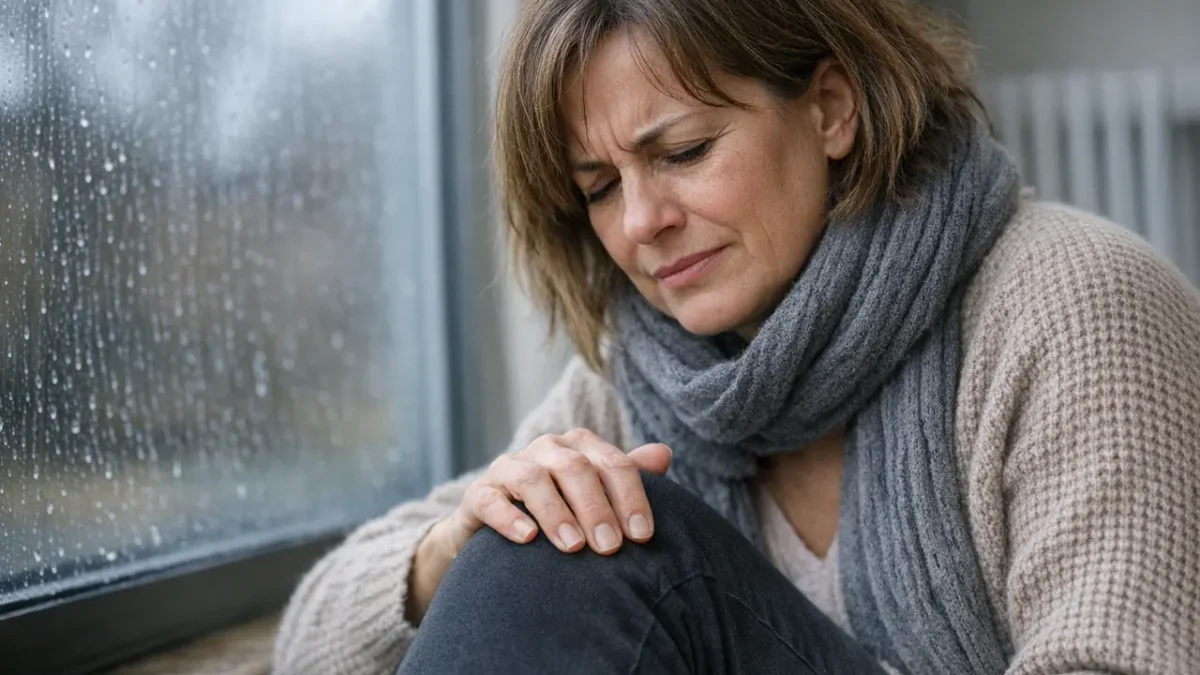
On Instagram, Dr Sermed Mezher explains why cold or a drop in pressure can, in certain people, awaken pain around an implant or an old injury. The idea is plausible, but should be handled with caution: the weather can be associated with pain, without always being the direct cause.
What cold and pressure can change in tissues
The British influencer doctor’s reasoning is based on a simple phenomenon: the body constantly adapts to its environment. When it is cold, tissues can contract, while a drop in external pressure could encourage a slight expansion of certain tissues. He adds that around a metal implant, this adaptation could be less flexible, which would create tension felt as painful.
On a medical level, however, two things must be distinguished. On the one hand, some people wearing orthopedic equipment report more discomfort in cold weather. This feeling exists and should not be brushed aside. On the other hand, the available studies are mainly based on pain declared by patients and observations: they do not prove that cold mechanically triggers pain in everyone.
In other words, if an old fracture, an operated knee or an area around a plate seems more sensitive when the weather changes, it is not necessarily “in the head”. But this is not a universal rule either. Research on joint pain aroused by cold shows variable results depending on the people, the pathologies studied and the weather parameters.
A meta-analysis published in 2023 on osteoarthritis found associations between pain and weather conditions. But the important word is “association”: this does not demonstrate individual causality. Temperature, humidity, reduced physical activity when the weather is bad, sleep, stress level or the condition of the joint can also play a role.
Implant or old injury: what to do when the pain returns?
The practical advice given by the doctor is to cover yourself, for example to protect a replaced knee, in order to control the “micro-environment” around the sensitive area. Gkeeping the area warm can limit local exposure to the cold. However, it does not treat the cause of persistent pain and does not replace medical advice if symptoms change.
The precise mechanism remains debated. Temperature variations, nerve sensitivity, the condition of the tissues around the implant, atmospheric pressure or even local inflammation can be mentioned. But the idea that the metal would really prevent the tissues from moving and would alone create pain is not demonstrated as an established medical explanation.
In practice, it is reasonable not to attribute everything to the weather. A few points of reference can help:
- Protect the sensitive area from the cold with suitable clothing, especially if you have already noticed that it helps you;
- Observe the context: pain after an unusual walk, recent fall, exertion, prolonged cold spell or sudden change in weather;
- Seek medical advice if the pain is new, significant, persistent, or if it clearly limits daily activities.
In a person who has recently had a hip or knee prosthesis, greater caution must be exercised. Pain that returns or gets worse, especially with swelling, redness, warm scarring, discharge, fever or chillsshould lead to quickly contacting the surgical team or the attending physician. These signs do not necessarily mean that there is a complication, but they should not be trivialized.
For post-prosthesis pain, particularly residual pain after a knee prosthesis, several causes are possible and the weather is just one possibility among others. If the discomfort is long-standing, fluctuating and already known, covering yourself and temporarily adapting your activities may be enough to tolerate it better. If it changes in nature, intensifies or is accompanied by local signs, it is better to speak to a health professional.