
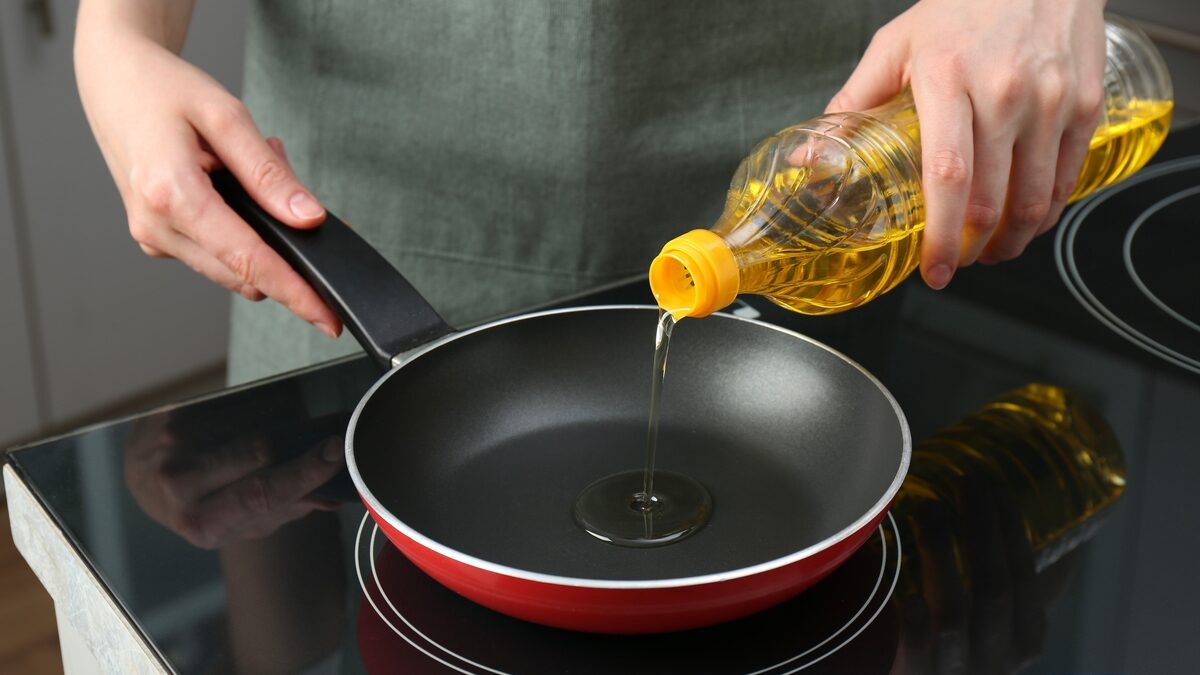
Rapeseed, flax, olive, coconut… Edible oils are part of our daily lives. But which one to choose for cooking? And which ones to avoid? Julie Boët, dietician-nutritionist, explains to us that there is no “right answer”, because not all oils have the same composition and do not react in the same way to heat.
“Not all fats are equal, and the difference is mainly due to their fatty acid composition: saturated, monounsaturated or polyunsaturated. This composition determines both their behavior in heat and their impact on cardiovascular health.“, she explains.
Despite everything, certain oils should be consumed more than others on a daily basis. Here are those to favor and those to limit.
The 5 oils to favor every day
Unsurprisingly,
olive oil is the first oil to favor. Rich in monounsaturated fatty acids, it tolerates cooking quite well.
“Monounsaturated fatty acids, very present in olive oil, are particularly interesting for cardiovascular health: they help to lower LDL (bad cholesterol) without affecting HDL. Oleic acid, which also constitutes the “essential part” of olive oil, also resists heat well. It is therefore a good choice both for seasoning and for cooking at moderate temperatures, around 180 degrees“, indicates the dietician.
Avocado oil also has its place in your kitchen. It belongs to the same family of fatty acids and is resistant to high temperatures. “Less common than olive oil but increasingly present in cooking, it belongs to the same family and withstands even higher temperatures. It can therefore be interesting for the pan or the wok“, underlines the nutritionist.
But that’s not all: oils containing polyunsaturated fatty acids (i.e. linseed oil, rapeseed oil and walnut oil) are also interesting.
“Polyunsaturated fatty acids include two families with different effects: omega-3 and omega-6. However, omega-3s, which are found in notable quantities in linseed oil, rapeseed oil or walnut oil, have a recognized action on the regulation of inflammation, in particular thanks to the transformation, although limited, of alpha-linolenic acid into EPA and DHA“, reveals Julie Boët.
In cooking, rapeseed oil is particularly interesting for our health, because its omega-6/omega-3 ratio is “naturally balanced“, specifies the specialist.
Coconut oil, palm oil… which ones to limit?
While many oils are beneficial for our health, others should be avoided. This is particularly the case of
coconut oil and of
palm oil.
“Saturated fatty acids, present in significant proportions in coconut oil, butter or palm oil, have a stable chemical structure which makes them very resistant to cooking. But this same stability poses a problem once digested: consumed in excess, they tend to raise LDL, the cholesterol which accumulates in the wall of the arteries.“, warns Julie Boët.
That being said, not everything can be thrown into coconut oil.
“Its majority fatty acid, lauric acid, certainly increases LDL, but it also raises HDL, the protective cholesterol which helps clean the vessels. It should therefore not be banned, but rather used sparingly, alternating with other fats, rather than on a daily basis. For example, you can use it once a week to flavor a dish.“, confides the dietician.
Same logic for palm oil, particularly rich in saturated fats: it is better to consume it occasionally rather than as a daily oil.
As for the
sunflower oils and of grape seedsthey provide a lot of omega-6, fatty acids necessary for the body, but which are already largely present in our diet.
“Omega-6 is essential for the body. But when consumed in large quantities compared to omega-3, they can promote a pro-inflammatory environment. This imbalance also poses in our current Western diet“, explains Julie Boët.
Oils: how to store and use them?
Once you have chosen your oil, the question is how to store and use it. And again, not everyone behaves the same way. Oils rich in omega-3, such as flax and walnut, are particularly fragile. They should therefore only be used cold.
“These fatty acids are more fragile and sensitive to oxidation, particularly with light, air and especially heat. Flaxseed or walnut oil should therefore never be heated, as this can lead to the formation of harmful oxidized compounds. It should also be stored in the refrigerator, in an opaque bottle, and consumed within a few weeks of opening.“, advises the dietitian.
Rapeseed oil, more stable than linseed oil but less stable than olive oil, also keeps better in the fridge once started.
“Conversely, oils rich in saturated or monounsaturated fatty acids, such as olive, avocado or coconut, can be stored without difficulty at room temperature, away from direct light.“, specifies the expert.
Then, regarding the quantities of oil to consume, it is better to limit saturated fats (which should not exceed 10 to 12% of our total energy intake). “Monounsaturated fats must here represent the majority of lipids consumed“, specifies Julie Boët.
“On a daily basis,Concretely, this can correspond to one to two tablespoons of olive oil per meal for seasoning and gentle cooking, supplemented by a teaspoon of rapeseed or raw walnut oil each day for omega-3 intake. Coconut or palm oils can be consumed occasionally.indicates the dietitian.
In summary, there is no point banning an oil on the pretext that it is less interesting than another. The main thing is to know which one to choose according to use: olive or avocado for cooking, rapeseed for omega-3 and linseed or walnut oils rather when cold.
“It is this way of varying oils, rather than trying to classify some as “good” and others as “bad”, which is interesting for long-term cardiovascular health.“, concludes Julie Boët.