
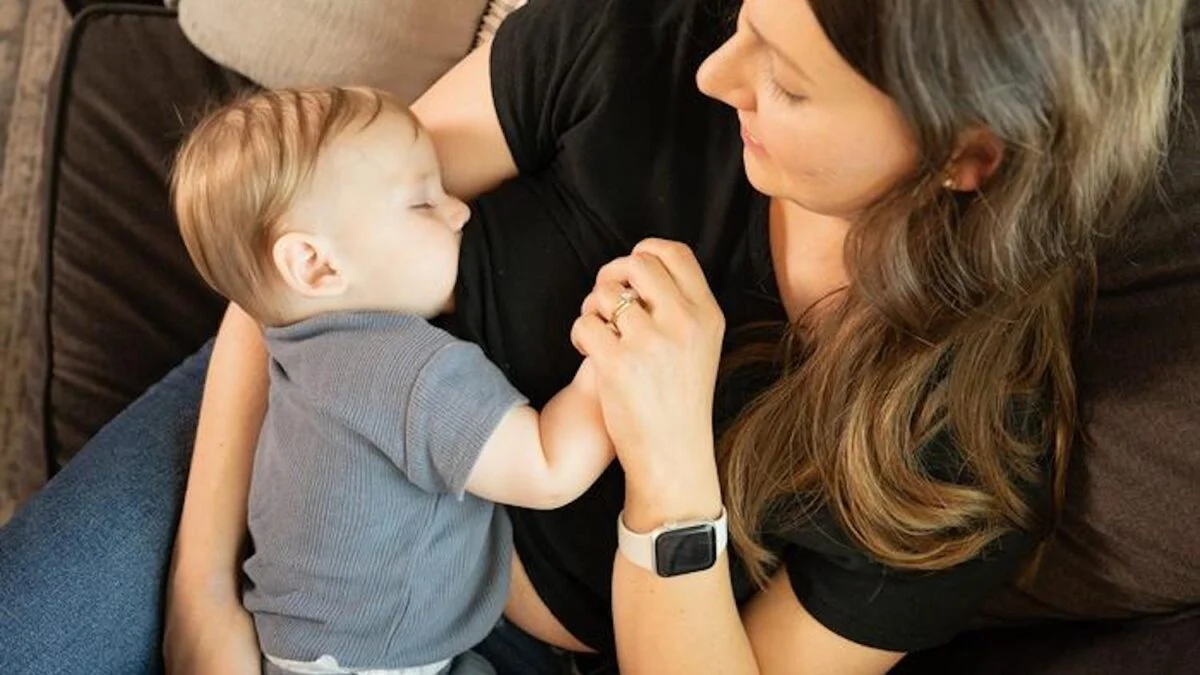
When a newborn cries and a feeding goes wrong, many exhausted mothers reach for their smartphones. A national survey from Orlando Health indicates that 51% of women aged 18 to 44 would first consult an AI chatbot, social media or search engine for an urgent breastfeeding question, compared to 29% who would call a healthcare professional and 21% a loved one. This reflex seems practical, especially at night, but it can pose real risks to the baby’s growth and the mother’s health.
Pediatrician Dr. Erynne Bowers, who practices at Orlando Health Physician Associates – Lake Mary Pediatrics, sees this in her office. She explains that there are certain questions that AI cannot answer, because a chatbot does not see the baby or their weight curves, does not assess latching or detect possible oral-motor dysfunction. According to her, about a third of the mothers she sees have followed bad advice from AI on the quantity of milk or the frequency of feedings.
AI Breastfeeding Tips: When a Number Isn’t Enough
Chatbot responses often appear very specific, with detailed milk volumes and schedules. But Dr. Erynne Bowers reminds that “not all babies are the same. Not all babies will eat this often. Not all babies will take this much“An infant born small, a very large newborn, or a child with sucking difficulty require different feeding plans that AI cannot adjust on its own.
Orlando Health reports that this standardized advice sometimes leads to feedings being spaced too far apart or offering inappropriate amounts. This can lead parents to believe that everything is fine when the baby is not gaining enough weight or milk production is dropping. Without examining the infant, no AI tool can detect this type of drift early enough.
The major risk of breastfeeding chatbots: delaying the consultation
The main danger is not a single bad advice, but the time wasted before seeing a professional.
“They will be more reluctant to make an appointment for a breastfeeding consultation or an in-office consultation” said Dr. Bowers. “Sometimes we see stunted growth in the baby because of this, and then we have to go back. Or we see a drop in breast milk production because the AI told them they didn’t need to breastfeed as frequently“.
According to Dr. Erynne Bowers, these delays in consultation are not without consequences and could have been avoided with an in-person assessment.
Breastfeeding: how much can we trust AI, and with what resources?
The story of Emily Hunziker in Sanford shows this well. Her son Luca, born at nearly 10 pounds, lost weight while she searched for answers online. “Everyone has their phone. For moms, I think it’s a blessing and a curse“, she confides, before recalling that”you have to check your source“. With the help of Dr. Bowers and a lactation consultant, combining breastfeeding, breast pumping, bottle feeding and supplementation, the baby returned to reassuring growth.
This mother of two boys from Sanford, Florida, had difficulty exclusively breastfeeding her youngest son, Luca. Born weighing almost 10 pounds, he started losing weight, so she looked for solutions online. “Everyone has a phone. For moms, I think it’s both a blessing and a curse.”said Emily Hunziker. “I love the little summaries provided by the AI: when I do a search online, it gives me an overview, but you always have to check the source”.
Eventually, she finds the solution by turning to Dr. Bowers, Luca’s pediatrician. Together, they sought to reconcile the breastfeeding desired by Hunziker and Luca’s changing nutritional needs, including consulting a breastfeeding specialist, expressing his milk, giving the bottle and supplementing with formula.
“We love breastfeeding, and I appreciate that Dr. Bowers respected my wishes. As long as it was safe for my baby, she gave us the time and opportunity to achieve this goal. You can’t get that with AI.” concludes the mother.
Prioritize professional advice and always check sources
According to Dr. Bowers, when parents choose and are able to breastfeed, it has benefits for both baby and mother. This reduces the risk of developing problems like ear infections, asthma, type 1 diabetes and autoimmune diseases in the child, as well as breast cancer, cervical cancer and heart disease in the mother.
Dr. Bowers recommends relying on validated resources when a doctor cannot be reached by phone. Among them in France, we can cite the advice for getting started with breastfeeding for the first 100 days, the breastfeeding guide from Santé Publique France and SOS breastfeeding from La Leche League. And of course True Medical’s breastfeeding file.