
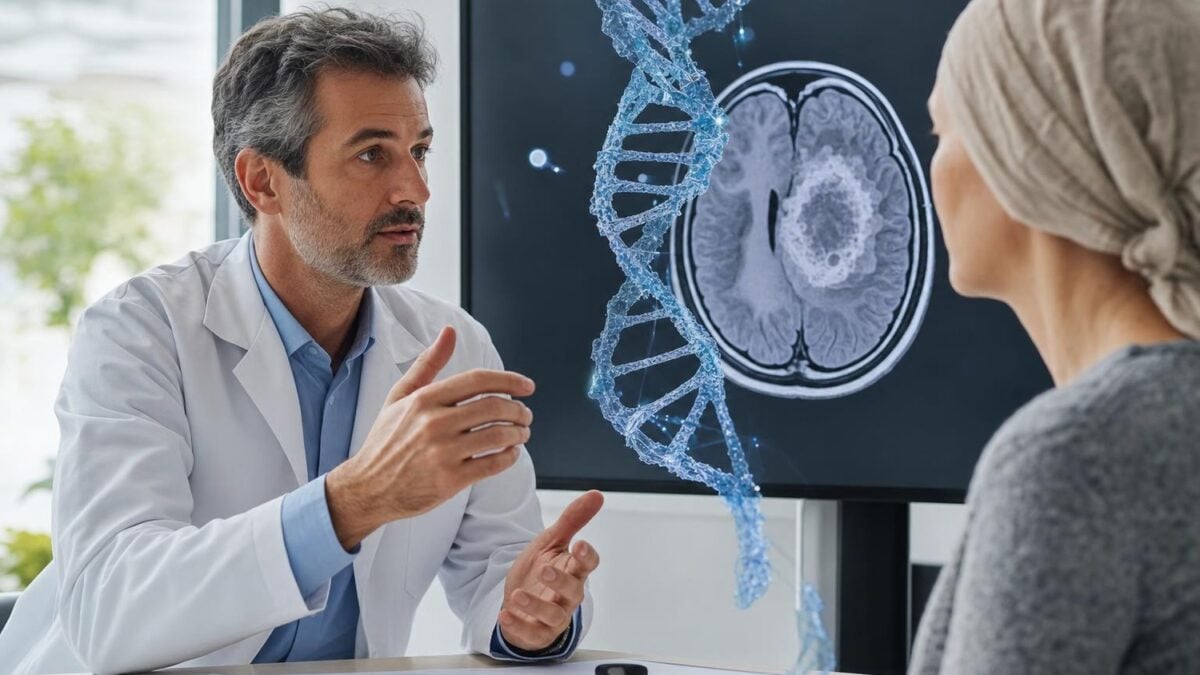
Glioblastoma represents the most aggressive form of brain tumors. Often detected at an advanced stage, its prognosis is particularly unfavorable. However, scientists in the United States have just developed a personalized DNA-based cancer vaccine that has demonstrated very encouraging results against this disease.
Glioblastoma: a cancer with a terrible prognosis
In neuro-oncology units, practitioners are aware of this: once glioblastoma is diagnosed, it is generally too late to consider its complete elimination. These tumors are only identified at an advanced stage, when they have already invaded the brain. Currently, even the combination of surgery, radiotherapy and chemotherapy only extends life by a few months. Why this? Mainly, because this fast-growing cancer is often detected late, because surgery struggles to remove the entire tumor and because this cancer escapes the immune system.
But a personalized vaccine developed by Geneos Therapeutics with the Washington University School of Medicine in Saint-Louis could provide part of the answer to this formidable tumor. It has successfully induced robust and broad immune responses that appear to increase recurrence-free survival in a subgroup of patients after surgery.
A personalized vaccine for each patient with glioblastoma
After surgery on 9 patients, doctors removed several areas of the tumor and sequenced the DNA to spot mutations that produce neoantigens, proteins specific to a patient’s cancer cells and recognized by their immune cells. An algorithm developed by the researchers then selected between 17 and 40 targets per person, to make a synthetic DNA molecule encoding the unique information of each patient’s tumor neoantigens. This personalized cocktail for each patient was combined with a piece of DNA encoding interleukin-12, a cytokine intended to strengthen the CD8+ T cell response in a cold tumor to make it warmer.
The vaccine is injected into the muscle, with a brief electrical pulse that helps the DNA enter the cells. They started on average 10 weeks after surgery, with three doses spaced every three weeks then boosters every nine weeks. Most participants received four doses, and side effects were mostly limited to small local reactions at the injection site.
Unprecedented results in the face of glioblastoma
All patients had a form of glioblastoma that is particularly difficult to treat because it is resistant to available treatments, such as chemotherapy (a
MGMT unmethylated glioblastoma). Its prognosis is such that only 10 to 15% of patients in this group reach 2 years of survival. Among the 9 patients operated on then irradiated but without chemo, then vaccinated, two thirds showed no progression of their cancer, and the remaining two thirds were alive one year later. In general, about 40% of glioblastoma patients achieve one or both of these goals.
“These results are extremely encouraging”said Dr. Tanner M. Johanns, senior author of the study and assistant professor in the Division of Oncology in the John T. Milliken Department of Medicine at WashU Medicine.
The strongest signal is at the two-year mark. In this very high-risk group, a third of patients, or three out of nine, were alive 24 months after surgery, whereas historical series speak more of 10 to 15% in the same situation. One patient even remains without recurrence more than four years after her diagnosis, which is extremely rare for a glioblastoma.
What this personalized DNA vaccine can change for affected patients
However, the researchers remain cautious: this is a phase 1 study, open, without a control group and carried out on nine people, all Caucasians, in a single center. They speak of an encouraging signal, not yet sufficient proof to change the recommendations.
“Cancer vaccines have a long history, and the development of personalized therapeutic vaccines targeting neoantigens now represents a very promising approach in the treatment of glioblastoma and other cancers.”said Dr. Gavin Dunn, a neurosurgical oncologist at Mass General Brigham Cancer Institute and co-senior author of the study.
Concretely, this vaccine is currently only accessible in clinical trials, some in combination with anti-PD-1 antibodies, but it opens the way to tailor-made vaccines for other tumors.