
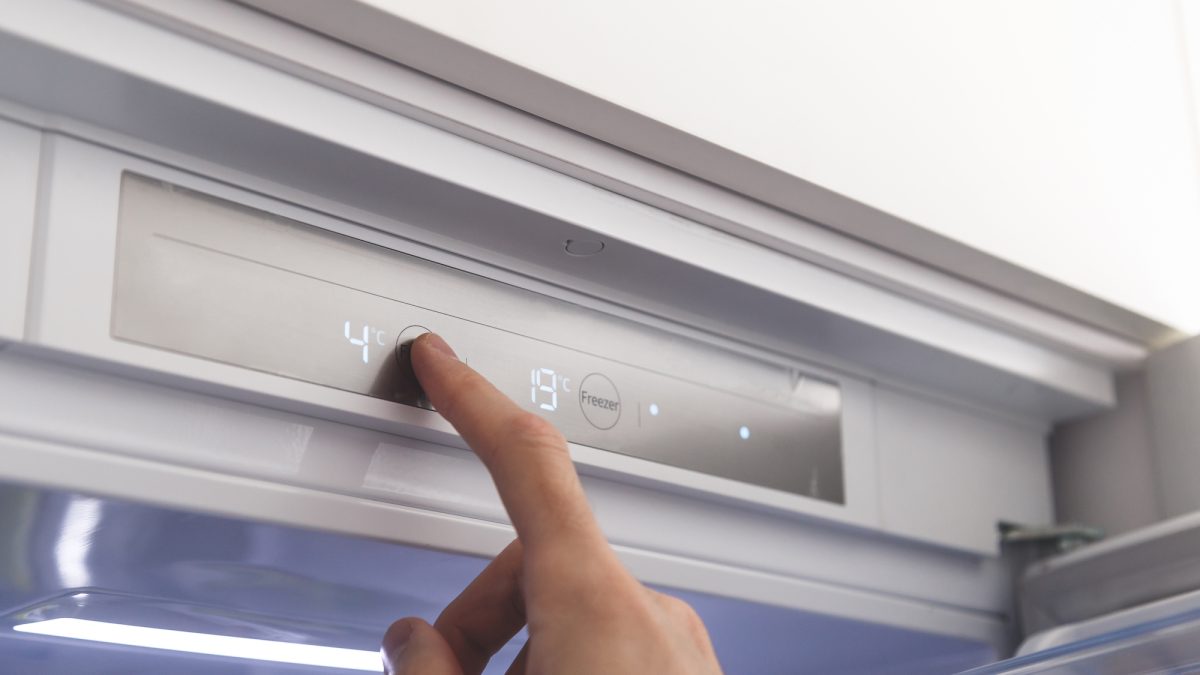
ANSES, the health security agency, recommends checking and adjusting the temperature of its refrigerator, especially in summer. The right adjustment is not accident: there is a specific threshold to be respected to limit the proliferation of microorganisms and preserve the quality of fresh products.
The temperature recommended by handles for your fridge
Depending on the handles, the ideal temperature at the coldest point of the refrigerator must imperatively be between 0 ° C and +4 ° C. Why this figure? Because in 4 ° C, the growth of pathogenic bacteria like Listeria Monocytogenes or Salmonella Enterica is drastically slowed down, even stopped.
The agency specifies: “A temperature below +4 ° C makes it possible to considerably slow down the growth of microorganisms \ (…) and to stop the growth of the majority of pathogenic germs“.
To ensure good setting, do not only trust the device dial. The ideal is to use a thermometer, to be placed in the coldest area. Some recent models incorporate a green lozenge, a very useful visual indicator. Otherwise, the installation of a thermometer remains the most reliable solution for good preservation.
Where and how to store food in the refrigerator?
A well -adjusted temperature is not enough. It is still necessary to organize the products properly in the fridge. Here are the essential tips delivered by ANSES to limit cross contamination and extend the freshness of food:
- The coldest area (within 4 ° C): raw meats and fish, homemade mayonnaise, chocolate mousse, meat dishes;
- Remove sur-shops: often carrying external germs, they harm the circulation of cold air;
- Do not overload the fridge: air must be able to circulate to guarantee a homogeneous temperature;
- Protect the food started: with plastic films, hermetic boxes or suitable lids;
- Do not wait more than 2 hours to refrigerate a hot food, but do not place it immediately after cooking, otherwise the overall temperature of the fridge increases.
Why this setting is crucial during the hot weather
In summer, the refrigerator is often more requested and put to the test. More frequent open doors, lukewarm dishes stored in a hurry, overloads linked to family meals … All these gestures increase the interior temperature.
On average, the temperature in the upper part of the fridge can go up beyond 7 ° C if the conditions are not optimal. Result: sensitive products lose their freshness and potentially become dangerous.
Adjusting your fridge to 4 ° C maximum and respecting good storage practices is therefore essential, not only to avoid food poisoning, but also to reduce waste.