
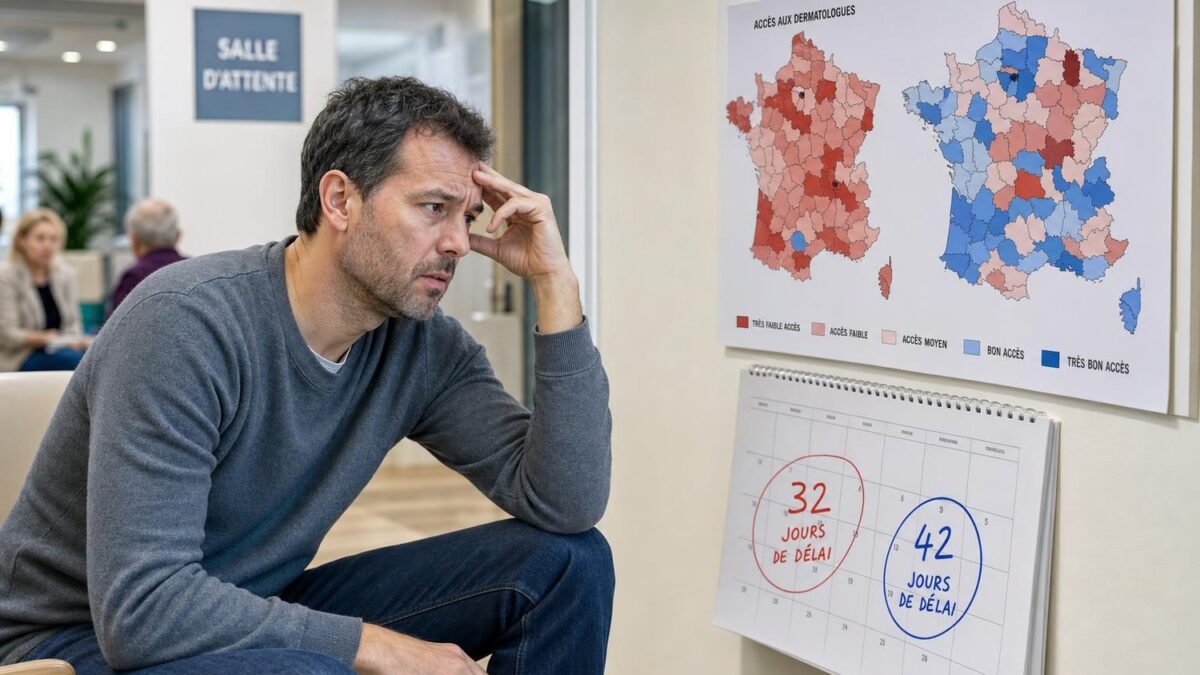
In France, obtaining a medical appointment can be done in three days… or in more than six months depending on the specialty and the department, depending on the French maps of access to care 2026 carried out by Doctolib and the Jean Jaurès Foundation based on 234 million consultations in 2025. The study covers ten liberal professions, from general practitioners to psychiatrists. “We have never been exposed to such a necessity and difficulty in treating ourselves“, alerts Martial Jardel, president of the Médecins solidaires association, on franceinfo. At the height of this tension, two key specialties clearly stand out. Unveiled exclusively by ICI this Tuesday, these results highlight significant inequalities in access to care.
Cardiology and dermatology: 42 and 32 days of waiting on average
These deadline champions are the cardiology and the dermatologyaccording to Doctolib and the Jean Jaurès Foundation.
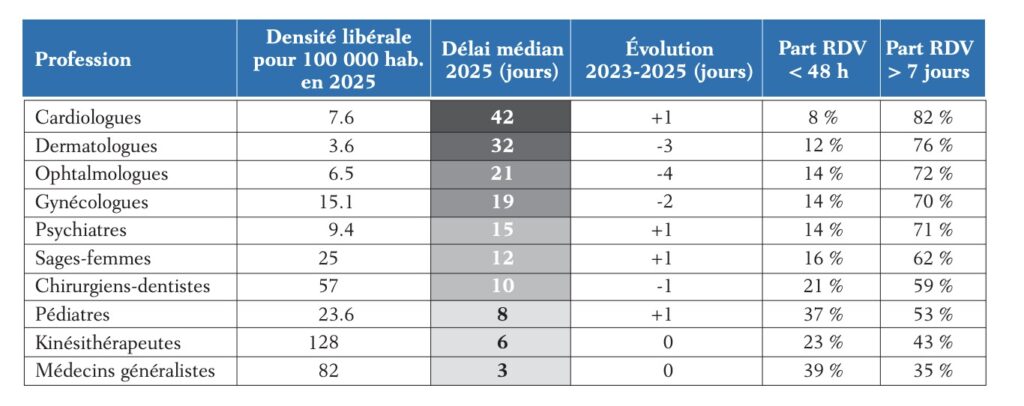
- In 2025, the median time in cardiology
reached 42 days, up slightly since 2023. 82% of appointments take place beyond seven days and only 8% of patients obtain a slot in less than 48 hours. In 47% of departments, it takes between 31 and 60 days, and in 7% more than 90 days to see a specialist. - There dermatology shows 32 days of waiting, three days less than in 2023 but much more than the 3 days of a general practitioner or the 8 days of a pediatrician. Only 12% of consultations are provided in less than 48 hours, and the study specifies that more than 70% of appointments with dermatologists and ophthalmologists exceed a week.
This slowdown is hitting vital areas: cardiovascular diseases are the second cause of death in France and, write the authors of the study, “In a specialty where skin cancers represent a third of cancers diagnosed in France, with an increasing incidence, the persistence of long delays in many territories poses a direct screening challenge.“.
 © Doctolib
Differences of 7 to 164 days depending on the department
In cardiology, the delay varies from 16 days in Paris to 164 days in Gers, “i.e. a ratio of 1 to 10”, indicates the Doctolib and Fondation Jean Jaurès study. “It affects everyone, it affects rural areas with its population and executives and young people too. That’s a bit of a surprise“, notes Martial Jardel.
The maps accessible online on HERE show in dermatology a period of 7 days in Savoie compared to 90 days in Aisne. For the authors of the Doctolib and Fondation Jean Jaurès study, “these inequalities are not limited to an urban-rural opposition“, because each profession has its own geography of tension.
 © Doctolib – Jean Jaurès Foundation
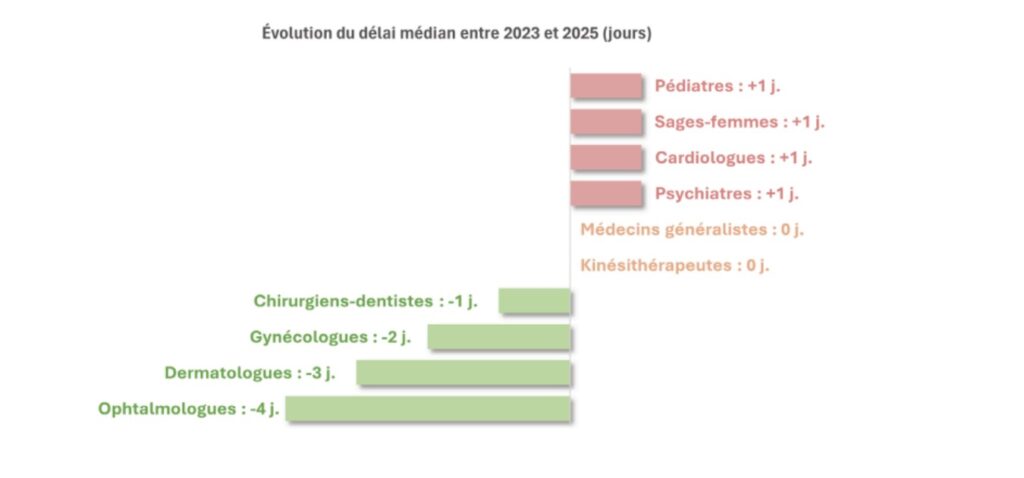
Between 2023 and 2025, some medical specialties saw improvements while others saw their waiting times lengthen. Thus, the delays in obtaining an appointment in ophthalmology have decreased by four days, in dermatology by three days, in gynecology by two days, and in dental surgery by one day. On the other hand, waiting times increased by one day for pediatrics, midwives, cardiology and psychiatry. As for general medicine and physiotherapy, their deadlines remained unchanged.
Organization of care and teleconsultation: ways to reduce waiting
For Martial Jardel, “One of the major levers (…) it will not just be about increasing the number of doctors, it will be about improving the structural organization of access to care.“. The example of ophthalmology confirms this: with almost constant numbers, the median time has been halved, while teleconsultation already reduces the wait to around 0.9 days in general medicine and 3.8 days in dermatology, according to Doctolib and the Jean Jaurès Foundation.