

On a phone, a cocktail recipe or a competition can scroll between two photos of friends, with the same light tone and the same visual codes. It is precisely this mixture of genres that worries Addictions France.
In a third report published Thursday, November 5, 2026, the association accuses alcohol brands of using social networks to circumvent the spirit of the Evin law. But how can we frame an advertisement that looks less and less like an advertisement?
When an ad looks like an ordinary post
Addictions France targets in particular unsolicited sponsored content, inserted in the user’s feed. The association considers that these formats may fall under intrusive or interstitial advertising, a qualification which must be assessed legally. The difficulty is that this border remains difficult to draw in the uses of platforms.
The Evin law strictly regulates the media and content of alcohol advertisements. On the Internet, they are authorized under conditions: they must not be intrusive or interstitial, and their content must remain limited to objective information on the product. Stages associating alcohol with partying, conviviality or humor can therefore be deemed illicit. when they go beyond this framework.
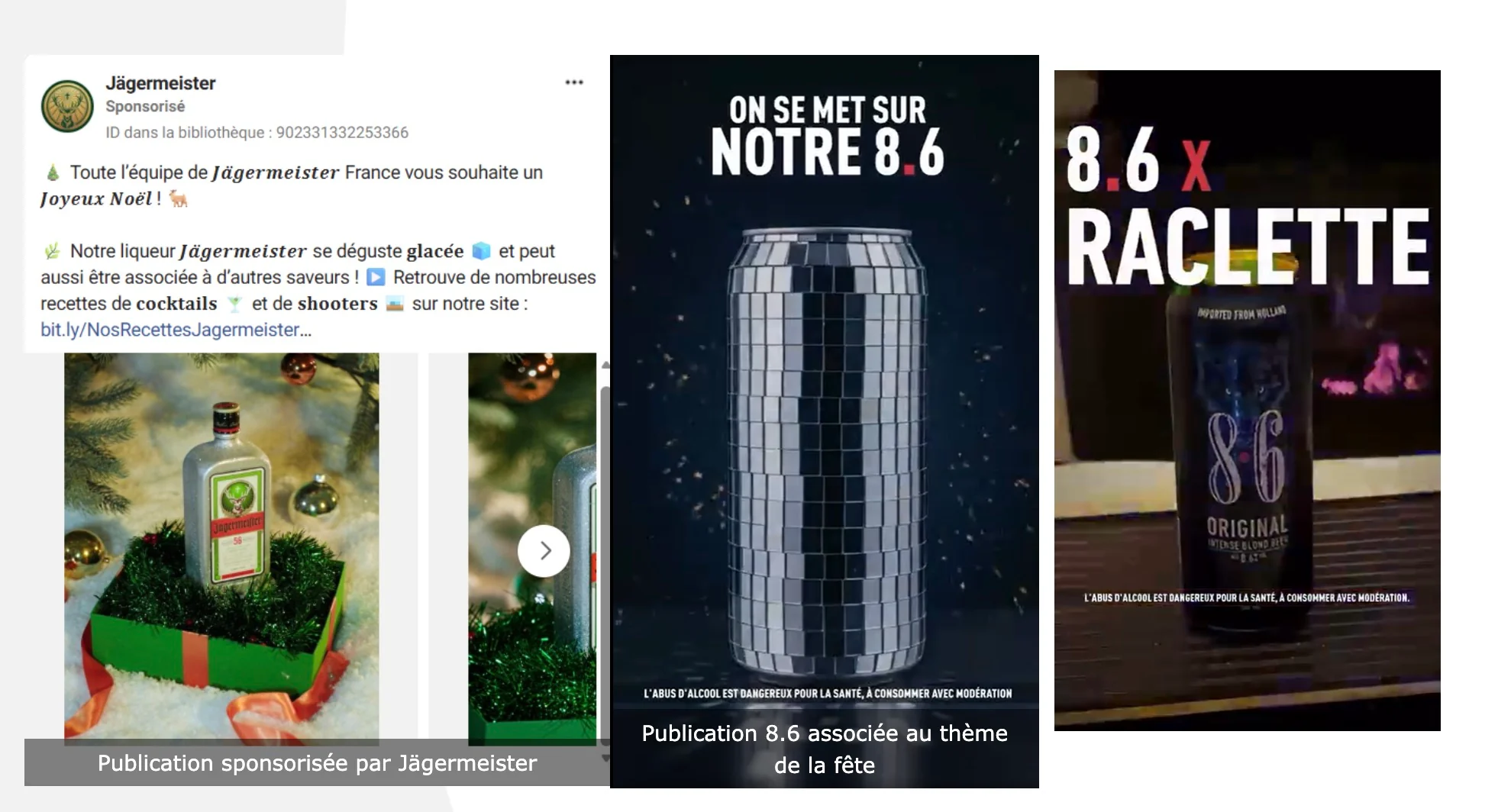
In the examples reported, the association says it has spotted mixology recipes, surveys, quizzes, viral competitions or calls to share with its friendly circle. For the Internet user, the message can then be part of an entertainment experience, much more than a traditional advertising display.
What do Addictions France’s observations show?
According to figures from Addictions France, 20 brands were observed on Meta platforms. BrewDog would come in first with 1,550 pieces of advertising content spotted over one year, ahead of Jägermeister, with 655 pieces of content, and Gérard Bertrand wine, with 630 pieces of content. The average indicated for the other brands observed is 210 sponsored content per year.
 © Addictions France
Another element: in a sample of 54 advertisements identified among the content of these brands, 52% would exceed the framework of the Evin law according to Addictions France. The reasons put forward relate, for example, to the presence of characters or celebrities, references to tattoo artists, competitions or incentives to interact with a community.
This point is important: these findings do not replace the analysis of a judge. The association regularly takes legal action against brands or influencers, but each content must be assessed in light of applicable law. Le Monde recalls the conviction of Heineken in December 2025 to two fines of 50,000 euros by the Paris criminal court, a case on appeal.
Why does this also concern the health of young people?
The debate is not only legal. Public Health France and the OFDT document the exposure of young people to alcohol marketing, particularly via social networks and influencers. The available studies above all show associations between exposure to alcohol marketing and consumption by young people: they support the existence of an increased risk, without of course making it possible to attribute a direct causal effect to each isolated content.
The report is also part of a series of work on influencers and alcohol on social networks. Addictions France, for example, mentions Saint-Germain elderberry alcohol, spotted in 87 publications from 35 influencers. According to the association, these collaborations can generate numerous reactions, comments and shares, which increases the visibility of brands.
Faced with this volume of content, Addictions France is calling for a ban on alcohol advertising on social networks and, more broadly, on the Internet, as is already the case on television. For users, a benchmark remains useful from now on: an attractive, humorous or participatory publication around an alcoholic drink can also be a promotional messageeven when it blends into the background of the news feed.