
After cancer, another battle begins. You have to get back to daily life, monitor your health and deal with treatments and their long-term effects. Because even when the tumor is controlled, the risk does not disappear completely: heart and other cancers can continue to threaten health.
It is in this “after” that an American study is interested. She suggests that the type of fat eaten after prostate cancer may matter more than you think.
After the diagnosis, the heart also becomes an issue
Researchers from Harvard and McGill University analyzed data from 4,884 men with non-metastatic prostate cancer, followed for a median of 12.8 years. The participants, aged around 70 years at diagnosis, regularly recorded their diet.
Of the 3,040 deaths recorded during follow-up, 803 were linked to cardiovascular disease, 499 to other cancers and 441 to prostate cancer.
A result that shifts the gaze: after the diagnosis, preserving health does not only consist of monitoring the tumor.
“Our results suggest that diet after diagnosis may be a modifiable component of survivorship management, broadening the focus beyond initial tumor control. Protecting cardiovascular and overall health is an essential part of prostate cancer care.”explains Lorelei Mucci, professor of epidemiology at Harvard.
Saturated fats: the signal that calls out to researchers
Men who consumed the most saturated fats had a 24% higher risk of death from all causes to that of the men who consumed the least.
In absolute figures, their estimated risk of death at ten years reached 26.4%, compared to 23.4% in the group consuming the least saturated fats. Or approximately three additional deaths per 100 men.
Conversely, researchers observed favorable associations when certain fats were replaced by others. Replace approximately 10% of calories from animal fats from vegetable fats was associated with a 16% reduction in the risk of death. Replacing 5% of calories from saturated fat with monounsaturated fat was associated with a 20% reduction.
“The central message is not simply to “eat less fat”. But the type and origin of fats seem to matter”underlines David P. Labbé, researcher at McGill.
However, we must remain cautious: these results show a
associationand not a cause and effect relationship. The study therefore does not allow us to assert that a dietary change would directly cause people to live longer.
Particularly marked cardiovascular risk
The signal is even clearer when it comes to the heart. Among men consuming the most saturated fats, the risk of cardiovascular death was 42% higher.
Several mechanisms could contribute to this association, including increased LDL cholesterol, chronic inflammation and certain metabolic disturbances. Researchers also point out that certain prostate cancer treatments can affect cardiovascular and metabolic health.
Diet could therefore constitute an additional lever to protect an already weakened body.
No question of eliminating everything: rather change a few habits
The message from the researchers is certainly not that of a drastic diet. It is more about gradually replace certain sources of fat with others.
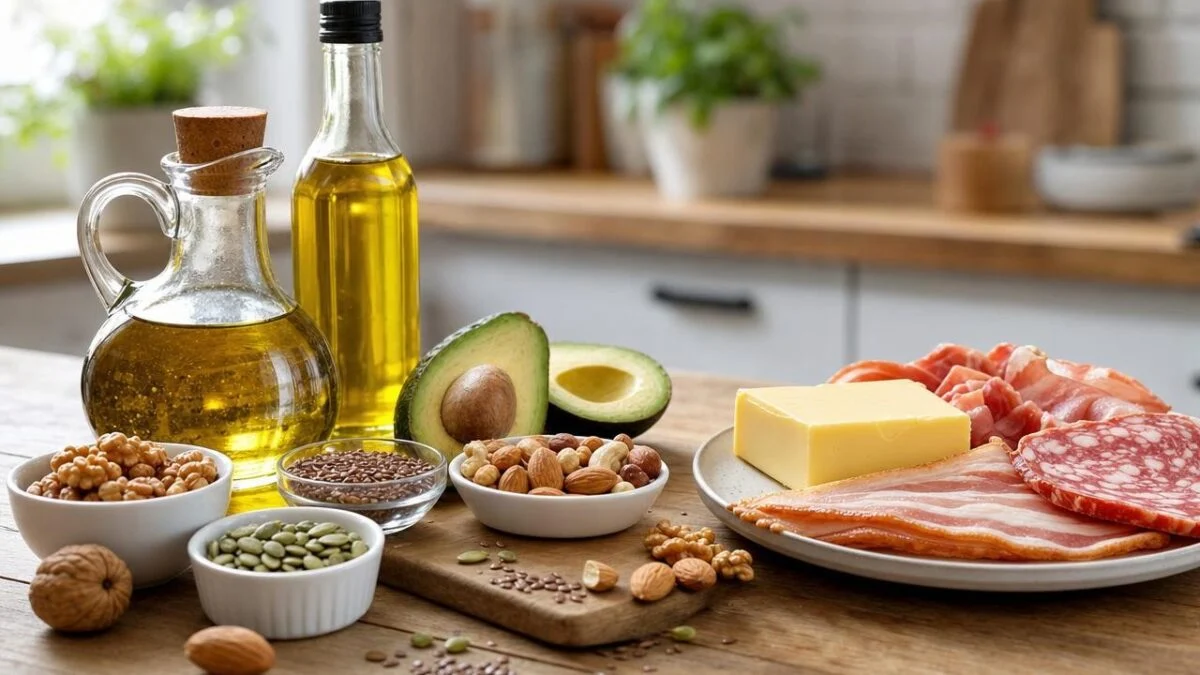
“The take-home message is to favor simple substitutions, choosing olive oil, nuts, seeds, avocados and other plant foods more often in place of foods high in animal or saturated fats.”recommends Edward Giovannucci, professor of nutrition and epidemiology at Harvard.
The study nevertheless has limitations. Participants were predominantly white men living in the United States and relatively advantaged. Other factors may also influence the results, despite statistical adjustments made by researchers.
A new step therefore consists of verifying these observations in more diverse populations and determining whether certain foods, types of fatty acids or treatments modify the associations observed.
After prostate cancer, there is no “miracle diet”. But this study reminds us that post-cancer is not just about monitoring a tumor. Taking care of your heart, metabolism and overall health could also help you live better in the years following diagnosis.