
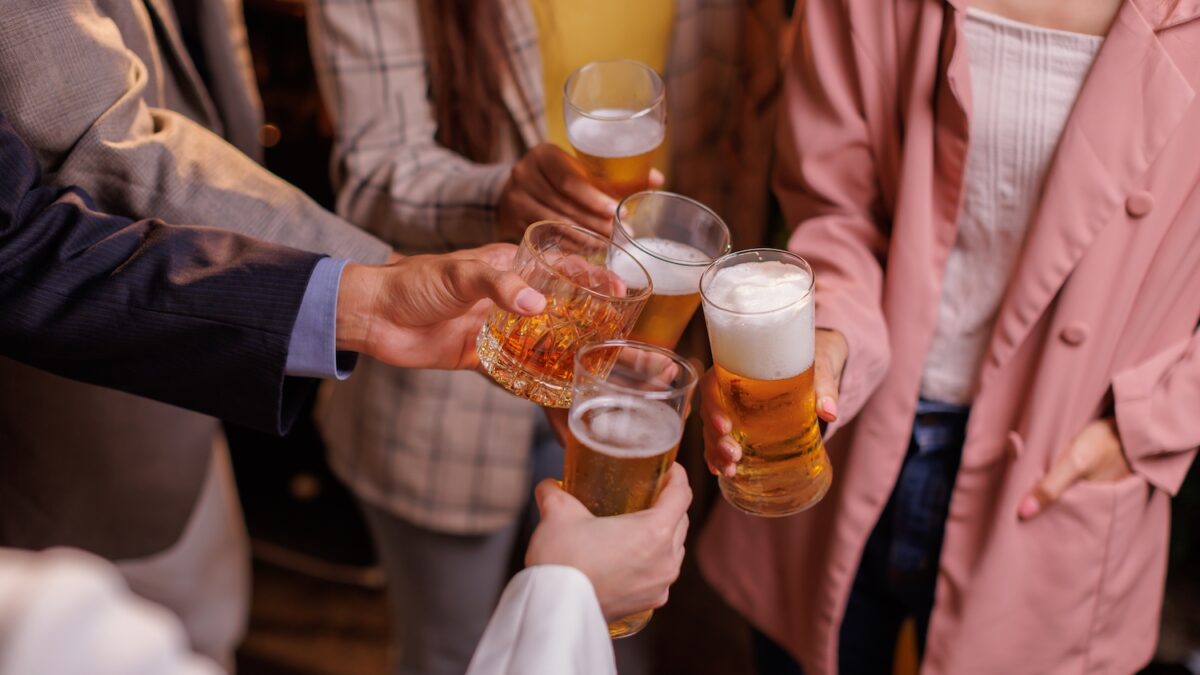
By pointing out the role of digital giants in the association between health and alcohol, the Addictions France association is opening a sensitive debate: that of a deeply rooted cultural trivialization, with very real consequences.
When digital extends a deeply rooted cultural reflex
Sometimes you just need to type a few letters. On certain smartphones or applications, writing “cheers” spontaneously causes beer, champagne or whiskey emojis to appear. A digital automation, almost invisible. And yet. For Addictions France, this detail is not one. On the contrary, it reveals a powerful collective imagination, where alcohol remains associated with conviviality, well-being… and paradoxically, with health.
This cultural reflex is not new. It has its roots in a time when alcohol was sometimes seen as beneficial. But today, the scientific knowledge is clear: alcohol is the second cause of avoidable mortality in France. It is involved in many chronic illnesses, including certain cancers, as well as in violence and accidents.
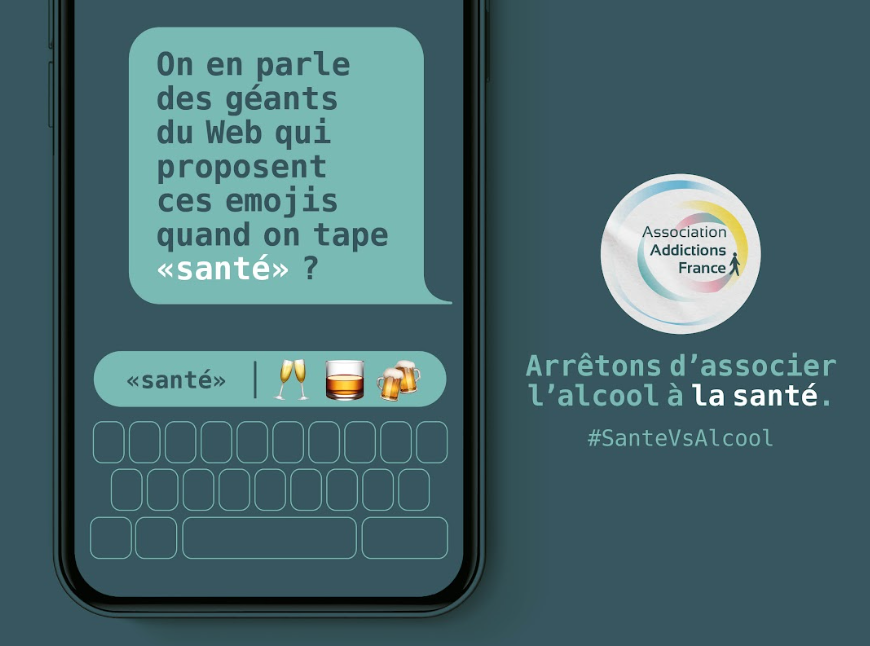 © Addictions France
Professor Amine Benyamina warns:
“When typing “health” causes glasses of alcohol to appear on our screens, this is not anecdotal: it is a sign of a profound and insidious trivialization of alcohol in our daily lives. Our SantéVsAlcool campaign aims to challenge this cultural and digital reflex that has become invisible, and to ask platforms to take their responsibilities..
A trivialization that is all the more worrying as it affects all audiences, including the youngest.
GAFAM, emojis and influence: a responsibility now questioned
At the heart of the “Health vs. Alcohol” campaign, a clear target: the major digital platforms. Google, Apple, Microsoft and Meta participate, via the Unicode consortium, in the creation and distribution of emojis.
But their role does not stop there. It is also their algorithms that suggest certain symbols based on the words entered. In other words, they influence, often without us being aware of it, our representations and our uses.
This is precisely what the association denounces: a form of repeated, diffuse exposure, which contributes to normalizing alcohol in contexts where it has no place.
To make this inconsistency visible, the campaign relies on a deliberately disturbing film. We see a woman about to be operated on, to whom her loved ones give… a middle finger to wish her “good health”. An absurd, almost shocking scene, which acts like a mirror: why accept, in digital language, an equally incoherent association?
An underlying question: when does a habit become problematic?
Changing representations to better protect health
Beyond the provocation, the campaign poses a major public health issue: that of representations. Because the trivialization of alcohol does not only occur through consumption itself. It insinuates itself into words, images, gestures. It shapes an environment where drinking remains socially valued, even encouraged. However, the consequences are very real. In France, alcohol is involved in a significant proportion of cancers, particularly digestive cancers, but also in psychiatric disorders, domestic violence and road accidents.
Faced with this, Addictions France pleads for a change of outlook. A collective awareness, which would also involve everyday digital tools. The campaign, deployed in several large cities and on social networks, is accompanied by a petition and educational content. A way to open the debate, without feeling guilty, but by questioning our automatisms.
Behind the screens, a collective responsibility
What this initiative reveals, ultimately, goes far beyond the question of emojis. It questions our relationship with alcohol, which is deeply ingrained in French culture. Can we continue to toast “to health” without questioning this paradox? How can we protect the youngest in an environment saturated with ambivalent messages? There is no simple answer. But one thing is certain: representations count. They guide behavior, sometimes quietly.
By making the invisible visible, this campaign invites you to take a first step. Become aware. Question your habits. And perhaps, gradually, evolve a reflex that has become too automatic to be questioned anymore.