
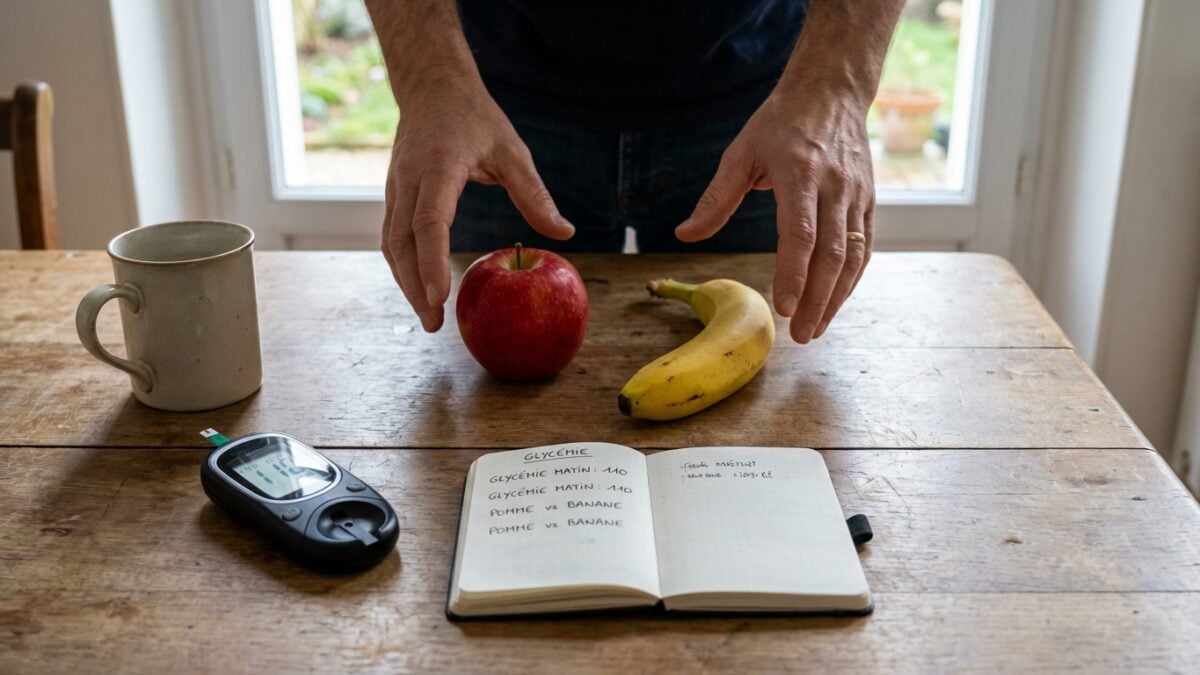
When choosing a quick snack, many hesitate between apple crunchy and a banana
very ripe. When we monitor blood sugarthis small gesture suddenly seems less simple.
These fruits are not the enemy: they provide fiber, vitamins and satiety, even when you watch your sugar. But between them,
banana or applewhich choice helps stable blood sugar levels?
Blood sugar, glycemic index and role of fruit fiber
To estimate the effect of a fruit on sugar, we look at its
glycemic index : the apple has a GI of 38, the banana around 52, a moderate level. “Apples generally have a more gradual effect on blood sugar due to their higher fiber content, especially soluble fiber like pectin, which slows the absorption of carbohydrates“, explained dietician Ginger Cochran, to EatingWell.
A medium-sized apple provides around 25 g of carbohydrates, 19 g of sugars and 4 g of fiber, especially if you keep the skin on. “If we look at the fruit on its own, apples generally have the advantage due to their higher fiber content and slower digestion compared to bananas“, says Jackie Topol, MS, RD. This lag limits how quickly blood sugar levels rise.
Bananas: carbohydrates, ripeness and blood sugar variations
A medium ripe banana provides around 27g of carbohydrates, 14g of sugars and 3g of fiber. According to dietitian Sheri Gaw, “The size and color of a banana impacts carbohydrate content and blood sugar response” And “A large banana will raise blood sugar more quickly than a smaller one because it contains more carbohydrates.”. Clearly, choosing a small banana already moderates the glycemic load of the snack.
When the banana is still green, its resistant starch dominates; as it ripens, it transforms into simple sugars and the GI rises. “Green bananas are less ripe and sweet; they contain more resistant starch and have a lower impact on blood sugar levels“, says Sheri Gaw. “Bananas and apples contain polyphenols and other plant compounds that may help reduce the risk of diabetes“, she adds, reminding us that these fruits remain interesting in the long term.
How to Eat Apple and Banana Without Raising Blood Sugar
To limit glycemic peaks, the way you consume the fruit matters almost as much as the choice of apple or banana. “I tell my patients who have prediabetes to limit what I call ‘naked carbohydrates,’ or carbohydrates eaten alone without any fat or protein.” says Jackie Topol, who recommends pairing them with protein or healthy fats.
“Research shows that light activity, such as a 10- to 15-minute walk, helps muscles pull glucose from the blood without needing a lot of insulin, leading to lower blood sugar levels after eating.“, she continues: a short walk after eating your fruit can therefore smooth the curve.