
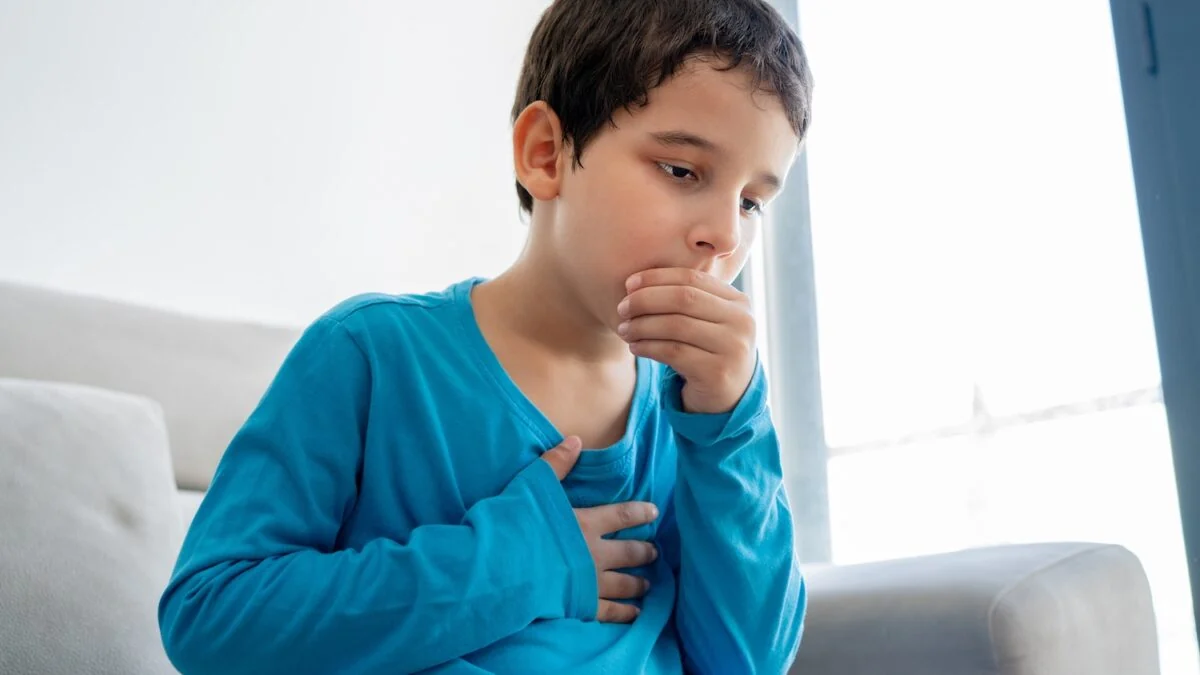
Your child tries to answer you, but the lack of air forces him to stop in the middle of his sentence. In an asthma attack, this detail should immediately alert: a child who is no longer able to speak normally because he is breathing poorly should be considered in an emergency situation. In this case, call 15, 18 or 112, without waiting for the situation to get worse.
This reminder comes as Public Health France reported, in its Oscour bulletin of November 12, 2026, an increase in visits to the emergency room for asthma attacks among 2-14 year olds during the week of November 2 to 8: +20%, or 230 more visits than the previous week. The bulletin does not allow us to deduce a precise cause.
Why is whistling not always enough?
In children, an asthma attack can manifest as wheezing when exhaling, coughing, a feeling of tightness in the chest or difficulty breathing. These symptoms vary from child to child and depending on the intensity of the episode.
But at home, the question is rarely theoretical: “Do I wait a little longer? Is it really serious?” The sound of breathing does not always give the answer. Some children wheeze a lot, while another child may seem quieter but make a significant effort to breathe.
The most useful benchmark is therefore discomfort: Does your child have to make a visible effort to breathe while at rest? Is his breathing rapid, difficult, unusual? Does he spontaneously try to stay seated because he breathes better that way? These elements matter as much, if not more, than the whistling alone.
To better understand the signs of a serious asthma attack in children, you must observe their ability to speak, their behavior and the movements of their chest.
What signs should call for help?
One sign should particularly attract attention: the child tries to respond, but has to catch his breath after a few words, or even in the middle of each sentence. This difficulty in speaking due to lack of air is one of the signs of seriousness described by a French professional source on severe acute asthma.
Another important sign: the “draw”. Concretely, the skin hollows between the ribs or at the neck and sternum when the child inhales. This reflects a significant respiratory effort. Unusual restlessness, extreme fatigue, sweating or difficulty coughing may also accompany a severe attack.
You don’t have to wait for blue lips to appear to react. Cyanosis, i.e. blue discoloration around the lips or face, is a serious sign. Its absence should not be reassuring if the child no longer speaks normally or struggles to breathe.
When in doubt, simply describe what you see on the phone: “He can’t finish his sentences,” “his skin hollows when he breathes,” “he’s breathing very fast,” “he sits still to breathe,” “he’s already had his rescue medication.” This information helps emergency services assess the situation.
Rescue treatment: what to do without wasting time?
If your child has asthma, they may have rescue treatment prescribed for attacks, separate from any basic treatment. The treatment is based on these complementary treatments, adapted to each child by the doctor.
When rescue treatment has been prescribed, follow the instructions given by the doctor or indicated in the child’s personalized action plan. On the other hand, you should not improvise a “standard” dose, nor wait too long to see if the medication is enough when the signs are serious.
The course of action is clear: in case of severe respiratory discomfort, call 15, 18 or 112. 15 corresponds to Samu for a medical emergency, 18 to firefighters in the event of danger or accident, and 112 to the European emergency number.
While waiting for help, leave the child in the position where he or she breathes best, often sitting. Avoid laying him down if he is more uncomfortable this way. Keep their treatment, prescription or action plan close to you if available, and note what has already been given.
These benchmarks also apply outside the home, for example with grandparents, on outings or at school. An adult who supervises an asthmatic child must know what to do when a child has an asthma attack and recognize the warning signs of acute respiratory distress.
The point of vigilance to be conveyed to anyone looking after the child is this: if the lack of air prevents him from speaking normally, the call for help should not wait.