
Ten years ago, deadly attacks hit Paris, leaving 132 dead and more than 350 injured. A day that no French person has been able to erase from their memory. “Ten years later, Paris remembers. On November 13, 2015, terrorists struck Saint-Denis and Paris right in the heart, its youth, its freedom and its joy of living. That evening, it was our entire humanity that wavered.”
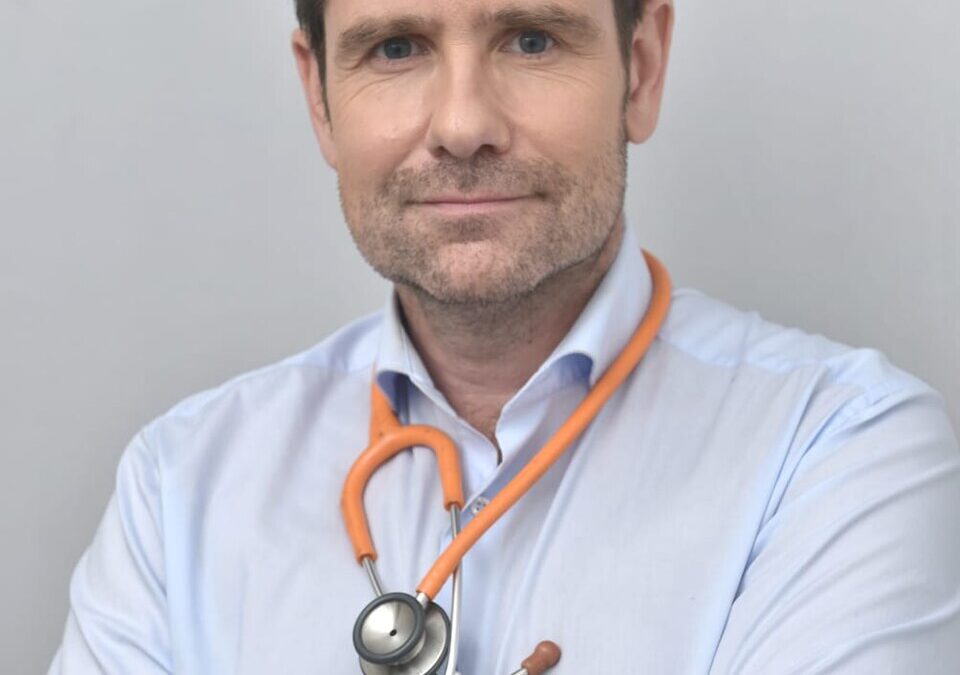
writes the mayor of Paris on the Bluesky social network. That day, Dr. Gérald Kierzek, emergency physician and medical director of True Medical, took care of the victims. He looks back on this chilling day.
We understood that an unprecedented drama was playing out in Paris
The evening of November 13 began like every other evening. Tired from their day, Parisians found themselves on the terrace to remake the world. It was also Dr. Gérald Kierzek’s program that evening with friends in a bar in the 9th arrondissement.
“With Guillaume, a nurse friend in the emergency room, we started receiving notifications from news channels and alerts on our cell phones. Very quickly, we understood that the scale of the event, affecting several sites, would lead to triggering the APHP’s White plan. Both trained in disaster medicine, we know this type of scenario all too well.”
Very quickly, Dr Kierzek and his colleague decided, after a few phone calls, to quickly reach the Hôtel-Dieu, near the Bataclan and the 11th arrondissement.
“In this type of attack, the victims’ first reflex is to flee and go to the emergency room located outside the immediate area, but close by. In Paris, so there is Saint-Antoine, Saint-Louis and the Hôtel-Dieu”, relates the expert.
All mobilized to care for bodies and minds
After a first attack near the Stade de France, the terrorists machine-gunned the terraces of cafes and restaurants, in several streets of the 10th and 11th arrondissements and the attack on the Bataclan begins. Faced with the succession of information reaching him, the doctor quickly understands the exceptional nature of the situation.
“In this type of situation, the SAMU and the firefighters intervene on site, ensure triage and direct the victims according to their condition, but all hospitals are mobilized “without regulation”, he assures. “After a call to the emergency room, we were confirmed that one or two victims, injured by gunshots, were already there. Which definitely convinced us to return to the service both on my scooter… without really respecting the highway code.” he confides.
Once arrived at the scene, “as we did not yet know the extent of the system or the number of victims, the first reflex was to evacuate the emergency rooms to free the boxes. Second step: prepare equipment. This is one of the specificities of the Hôtel-Dieu, since Charlie Hebdo in particular: the presence of a medical-psychological emergency cell for debriefings. The victims are therefore both physical and psychological”, assures the medical director of True Medical.
Victims will arrive throughout this tragic night. Faced with the horror, the responsiveness of the healthcare staff is exemplary.
“The White plan was launched quickly. The reception hall was refitted with beds, stretchers, and everything necessary to sort patients. The fact of coming in as reinforcement also freed the teams on site from the organizational part, so that they could concentrate fully on individual care…”, further specifies the expert.
An evening that will remain forever engraved in memories
Dr. Gérald Kierzek, medical director of True Medical, admits to being used to being around death.
“We are trained for this type of situation, and, in a certain way, protected by the walls of the hospital. It is a completely different story for colleagues directly engaged in the field. A debriefing, both psychological and organizational, followed these events,” he emphasizes.
However, despite his long experience as an emergency doctor, November 13 will remain a day engraved in the doctor’s memory.
“I remember a moment of panic, that evening of November 13, when rumors began to circulate about possible terrorists still on the run. As a precaution, we closed the hospital until the alert was lifted. That’s when we really became aware of our vulnerability…”,
he confides.
With hindsight, the medical director of True Medical admits that it would have been possible collectively to “do better“, better manage certain aspects.
“These war situations show that efficiency relies on speed, for example by taking victims to the hospital as quickly as possible – the famous scoop and run. That evening, the firefighters sometimes took three or four injured people into the same ambulance, whatever their condition. This is undoubtedly what saved many of them”, he concludes, with emotion.