
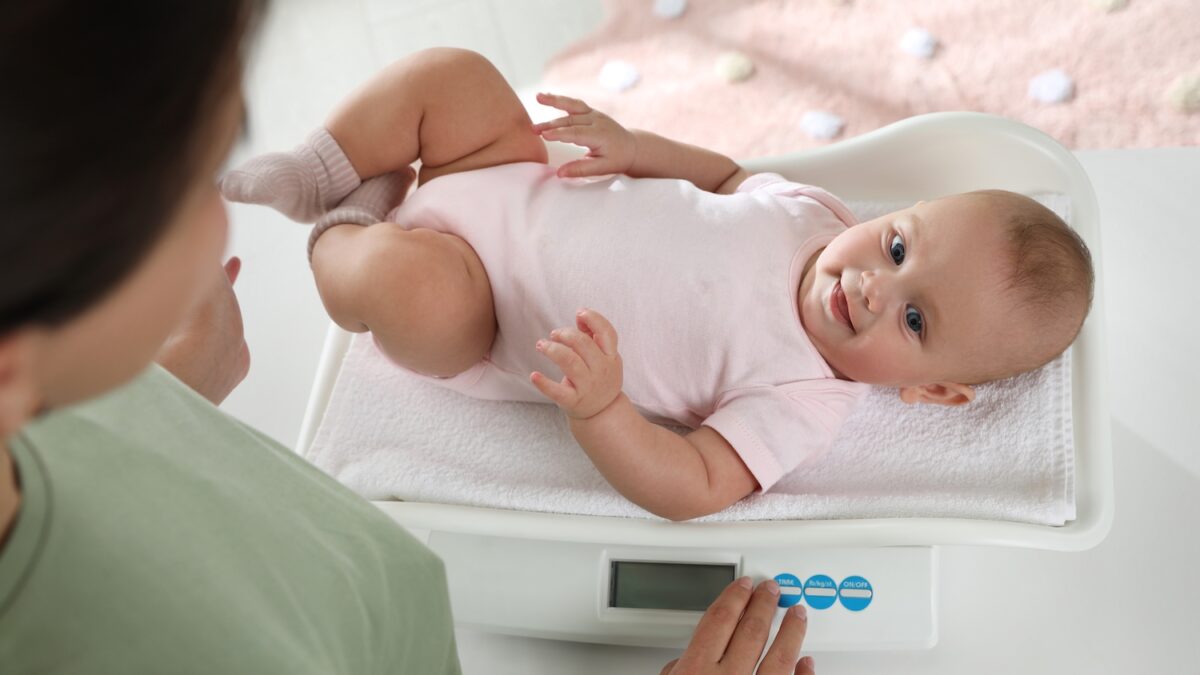
Comparisons on social networks, comments from those around you, fear of not being a “good parent”… This pressure can lead to counterproductive behavior. Psychologists and early childhood professionals explain why it is essential to regain confidence.
“Like grades at school”: when the curve becomes a judge
At first, it’s just a matter of monitoring your child’s growth. Then, little by little, some parents begin to monitor each weight gain, weighing their baby several times a week or adjusting the bottles to the nearest milliliter.
Sandra experienced this spiral. For her, the growth curve has become the main benchmark.
“This is our only reference point. They’re like grades at school, you don’t have to be below average“, confides this future mother to Parisian.
However, specialists point out, this famous average is often misinterpreted. Many parents think that a baby must absolutely be in the middle of the curve, even though each child has their own growth rate.
Comparisons, guilt… a pressure that sets in very early
Concern is often fueled by comments from those around them or images conveyed on social networks. Léna, mother of a three-month-old infant, admits to constantly comparing her son to other babies his age. Others end up doubting after hearing that their child is “too big” or “too small.”
Young mothers are particularly exposed to this guilt. Psychologist Clémence Prompsy explains that she sees regularly “women traumatized by little phrases heard from midwives”like the idea that you should systematically wake a baby to make him eat.
According to Élodie Emo, childcare nurse, this permanent quest for normality above all reflects the desire to be “good parents”.
Why weighing too often can become counterproductive
By wanting to do the right thing, some parents limit the quantities if their baby seems too round to them. Others, on the contrary, encourage him to eat more.
For Clémence Prompsy, this logic goes against the natural functioning of the infant.
“Today, when the child is at the top of the curve, some pediatricians recommend introducing bottle doses even though the child is supposed to stop when he is full. However, there is no such thing as a naturally bulimic baby.she explains to Parisian.
Specialists point out that before the age of two, putting a baby on a diet or worrying about their body mass index makes no sense. Above all, they invite parents to trust the signals sent by their child more.
The real message from professionals: look at the trajectory, not the number
The position on the curve ultimately matters less than its regularity. In other words, a baby can be naturally small, tall, thin or more robust without this being worrying. What should raise alarm is a sudden break in its growth, and not its place on the graph.
Dr. Gérald Kierzek, emergency physician and medical director of True Medical, specifies that “the growth curve is mainly used to identify a break or a change in direction, rather than a small one-off shift. It is looked at at each medical visit: very often the first year (every 1-3 months), then every 6 months until 4–6 years old, then at least once a year until the end of puberty“.
For him, we must be concerned and consult “if the curve breaks (height or weight which stagnates or slows down significantly), if the child changes several corridors, percentile, or if the height/weight remains outside the usual corridor for a long time (below the 3rd or above the 97th percentile), especially if this is accompanied by fatigue, loss of appetite or other symptoms“.
In the long term, excessive vigilance can even influence the relationship that the child will develop with food. This is why professionals invite families not to let a simple curve become a judgment on their way of being parents.
Basically, the health report was never intended to distribute good or bad grades: it is simply there to support each child in their own growth.