
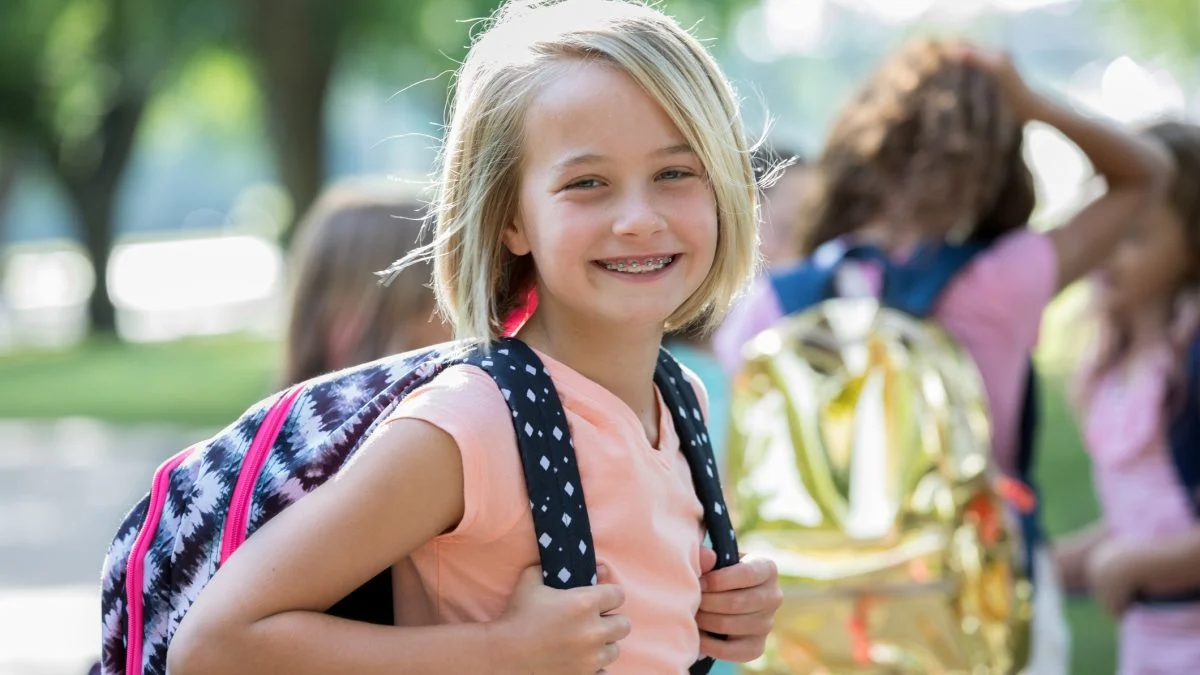
A child’s life is punctuated by changes that are synonymous with evolution and progress. The first change is the separation from one’s parents when it’s time for nursery or nanny. Then, entering nursery school is a new stage, and finally entering CP marks the transition to “grown-up” school.
Transition from kindergarten to primary school: what changes?
Nursery school is still a “mothering” environment where play and rest times are still very present, while in CP the child will sit longer, listen and work.
During preparatory classes, the young student will also find himself during recess and canteen times with schoolchildren much older than him (CM2 students are around 10 or 11 years old), which can be impressive and disturbing.
Prepare your child well for entry to CP
The most important thing is to explain to him, in a positive way, the entry into CP. Often, it is the parents who are anxious while the child is not at all. The start of the preparatory course must be presented as progress: “You’re coming to the big school because you’ve grown up and you’re going to learn new things!“.
Furthermore, from this age, the schoolchild can start new sporting and/or artistic activities. We can therefore use this lever to associate the entry into CP with “You will be able to start judo, dancing…“.
A good way to prepare the child is to show him around his new class (and possibly his new school). This approach is done more and more frequently at the end of the year when the teacher of the last year of kindergarten takes her students to discover the future class and the new teacher.
When it comes to timing, you have to let the holidays pass peacefully. Start preparing for back to school the last week of August. This preparation must be done with lightness and good humor through the purchases of supplies, equipment and clothing. Purchasing a schoolbag is often a symbolic act that cements entry into CP.
It is also necessary toexplain the organization during the school yearbecause children need to know and anticipate what will be put in place: the school schedules, who will accompany them and come to pick them up….
Pro tip
This explanation can be an opportunity to do an activity with him: build the schedule together, day by day, from the start of the school year, including the days and times. Illustrate it with symbols, drawings and photos. This way, the child will feel more involved in organizing their return to school and will therefore be less anxious.
My child is apprehensive about going to preparatory class
There is no reason for the child to dread his transition to primary school, because it is a natural continuation of his schooling. It is therefore necessary to discuss a lot with him/her and make him/her express the reasons why he/she does not want to go to school. There can be multiple reasons: fear of the new teacher, fear of not finding your classmates, apprehension about something new, etc.
Your toddler may also refuse to go to school because he simply doesn’t want to leave the holiday period.
If entering CP is accompanied by a change of school, it is important to physically visit the school when possible, or at least look at the buildings from the outside. And, above all, travel from home to school under the conditions that you will put in place at the start of the school year (on foot, by public transport, by car, etc.).
Also consider asking former kindergarten classmates who could go to the same new school as your child. Knowing that we will meet friends that we already know is reassuring.
His first “big” back to school, on the parents’ side
In practice, this change of class changes little for parents, except for evening homework, and even then, in CP, there is very little, if at all.
On the other hand, the transition to primary school can awaken memories of the start of the school year for parents who have themselves experienced difficulties, particularly when starting preparatory classes.
These memories can sensitize and emotionally weaken parents. Also, watch out for emotional contagion! You should not convey your own anxieties. You are you, and he is him. Put things into perspective to detach yourself and allow your children to return to school with complete peace of mind.
Back to CP: prepare for D-day
The day before school starts, and even a few days before, it is important to get back into good habits when it comes to bedtime and getting up. It is essential to get back into the rhythm of school life (going to bed early and getting up early) several days before the big day.
The day before, all school belongings as well as clothes must be prepared with your child, ready on a chair, in their room and in plain sight.
Accompanying the child as a couple is a good idea, but if this is not possible for professional reasons, you will simply have to explain it to them.
The big day: plan a breakfast composed of what your toddler particularly likes, wake him up in a happy and light way. Make this moment a celebration! You can even surprise him to add a touch of joy to this special morning. The atmosphere in which your child wakes up will determine his general state of mind, and particularly his emotional state on this first day of school.
Parents: good reflexes on the first day of school
First of all, it is very important to take some space when heading towards school. As traffic is particularly heavy on this day, getting stressed in traffic jams or on public transport should be avoided.
Arriving calmly on time, or even a little early, will allow you to spend time with your toddler in front of the school. In addition, he will have observation time and the pleasure of meeting his classmates from the previous year.
However, taking the morning off is not necessary, because once the child returns to the establishment, you have nothing more to do. On the other hand, planning to arrive at work later and leaving earlier to pick him/her up and go have a snack and buy some groceries is a good idea.
Once through the door, does she/he start to cry? Don’t panic: we console, talk, and reassure. There is no need to scold or punish your child, because they have the right to express their emotions.
Rest assured, in general, the crying fades quickly as soon as the young student gets together with his classmates. Not to mention that teachers are used to dealing with these back-to-school tears. They know very well how to distract schoolchildren from their grief by offering them activities.
Pro tip
If, as parents, we think we cannot hold back our tears, it is best not to accompany our child and to delegate this mission to our partner.
Namely: Since the implementation of the Vigipirate plan, parents can no longer enter the classroom, and sometimes even the school. Farewells are therefore said at the entrance to the school.