
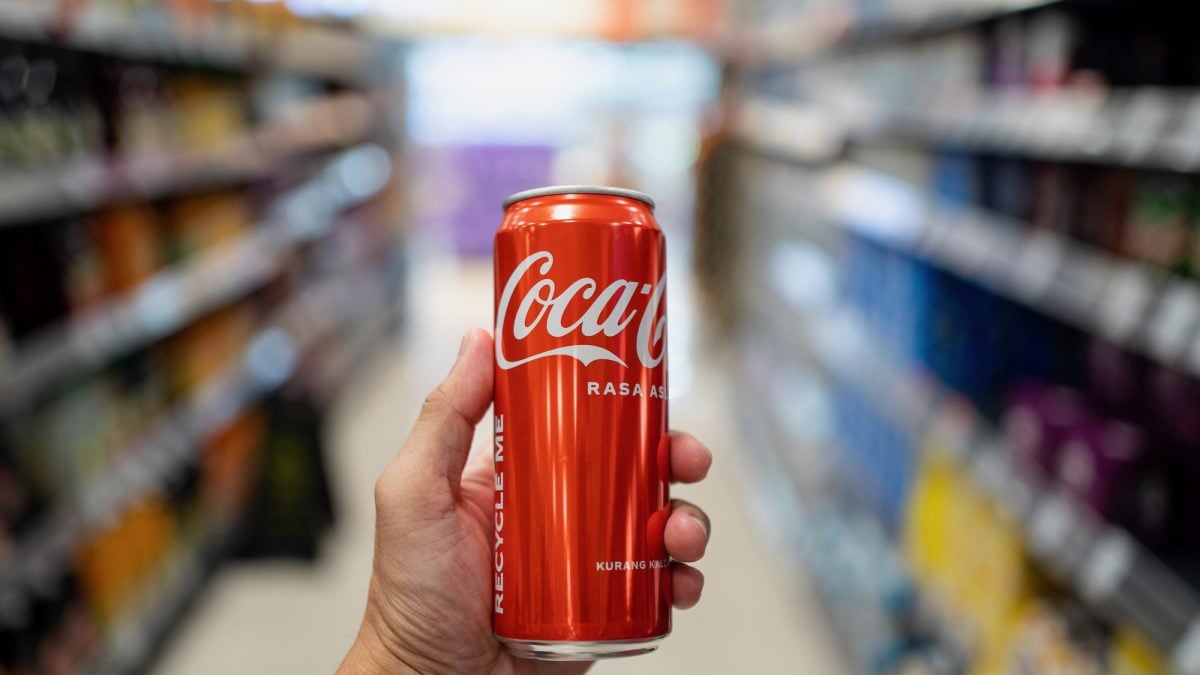
Contrary to popular belief, the composition of Coca-Cola varies depending on the country. But it also depends on “promotional” operations, visible on the shelves. According to an article published on the RMC Conso website, certain “discount” supermarkets such as Aldi, Auchan and Action, in fact offer lower quality Coca-Cola, purchased abroad.
The recipe for Coca-Cola varies depending on the country of manufacture and the local price of foodstuffs.
How do brands manage to sell cans of Coca-Cola at low prices in France? Quite simply, by bringing them from elsewhere. And this business has a name: manufacturers speak of a “parallel market” or “gray market”.
In fact, importing a bottle of Coca-Cola from Vietnam or Eastern Europe – rather than buying a bottle made in France – is indeed less expensive for manufacturers.
“It is therefore not uncommon to find Coca-Cola at Action for less than one euro per liter, compared to usually 1.3 or even 1.5 euros.“, specifies RMC Conso. In certain cases, the brands even allow themselves “promotional operations because they themselves bought this cheaper Coca-Cola.“
Result: the consumer has the impression of getting a deal, when in reality, he is enjoying poor quality Coca-Cola. Because, yes, importing cans has a cost for consumers’ health.
Foreign Coca-Cola: a composition that often leaves something to be desired
If Coca-Cola usually contains carbonated water, sugar, caramel (E 150d); an acidifier (phosphoric acid), natural flavors (plant extracts: vanilla, cinnamon, traces of orange and lemon, etc.) and caffeine, one ingredient in particular is often interchanged: it is sugar.
In France, white sugar – from beets – is in fact favored, which is not the case in other countries, where corn syrup, which is also found under the name “glucose-fructose syrup“, is favored. This is particularly the case in Bulgaria, where Coca-Cola syrup is made up of isoglucose, a derivative of corn starch, half the price of sugar, specifies the magazine Le Point.
A more affordable syrup, which is also of lower quality: its consumption increases the level of lipids (fats) in the blood and leads to an accumulation of fat in the liver. Glucose-fructose syrup is also accused of promoting the onset of cardiovascular diseases and/or diabetes.
Faced with these real risks, consumers are invited to be extra vigilant regarding the composition of their cans. “Good deals” often hide a completely different reality…