
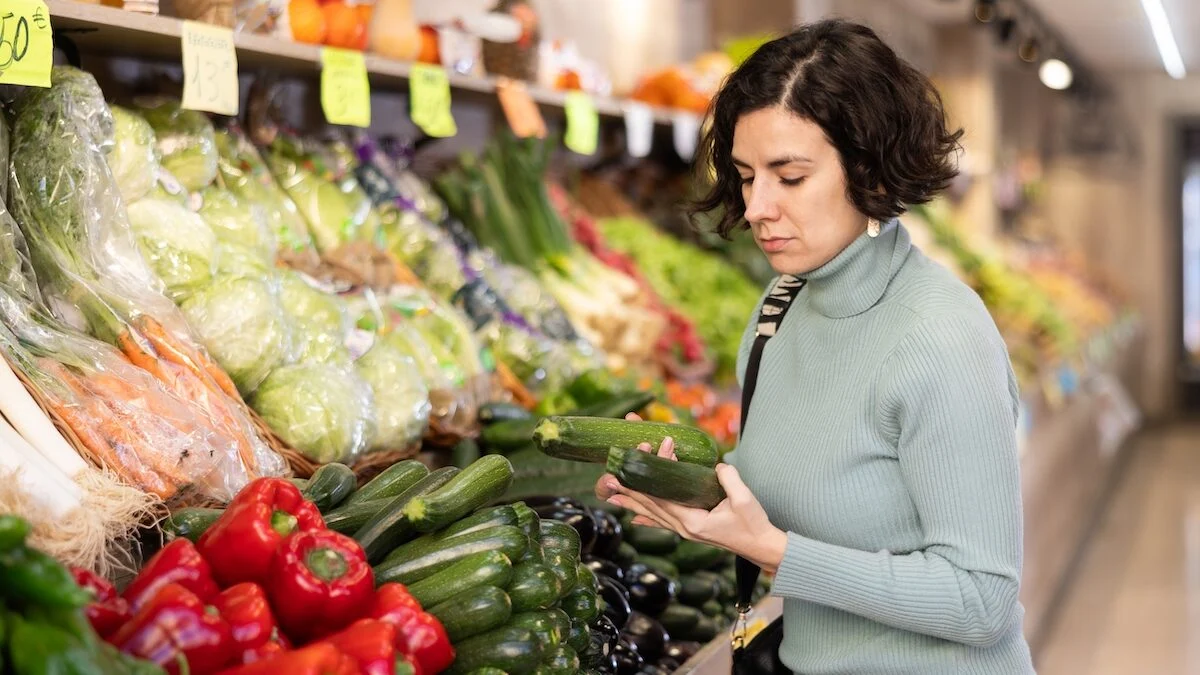
Does your vegetable basket seem more expensive than before? Does the price of tomatoes make you jump? It is not a simple impression. And unsurprisingly, this summer’s weather is no stranger to it. The extreme heat and lack of water have disrupted many French crops, with consequences that are beginning to appear on the shelves.
According to a survey of What to Choosebut also 60 million consumers, the prices of seasonal vegetables recorded at the Rungis wholesale market increased by 17% on average over one year in August 2026. Fruits are less affected, with an average increase of 2%. But behind these averages, the situations are very different depending on the product.
Harvests heavily affected by heat
For crops, the heatwave is not just a few very hot days. When temperatures remain high and water is lacking, plants develop less well and yields decrease.
Thus, the sectors report drops of 20 to 30% for carrots, onions, garlic and shallots, and losses of up to 50% for green beans, leeks and cauliflowers. In some farms, broccoli, small red fruits or prunes have even suffered much greater losses.
“Concerning storage vegetables such as leeks, cauliflowers, broccoli and squash, losses should reach 25 to 75% depending on the department,” explains Jonathan Chabert, member of the fruit and vegetable commission of the Confédération paysanne to 60 Million consumers. “This will cause them to become rarer between autumn and the first months of winter.”
Autumn production is also being closely monitored, particularly potatoes and leeks, whose harvests are expected to be difficult. And rarer products automatically become more expensive.
Which products are likely to be the most expensive?
Among vegetables, artichokes, lettuce, peppers and tomatoes are among the products that have suffered the most from the price increase so far. Certain fruits, such as rhubarb, blueberries or watermelon, have also been affected.
For fall 2026, the vegetables to watch as a priority are especially leeks, potatoes, cauliflower, broccoli and squash.
But there is no question of generalizing: on the contrary, certain products have decreased (like melon and zucchini). Developments depend in particular on harvests, demand and supply possibilities.
Overall, there is therefore no risk of a general shortage at this stage. On the other hand, certain sectors remain particularly fragile.
Less beautiful fruits and vegetables… but just as good
Another possible consequence of this difficult weather: products of smaller caliber or presenting more visual defects.
Smaller apples, blemished pears, small potatoes or less regular salads could thus be found more on the shelves. A development which can also represent an opportunity for the consumer, since these products remain perfectly consumable.
The Federation of Commerce and Distribution has also called on brands to relax their appearance criteria and to favor French production.
How to continue to eat vegetables without blowing your budget?
Faced with this increase, are we condemned to reduce our vegetable consumption? Not necessarily. For dietician-nutritionist Pauline Pied, the idea is above all to diversify your sources of supply and to compare prices.
Look at what’s on sale near you
First reflex: don’t limit yourself to the supermarket. “If you can, going around the markets, and looking to see if there are farms near you can give you some good surprises”advises Pauline Pied.
Local producers can sometimes offer attractive prices, especially when they sell their production directly. Vegetable baskets to order (Amap) are also an avenue to explore.
The advantage is also to take advantage of the products available in abundance at any given time, rather than trying to systematically buy the same vegetables all year round.
Think about frozen
When fresh prices soar, the frozen food section can become an ally.
“Frozen vegetables are still much cheaper“, emphasizes Pauline Pied. While retaining valuable nutrients.
Green beans, spinach, peas, broccoli or mixed vegetables can easily complement meals. They allow you to maintain a regular consumption of vegetables without depending solely on fresh market prices.
Canned goods are also a good solution
Same strategy with canned goods. They can be particularly interesting when certain fresh vegetables become expensive.
Tomatoes, green beans, peas, mushrooms, lentils, chickpeas… The choice is wide. And for Pauline Pied, the main thing is to juggle between the different forms available rather than focusing solely on fresh products.
“This gymnastics necessarily takes more time than buying everything in the same place. But faced with the significant price increases that we are observing at the moment, we can still try to move between the local, the baskets, the canned goods, the frozen foods and to compare the prices”she summarizes.