
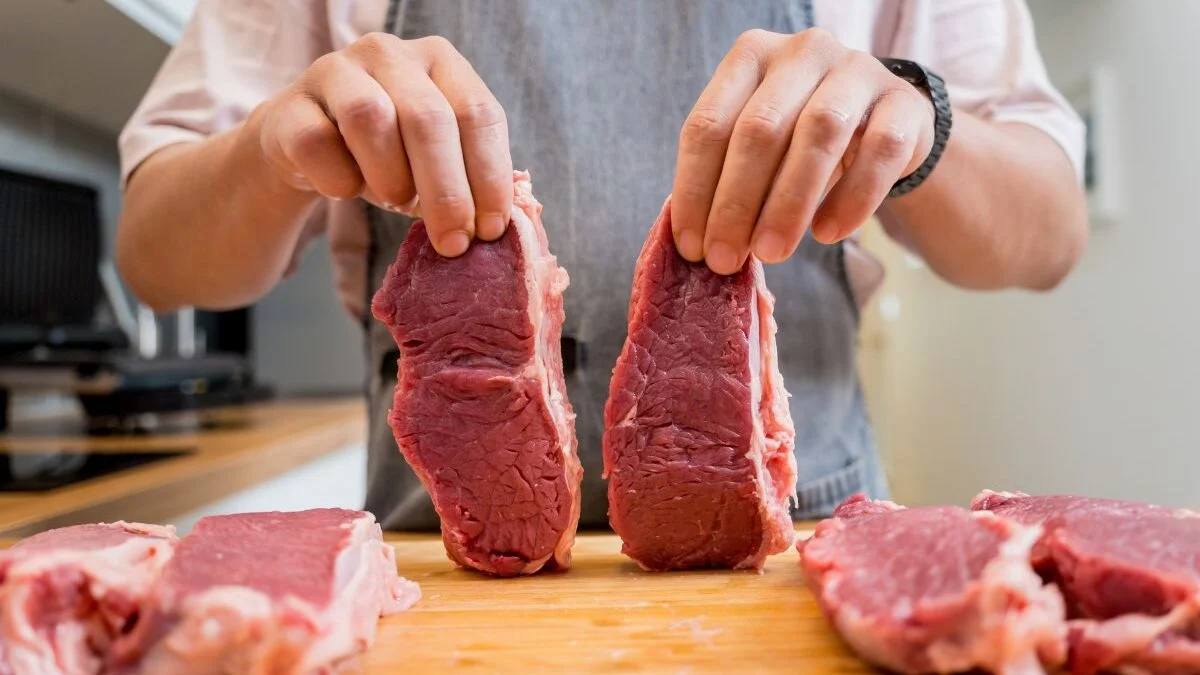
Where is the beef pear hidden and why is it so rare?
Taken from the inside of the thigh (in the edge of the thigh, just above the spider), the pear has long remained the best-kept secret of artisan butchers. Each hind limb only provides about 750 grams of this muscle, or barely 1.5 kg on an entire beast.
This tiny volume explains why these small parts run out in no time. To hope to cook it on the weekend, the first rule is to reserve it in advance with your maker.
The family of butcher cuts: a treasure trove of flavors
The pear belongs to the same category as the tab, the scape or the spider. These modestly sized pieces stand out for their exceptional taste profile.
“Red meat lovers sometimes forget to bet on what we call butcher’s cuts… They are generally modest in size, but particularly tasty,” underlines a gastronomy enthusiast.
Since the muscle works very little while it is alive, the fiber remains particularly tender under the tooth. Its discreet marbling gives it juice and roundness in the mouth. In the kitchen, it is a very versatile piece: it works wonders pan-fried, prepared on skewers for the barbecue, or even cut for an exceptional fondue bourguignonne.
How to ask your butcher for it and cook it successfully
To obtain this exceptional piece, do not hesitate to ask your artisan directly: “Do you have any beef pear, the butcher’s cut in the thigh?” If everything has already been sold, just ask them to reserve a piece for your next visit.
When it comes to stoves, simplicity is key:
- Favor short cooking in a pan or grill, preferably medium or rare;
- Aim for an ideal core temperature of 50 to 52°C to preserve its softness;
- Sprinkle the piece with hot butter at the end of cooking;
The key action: let the meat rest for 5 minutes under a sheet of aluminum foil before slicing it perpendicular to the grain.
Finally, remember that according to ANSES and the National Nutrition and Health Program (PNNS), consumption of red meat should not exceed 500 g per week. Dietitian Amélie Curpain confirmed this information in True Medical: “It is recommended to limit your consumption of red meat to 500 g per week. On the other hand, there are no real restrictions for poultry“.
She also advised favoring lean cuts, such as beef tenderloin, in order to cover your protein needs while limiting saturated fats.