
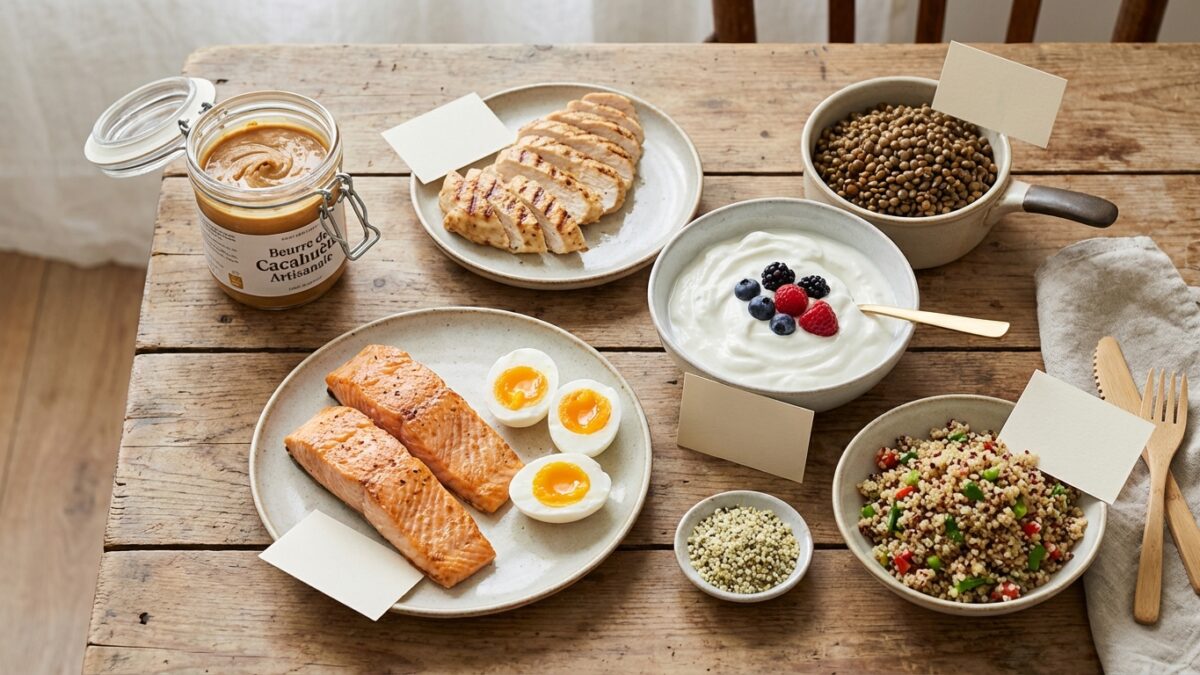
In many kitchens, the jar of peanut butter serves as a joker when it comes to adding a little protein to the sweet pleasure. The body’s needs are greater. “Protein is essential for building and repairing every cell in your body“, explains Ayla Barmmer, founder of FullWell Fertilityinterviewed by Vogue. She recommends around 1 g of protein per kilo of weight for a sedentary adult, 1.6 to 2.2 g for an active person, and 1.2 to 1.5 g after age 65.
Why is it not the richest food in protein?
Often seen as a miracle food, peanut butter is not so exceptional: “While they can and should be part of your rotation, don’t expect things like peanut butter to be a significant source of protein in your diet“, specifies the founder. “They will give a little boost but it just takes too much volume and calories to meet your protein needs with them. For example, it would take 679 calories of peanut butter (7 tablespoons) to equal 175 calories of a three-ounce serving of lean meat“.
Concretely, a tablespoon of peanut butter provides around 6 g of protein, but above all a lot of fat and calories. It’s mostly a source of fat with a little bonus, while the real foods richest in protein are found elsewhere.
The real animal protein bombs
To quickly fill your quota, lean meats and fish remain the champions. Chicken breast provides approximately 26 to 31 g of protein per 100 g, and lean beef or pork 22 to 28 g. As for fish, 100 g of tuna provides 24.4 g of protein, salmon 25.92 g, cod 19.36 g and mackerel 25.45 g.
Eggs are a useful reflex. “Eggs should definitely be part of your weekly rotation“, insists the expert.”Eggs also have a good dose of choline which supports the brain, liver and gallbladder“.
Greek yogurt complements these animal proteins: “From a nutritional standpoint, Greek yogurt generally has significantly more protein, often twice as much! And fewer carbs than regular yogurt“, explains nutritionist Heather Hodson to NYU Langone Health.
And if you are vegetarian…
“This grain-like seed is one of the few sources of complete plant protein providing about eight grams per cup“, says Ayla Barmmer about quinoa. “It is also rich in magnesium and fiber“. Two tablespoons of hemp seeds offer as much protein as two egg whites.
To achieve these intakes, several guides suggest aiming for around 25 to 30 g of protein per meal, plus a small snack.