
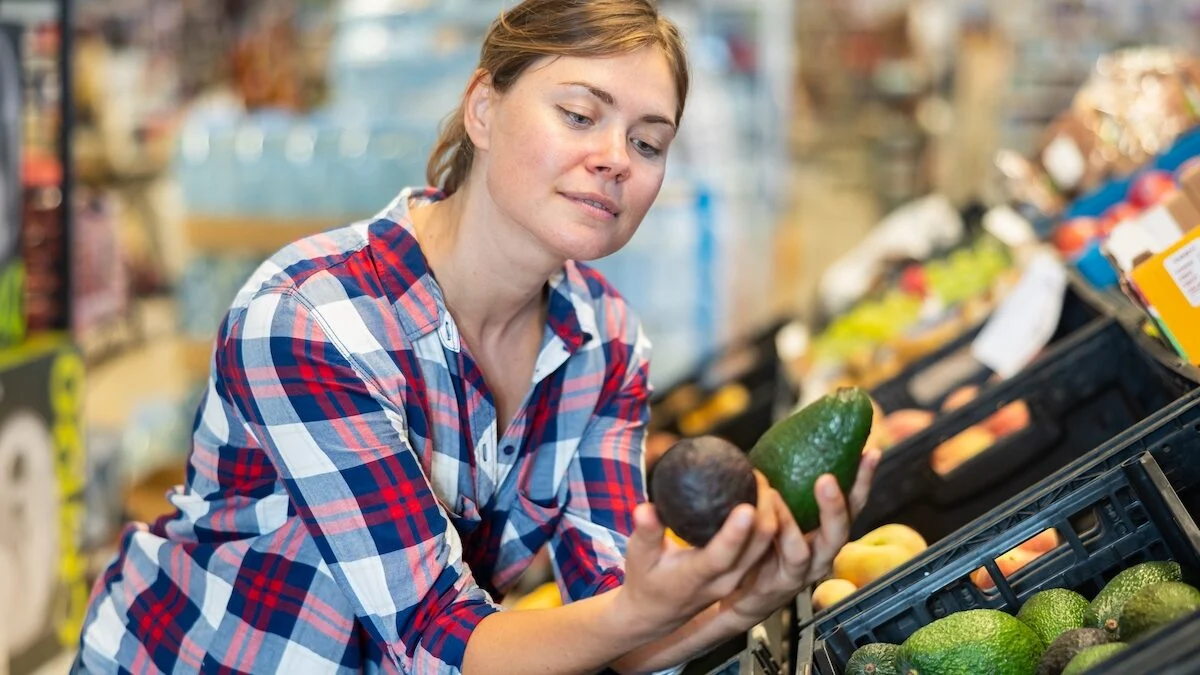
Have you ever noticed that the avocados sold on our shelves have two colors: black (or very dark) and green, a little more intense? This difference is not due to the maturity of the fruit, but rather to two different varieties… which do not have quite the same advantages.
Behind their appearance are actually two stars of the stalls: the Hass avocado, recognizable by its dark and rough skin, and the Fuerte avocado, smoother and very green. Texture, taste, uses in cooking… each has its own specificities. But should we favor one for health? Pauline Pied, dietitian nutritionist, helps us see things more clearly.
Two varieties with very different textures
Hass, the most consumed black avocado in the world, seduces with its very creamy flesh and its almost buttery taste. “It’s the one we generally use for guacamole, because its texture lends itself very well to crushing”explains Pauline Pied.
Conversely, Fuerte, greener and with smooth skin, has firmer flesh. “It holds together better when cut into slices, which makes it useful in salads, poke bowls or sushi,” specifies the specialist.
The taste also differs: Hass is often softer and richer on the palate, while Fuerte has slightly fresher and sometimes a little tangy notes.
Is there a better avocado for health?
Good news: the two remain excellent nutritional allies. Rich in fiber, vitamin E and vitamin B9, they also provide “good fats”, in particular monounsaturated fatty acids known to be beneficial for the heart.
However, some analyzes show some nuances between the two varieties. Fuerte would be slightly richer in phytosterols and certain unsaturated fatty acids, while Hass would contain more iron, copper and manganese.
But for Pauline Pied, these differences must be put into perspective.
“The nutritional differences remain quite small. It also depends enormously on the growing conditions, the soil, the light and even the degree of maturity of the fruit,”
she emphasizes.
The nutritionist even compares this to apples grown in different regions: “An apple from the south and an apple from the north will not have exactly the same nutritional qualities. It’s the same for lawyers.”
Black doesn’t mean “more mature”
Contrary to popular belief, a black avocado is not necessarily riper than a green avocado. The color depends above all on the variety.
On the other hand, touch remains the best indicator of whether an avocado is ready to be eaten. A fruit that is slightly soft under the pressure of the fingers will generally be ripe. If it is very hard, it deserves a few more days at room temperature.
Which one to choose at the supermarket?
For Pauline Pied, everything ultimately depends on the desired culinary use.
- For a guacamole or a very creamy toast: it is better to choose a Hass;
- For clean slices in a salad or makis: Fuerte will often be more suitable;
- For health: both remain interesting as part of a balanced diet.
However, be careful with the quantities. Even though it contains good lipids, avocado remains a high-calorie food. Count around 280 to 320 calories depending on the varieties and size of the fruit.
“The idea is not to demonize the avocado, but to consume it with balance, like all foods rich in fat”recalls the nutritionist.
In summary? Black or green, there really isn’t a bad choice. The best avocado will especially be the one that matches your tastes… and your current recipe.