
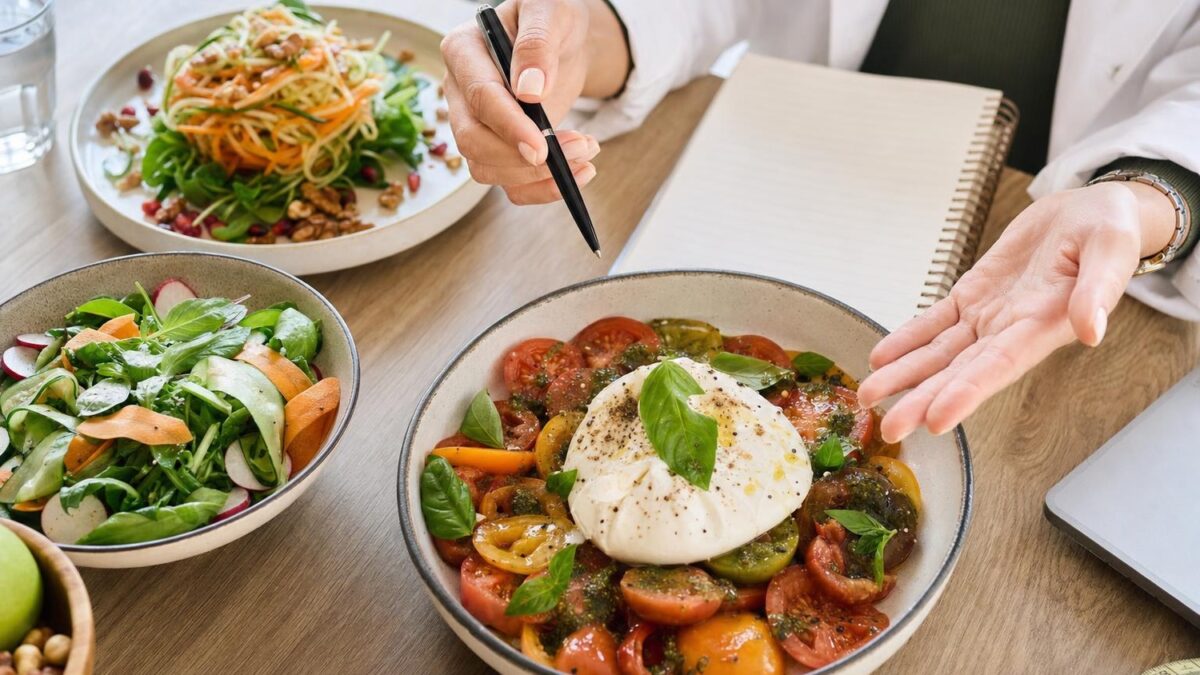
When starting a diet or simply looking to “eat better”, salads often appear to be the lightest choice. Green leaves, tomatoes, drizzle of olive oil… on paper, the plate seems healthy and reasonable. However, certain very trendy ingredients, such as avocado, nuts or even fresh cheeses, can quickly increase the calorie bill without you really realizing it.
In the podcast Responsible for food on RAC1, relayed by Men’s Health magazine, nutritionist Magda Carlas takes the example of burrata salad. She reminds us that a fresh and creamy cheese like burrata remains a food rich in fat. “Thinking that a salad with a large burrata and a few tomatoes constitutes a light dish is a wrong idea,” she says, referring to this choice often favored in restaurants to “keep it light”.
Burrata salad: a false light dish
The question “does burrata make you gain weight?” comes back regularly. According to the nutritional tables, 100 g of burrata provides approximately 270 to 330 kcal and 20 to 28 g of lipids, which is more than a classic mozzarella. A single ball of 100 to 125 g already represents almost 300 to 400 kcal, even before adding the olive oil, pesto or bread served alongside.
In the end, a burrata-tomato salad garnished with a drizzle of oil can easily reach 300 to 350 kcal for a 200 g portion, according to nutritional estimators like SnapCalorie. With a large 250 g burrata, the plate can quickly approach 700 kcal, the equivalent of a real complete dish. The problem is not that this food is “forbidden”, but rather that many mistakenly consider it just a light starter.
Burrata and cream cheese: Magda Carlas’ opinion
For Magda Carlas, the term “fresh cheese” can be misleading. “We would like cream cheese not to make you gain weight. It would be fantastic if a cheese as good as this didn’t make you gain weight. But, as always, the only food that does not make you gain weight is water… which does not make you lose weight either“, she explains.
The specialist, however, qualifies: “Fresh cheese contains more water than mature cheese and therefore provides less energy. But that doesn’t mean it’s not fattening. If we consume the same amount of both, fresh cheese will logically make you gain less weight.“
She also reminds us that no food, on its own, causes you to gain or lose weight: “Gaining weight or losing weight depends on your overall diet. There is no food that makes you lose weight, nor any that does not make you gain weight when consumed in large quantities. The only element without calories is water.”
Finally, the nutritionist emphasizes that fresh cheese has “lower nutritional density than mature cheese“It is often”more digestible“, but also brings “fewer vitamins and calcium than mature cheese“.
Can you eat burrata without feeling guilty?
Yes, provided you pay attention to the quantities and overall balance of the meal. “The richer a cheese is in fat and salt, the less you need to consume,” concludes Magda Carlas.