
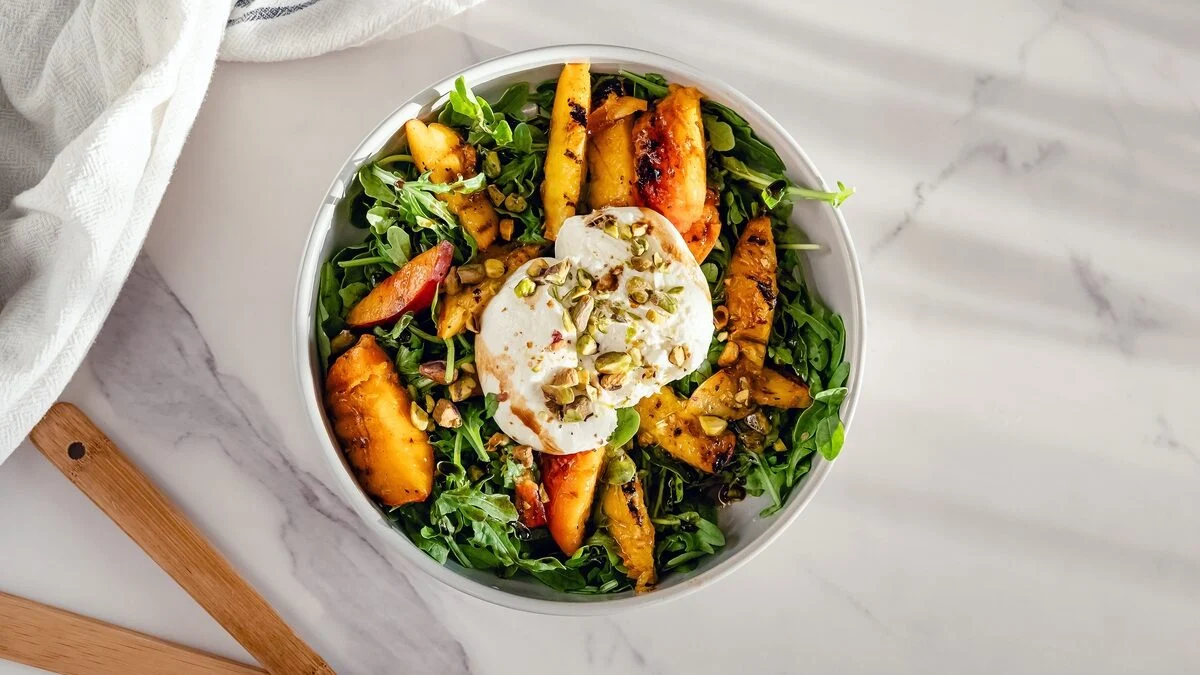
Your heart is torn between these two burrata references. You look at their origin, the list of ingredients… then you end up choosing the one that ultimately inspires you the most confidence. But was your choice really the right one? Here are the details that make all the difference on the label… and on the plate.
Burrata, a relatively rich cheese
It’s hard to resist its flowing heart, especially when accompanied by a few tomatoes and a drizzle of olive oil. But burrata remains a fairly rich cheese. Something to keep in mind when putting together your plate.
“Burrata generally provides 250 to 350 kcal per 100 g, with around 20 to 30 g of fat, including a significant portion of saturated fat. A 125 g burrata can therefore easily represent 300 to 400 kcal, without counting the olive oil, pesto or bread that accompanies it. It therefore has its place in a balanced diet, but must nevertheless remain a cheese “pleasure”, that is to say occasional” recalls Julie Boët, dietitian-nutritionist.
The subject is therefore not to avoid – or not – burrata, but rather to choose the right quantity to consume, i.e. a portion of 60 to 100 g)… and its accompaniment. A whole burrata with bread, oil and cold meats is not the same meal as a portion of burrata served with a large quantity of vegetables.
And if you fall for it, there’s no point feeling guilty: this famous Italian cheese is (also) full of good nutrients: proteins (15 to 20 g per burrata), calcium, phosphorus and vitamin B12. Just that!
What to look for on the label?
To choose a “good” burrata, your first instinct in the supermarket should be… to return the package. The list of ingredients often says much more than the pretty visual displayed on the packaging.
“A traditional burrata has a relatively simple composition: milk, cream, salt, lactic ferments and rennet, depending on the recipes. The shorter and more understandable the list, the better. Also look at its nutritional values, in particular the fat and salt content, because it can vary from one reference to another”,
then advises the nutritionist.
The presence of cream is also not a bad sign – quite the contrary. It is even essential to make the burrata perfectly creamy.
The origin of burrata, a key element
And yes! A simple Italian flag on the packaging is not enough to guarantee the Italian origin of the milk or its quality.
“But there is still a protected geographical indication: the “Burrata di Andria & Buffala IGP”. It guarantees compliance with specifications and a defined geographical area. It is a good benchmark if you are looking for a traditional burrata” specifies the specialist.
On a daily basis, how to go well with burrata?
This is often where everything plays out. Because burrata does not generally arrive alone on the plate… Also, remember to combine it with vegetables (tomatoes, zucchini, eggplant or other seasonal vegetables) and not multiply the fatty ingredients around the cheese.
“Simply combine it with a good quantity of vegetables, possibly a little bread or a starch, a source of protein and limit other very fatty additions such as a large quantity of oil, pesto or cold meats. It is above all the overall balance of the meal and the frequency of consumption that count” recalls Julie Boët.
And if you add olive oil… Also remember to dose it well!