
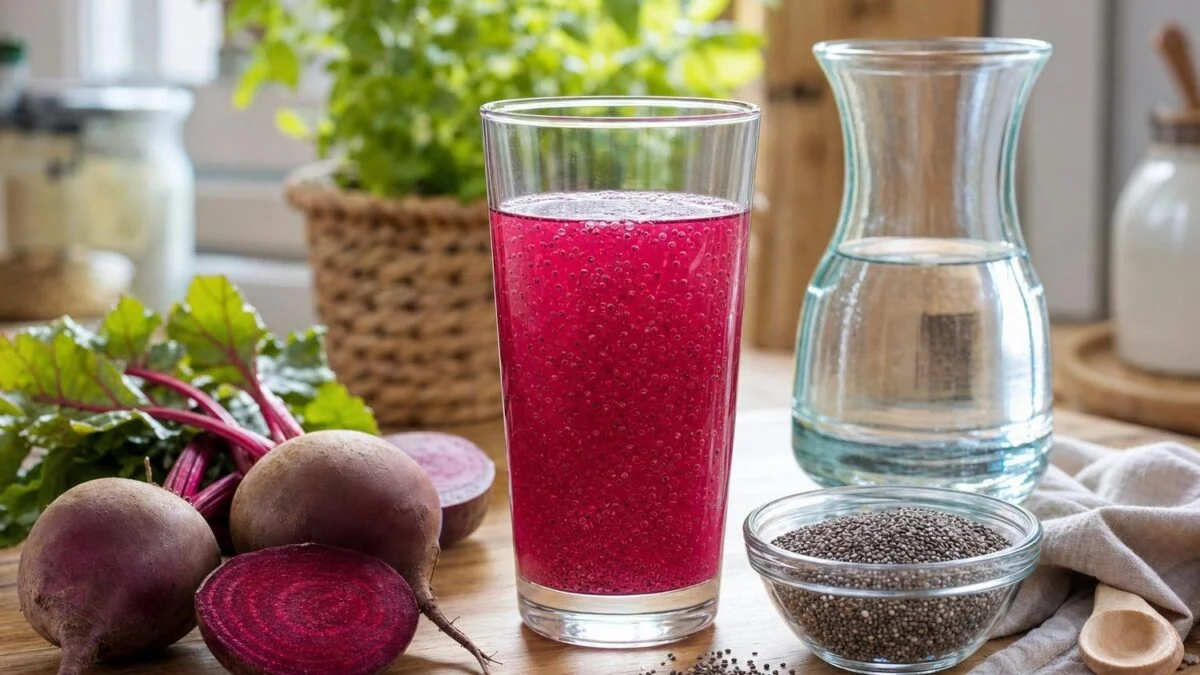
Imagine two glasses of beet juice, identical to the naked eye. In one, the nitrates naturally present in beets are preserved. In the other, they have been largely removed. It is precisely this type of comparison that allows researchers to know if these compounds can play a role in blood pressure.
The subject is of interest because dietary nitrates can be transformed by the body into nitric oxide, a molecule involved in the dilation of vessels. From there to making beet juice a cure for hypertension? The scientific data is more nuanced: it shows a signal, but not sufficient proof to replace medical monitoring or prescribed treatments.
Why compare two almost identical beet juices?
In a double-blind randomized trial published in
Hypertension68 hypertensive people drank 250 ml per day of beetroot juice for four weeks. Half received a drink rich in nitrates, the other half received beet juice depleted in nitrates. This method is important: it allows you to keep the taste, appearance and ritual of the drink, while isolating the effect of nitrates as best as possible.
Result: in this trial, the group that drank the nitrate-rich juice showed a drop in blood pressure compared to the control group. The effect was observed across several measurement modes, including in consultation, at home and over 24 hours. This is what fueled the interest around beet juice and blood pressure.
But you have to keep the scale in mind: this is a short trial, with a drink prepared for research. It cannot be assumed that a store-bought bottle will have exactly the same effect, nor that a specific amount should be recommended to all hypertensive patients.
When we group the tests, the signal becomes fuzzier
A meta-analysis published in 2024 brought together 11 randomized trials, for a total of 349 hypertensive patients. It found a significant drop in systolic pressure measured in consultation, that is to say the “top number” recorded in the medical office, but with a level of certainty considered low and moderate to high heterogeneity. This result suggests a possible effect, to be interpreted with caution.
But the analysis does not show a significant drop in diastolic pressure, nor especially a clear drop when blood pressure is measured over 24 hours. Now this difference is essential:
lower blood pressure in the office does not necessarily mean lower blood pressure all day. The 24-hour ambulatory measurement, or ABPM, gives a more complete view of blood pressure variations in real life.
Another nuance: in a small crossover trial from 2024 conducted in 15 adults aged 56 to 71, already treated for their hypertension, four weeks of beet juice rich in nitrates did increase biological markers linked to nitrates, but did not show a significant difference compared to nitrate-depleted juice on 24-hour home or ambulatory blood pressure. This result is not enough to rule out any effect, but it reminds us that the profile of the participants, the treatments already taken and the method of measurement change the interpretation.
What can we learn from this when we are hypertensive?
Beetroot remains an interesting food in a varied diet. Its juice can please, provide plant compounds and occasionally integrate into eating habits. However, the available work does not make it possible to set a dosage, an ideal frequency or a medical indication. To take stock of the benefits and limits of beetroot juice, we must distinguish the nutritional benefit from a real treatment.
In France, the Haute Autorité de Santé reminds that the diagnosis of hypertension must be confirmed outside the office before starting drug treatment, except in a hypertensive emergency. This confirmation can take place through self-measurement or through an ambulatory measurement. Health Insurance also recommends following the objectives set with your doctor, monitoring your blood pressure according to the instructions received and not stopping an antihypertensive medication without medical advice.
If you like beetroot juice, you can talk to your doctor or pharmacist, especially if you are already receiving treatment. It should not lead to changing treatment alone, nor to relaxing validated measures: adapted physical activity, salt reduction if necessary, limitation of alcohol, smoking cessation, overall nutritional balance and regular monitoring. The diagnosis and monitoring of high blood pressure remains a medical matter, not a matter of miracle juice.
The point of vigilance therefore comes into play on a daily basis: a drink, even scientifically studied, does not in itself indicate whether blood pressure is controlled. It is the quality of the measures, their repetition in good conditions and the discussion with the caregiver that makes it possible to adjust the care.