
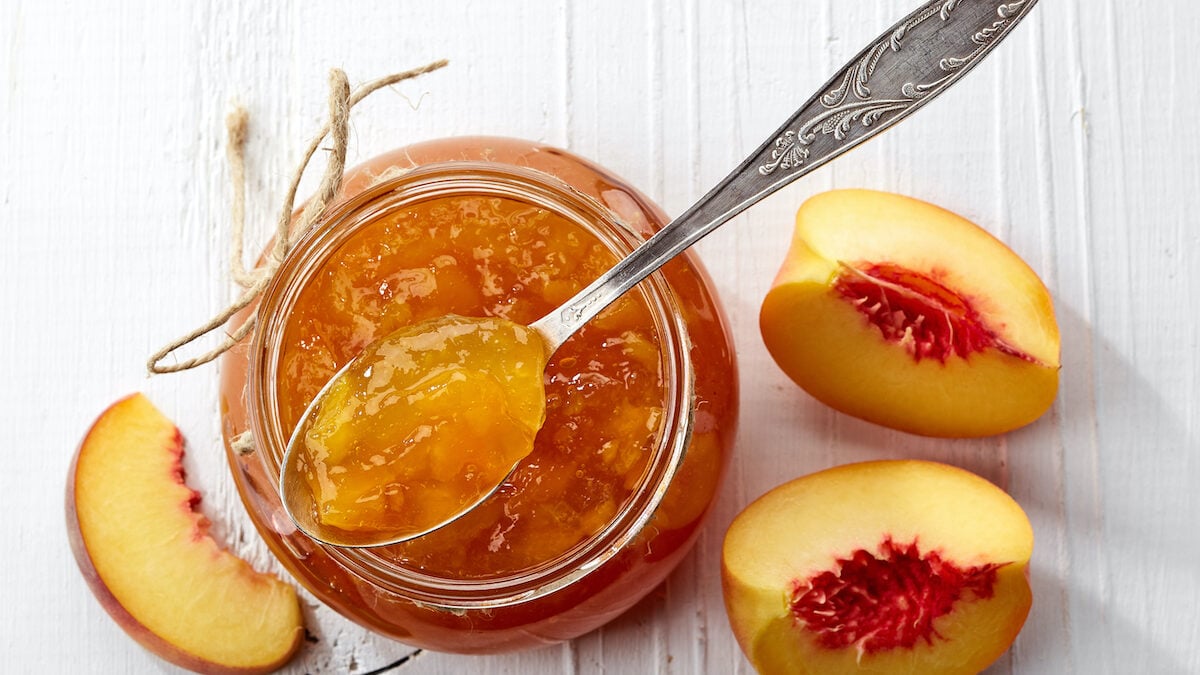
In the summer markets, seasonal fruit cagettes can make your eye. “What does it matter if some apricots or strawberries are a little damaged, we will make jams! “ Do you sometimes think. But is it recommended? Can too ripe or past fruits be consumed in this form?
The jam is not for too ripe fruits!
For the virologist Océane Sorel, aka @thefrenchvirologist, the anti-gaspi idea is not so famous. “”Make jam with moldy fruit. It’s like making a detox juice with a trash can ” Does she directly attack her video on Instagram devoted to the subject.
There is, of course, a nuance to bring in this regard. In itself, a jam deserves still good fruit, to be tasty and consumable. If some specimens are damaged, due to a blow, or a little ripe, it remains passable. “”But turn all damaged areas “ advises the expert.
On the other hand, for “soft” fruits, such as strawberries, peaches, Océane Sorel recognized in a previous post the need to throw them away if they are too damaged. Indeed, the mold that develops in a humid and warm environment can slip much more easily into the soft fruit. “”And bacteria can take advantage of certain months to push around “.
But a simple and safe packaging for a homemade canned
However, apart from this small problem, jams are a great way to keep and use summer fruits. The virologist also specifies that the risks of botulism are rare or even almost non -existent.
“In acidic foods (pH ≤ 4.6), such as fruit jams or vinegar canned (e.g. pickles), clostridium botulinum spores are not developing well. There is therefore little risk of toxin formation in this type of canned and little risk of botulism.”
Most fruit jams can therefore be sterilized simply in boiling water, without necessarily needing a sterilizer. “”This does not kill spores but acidity prevents their development “.
Precious precautionary for successful jams
The fact remains that making jams, which is no longer just a grandmother activity, must respond to strict hygiene rules. For that
- Wash your hands well before cooking;
- Sterilize your pots and lids before using them;
- Follow the recipes well: some fruits are not very acidic and a sterilization step in a sterilizer (in this case, just turning the jar is not enough) and/or the addition of lemon juice is then necessary;
- Keep your jams in a cool, dry and sheltered location.