
In France, major cancer treatment is often decided without patients really having a say. Radiotherapy, used at one time or another for more than half of people with cancer, remains frequently proposed as medical evidence rather than as a discussed choice.
According to a vast study by the League Against Cancer, carried out among 3,669 patients and summarized by the Societal Cancer Observatory, 50.6% of those surveyed say their opinion was not asked regarding their treatment by radiotherapy. Among them, 28.5% even believe that their consent was not requested. “We must work on this point, so that consent and acceptance of treatment are effective. A patient who accepts treatment will adhere much better to care“, insists Catherine Simonin, president of the Society and health policies commission at the League against Cancer.
Radiotherapy: what the League against Cancer study shows
The League Against Cancer notes that 27% of patients say they were not informed of the possible side effects or risks of radiotherapy, while 88% say they experienced at least one adverse effect during treatment and 83% again after the end of the radiation. Burns, fatigue, digestive or oral problems often develop over time. For the association, “these results reflect significant limits in the system’s ability to involve sick people in therapeutic decisions“.
© League against cancer
The study also shows that 24.4% of people did not receive any information about post-treatment, a period marked by possible after-effects. The average journey, from diagnosis to the end of radiotherapy, is 39 weeks, compared to 32 weeks in the 2018 survey. Nearly a quarter of patients (23.4%) describe a poor overall experience of their journey. The Societal Cancer Observatory teams emphasize that people who do not fully understand the information about their treatment are 2.8 times more likely to report this bad experience.
Cancer and radiotherapy: striking gender inequalities
The numbers are even harder for women. The study indicates that 64% of them believe that their opinion on the treatment was not asked, compared to 33% of men. In terms of consent, 37.3% of women say that it was not requested, compared to 17.1% of men. “There is a real inequality between women and men, with women being, throughout the care process, much less well taken care of. We must also demand equity in all health centers“, exclaims Catherine Simonin.
This feeling is found in the testimonies. Nadia Mahituku, treated for breast cancer, says: “Radiotherapy was presented to me as an obligatory phase of my treatment protocol, without asking my opinion.”. She explains that she discovered afterwards that the small permanent tattoos traced on her skin could have been replaced by other non-permanent techniques.
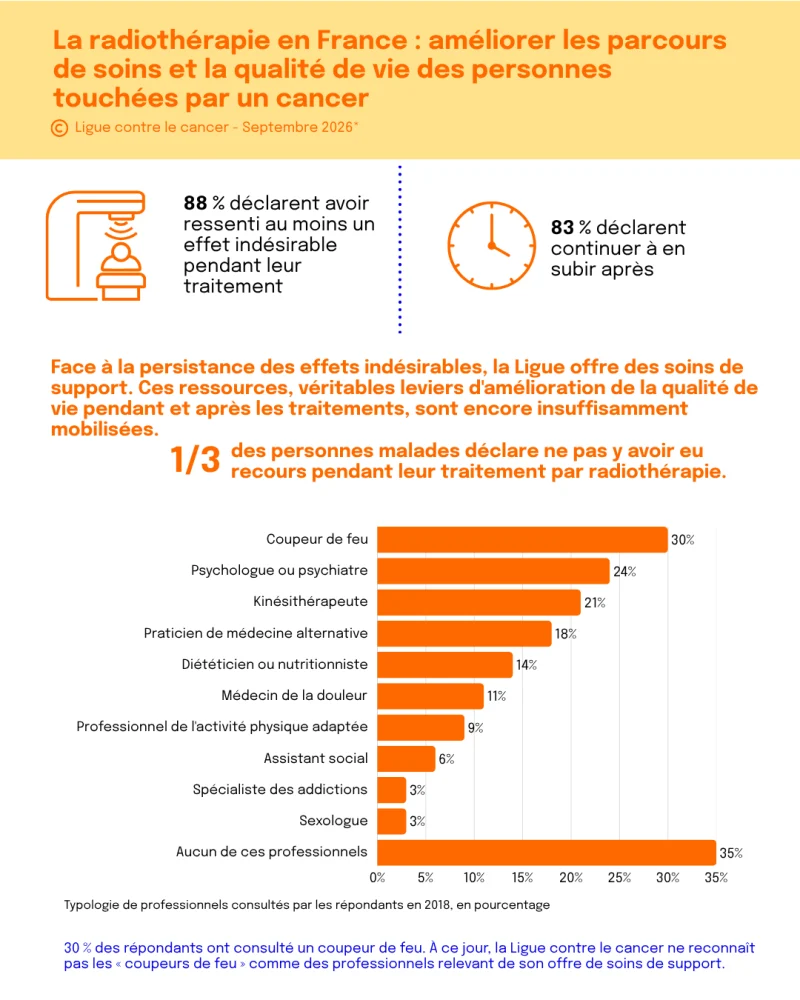 © League against cancer
Towards a true shared decision in radiotherapy
For Laura Lévêque, director of health democracy at the League Against Cancer, “Therapeutic and technological progress in radiotherapy is real and must be welcomed. Treatments today are more precise, safer, and more effective. But the results of our study show that they are not enough, on their own, to guarantee fully satisfactory care for all patients.“. The League requests that the financing of radiotherapy include a part dedicated to support, before, during and after the rays.
The association also calls for structured long-term monitoring, with dedicated consultations several years after treatment, and national indicators ofpatient experience published for each center. On its website, the National Cancer Institute recalls that “the treatment proposal is then discussed with you during the consultation dedicated to the therapeutic proposal with your referring doctor“. To make this promise a reality for everyone, the League Against Cancer wants to make understanding of care, informed consent and equity between women and men national priorities.