
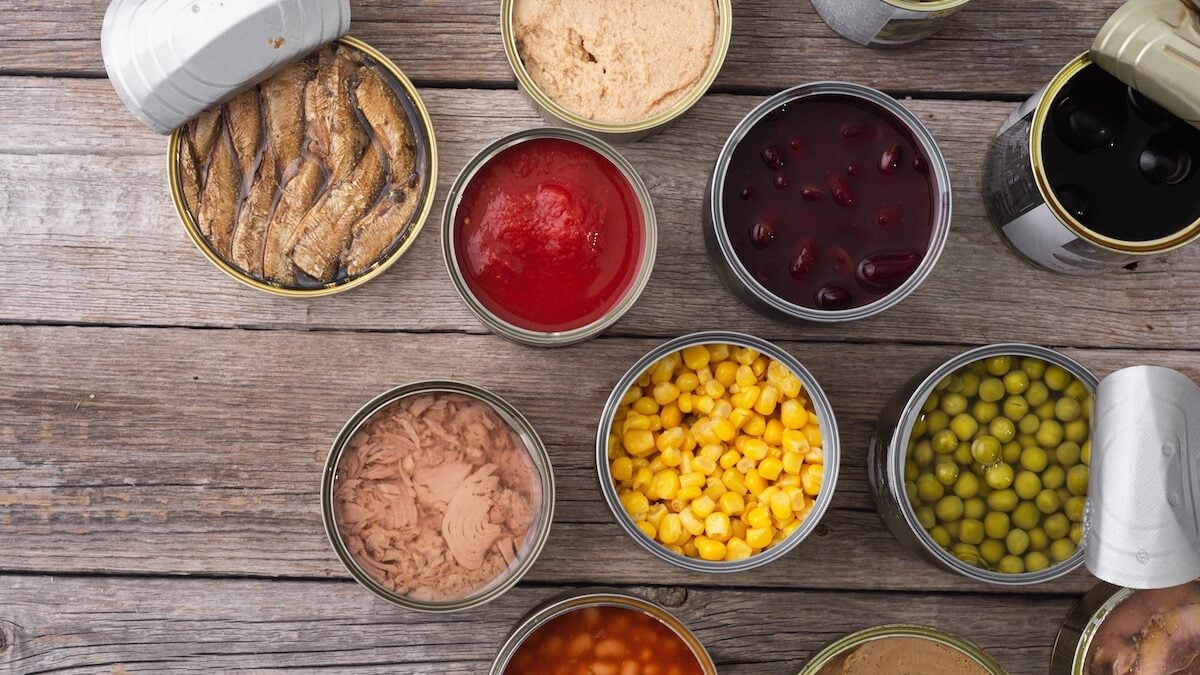
The cans, these essentials of our cupboards, seem to guarantee food security and longevity. Present in (almost) all our fast meals, canned preserves have long been associated with a safe and practical conservation mode. But if the external appearance of the box remains a good safety indicator – bumps, rust or shocks that can compromise its integrity -, science shows that the problem is elsewhere. Spanish researchers from the University of Saint-Jacques-de-Compostelle highlight an unexpected danger: some components of their coating could migrate to food and represent a health risk.
Cans, practical but not without risks
Most boxes are covered with polymers supposed to protect metal food. However, these coatings sometimes contain epoxy resins made from bisphenol A (BPA), a recognized endocrine disruptor, prohibited since 2011 in bottles. It can contribute to diabetes, obesity and affect the reproductive system. The European Commission also prohibited its use in materials in contact with foodstuffs in December 2024.
Studies carried out as part of Migraxpo, Migracoating, Bacfood4expo and Acan project, in collaboration with AESAN, show that migration of these substances is low in drinks, but much higher in the oily preserves such as oil, tomato or escabèche.
Endocrine disruptors and migration of chemicals
In these foods, the researchers measured the presence of another compound, the cyclo-di-badge. Unlike BPA, it is not yet regulated, due to the lack of sufficient toxicological data. The risk increases when canned can be heated directly on fire, a widespread camping practice, heat accelerating the migration of substances to food.
A study published in 2021 also showed that the bioaccessibility of these compounds, that is to say their potential absorption by the body, increases with the consumption of fatty products. It also varies according to age: children and the elderly, whose gastric pH is less acidic, are more vulnerable.
How to limit daily exposure?
Although the concentrations detected most often remain lower than the thresholds fixed by the European Union, cumulative exposure through food, water or even the skin should be taken into account. Researchers therefore recommend a few simple gestures:
- Avoid seasoning pasta or salads with the oil or sauce contained in the canned;
- Favor natural tuna rather than in oil;
- Do not warm food directly in the box.
These results provide consumers with keys to reduce their exposure to these doubtful compounds, without completely renouncing the practicality of preserves.