
Excess LDL cholesterol is a major factor in heart attacks and strokes, especially as it often progresses without symptoms. To control it, cardiologists mainly prescribe statins, these drugs which lower “bad” cholesterol.
But specialists in British Heart Foundation
claim that two foods can, on paper, act on cholesterol in a way similar to that of these treatments.
What are these two foods?
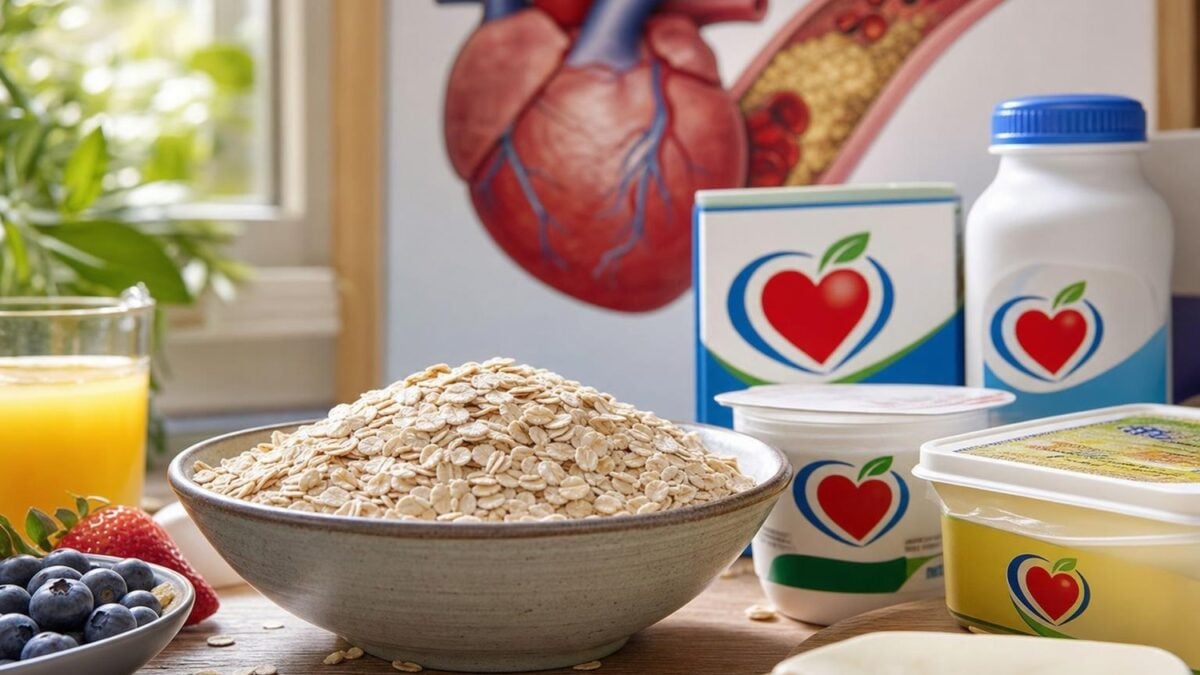
According to experts, these include oatmeal and foods enriched with plant sterols and stanols (phytosterols). Meta-analyses show that they lower LDL by 5 to 10%, when a statin reaches 30 to 50%.
Their interest lies in this mechanism close to medicines, while remaining foods that are easy to integrate into daily life.
How these two foods partially mimic the effect of statins
Statins block a liver enzyme called HMG-CoA reductase. This limits the production of cholesterol and forces the organ to capture more LDL to produce bile.
Clinical studies show that this mechanism lowers LDL by 30 to 50% and reduces heart attacks, strokes and cardiovascular mortality. It is the standard treatment when cardiac risk becomes significant.
With oats, its soluble fibers, beta-glucansform a gel in the intestine which traps bile acids rich in cholesterol. The liver must then draw on the blood LDL to make new ones. A bit like the “pump” created by statins. Plant sterols and stanols mimic the structure of cholesterol and occupy its place during intestinal absorption, allowing less cholesterol to pass into the bloodstream.
Oats and phytosterols: what real effectiveness on LDL cholesterol?
According to the British Heart Foundation, “a 40g serving of oatmeal contains 2g of beta-glucan, while a 250ml glass of oat milk contains 1g of beta-glucan.
However, there is no research linking oatmeal to a reduced risk of heart attack or stroke.”
The Association of Dietitians of the United Kingdom sums this up simply. “HAS“With a healthy diet, eating foods that provide you with about 2g of plant stanols and sterols each day has been shown to reduce blood cholesterol levels.”
Before adding: “Although plant sterols and stanols may lower your cholesterol, there have been no clinical trials showing that they reduce the risk of heart attack and stroke. In contrast, statins have been shown to reduce both your cholesterol levels and your risk of having a heart attack and stroke.”
Can they replace a statin prescribed by the cardiologist?
For the British Heart Foundation, these foods remain a complement to treatments, not a substitute. Statins remain the most effective way to lower high LDL and reduce cardiovascular risk.
Cardiologists advise combining them with a healthier lifestyle. This includes less alcohol consumption, quitting smoking and 150 minutes of physical activity per week.