
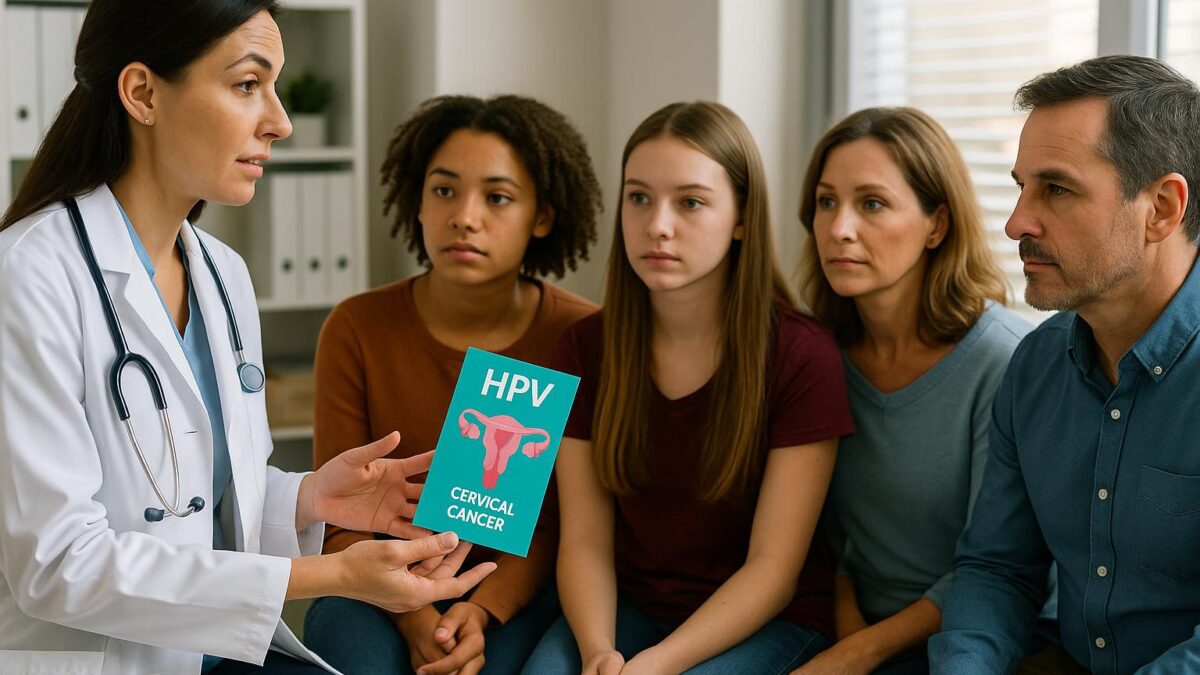
For a long time, cervical cancer was a silent inevitability. This cancer, the fourth most common among women in the world, still causes around 300,000 deaths each year, including 1,100 in France, and remains in the vast majority of cases linked to infection by the human papillomavirus. A vaccine has existed for several years, recommended for adolescents, but debates over its real effectiveness and its side effects have fueled doubt among many parents.
A double review of the literature, published on November 24, 2025 by the independent organization Cochrane, profoundly changes the situation. By analyzing dozens of clinical trials and more than 200 studies in real populations, this work provides evidence considered to be a reference on the interest of HPV vaccine against cervical cancer and on its safety. The figures give the measure of what a simple vaccine can change.
The HPV vaccine actually protects against cervical cancer
First major information: early vaccination significantly reduces the number of cancers. The authors of the Cochrane review summarize that “HPV vaccination likely reduces the incidence of cervical cancer by 80% in people who were vaccinated at age 16 or earlier“In other words, among young girls vaccinated before or at age 16, the vast majority of cervical cancers could be prevented in the long term thanks to the anti-HPV vaccine.
These results are based on more than 225 studies including more than 132 million people, to which are added 60 randomized controlled trials involving 157,414 participants. In these trials, “vaccines like Cervarix, Gardasil, and Gardasil-9 reduced precancerous lesions of the cervix and other tissues in people aged 15 to 25, as well as the number of people requiring treatment for HPV-related illness.” “We now have clear and consistent evidence that HPV vaccination prevents cervical cancer,” says Nicholas Henschke, co-author of the study. The data also shows a significant drop in high-grade precancerous lesions and ano-genital warts.
Why vaccinating against HPV early is more useful
At the heart of this strategy is the human papillomavirus, a widespread sexually transmitted virus. Cervical cancer is “attributable in almost 100% of cases to sexually transmitted human papillomavirus infection“. Infection often occurs at the first sexual intercourse, then can persist and, over the years, gradually transform cells in the cervix into precancerous lesions and then cancer. The vaccine works by preventing infections with high-risk HPV types before they take hold.
The authors of the Cochrane reviews emphasize the importance of age at first dose. They report “a significant interaction with age at vaccination,”the reduction in risk being greater in younger people“. Concretely, the earlier vaccination is carried out, before the start of sexual life, the stronger the protection. Cohort studies show that the reduction in the risk of high-grade lesions is already clear in women vaccinated before the age of 16, and remains present but less marked when vaccination is later. In France, vaccination against HPV is recommended for all young girls and boys aged 11 to 14, with catch-up possible up to 19 years and up to 26 years for certain men who have sex with men.
HPV vaccination: more preconceived ideas than side effects
Beyond effectiveness, these new reviews focus on the safety of HPV vaccinecentral point of reluctance. The first Cochrane analysis, based on 60 randomized clinical trials, did not demonstrate any increased risk of serious adverse events in more than 97,000 participants. The authors conclude that “No safety issues were noted in the studies“The effects observed most often are mild and temporary.”Side effects are mild and transient, such as arm pain,” describes Hanna Bergman, co-author of the work. The researchers point out that neither infertility nor lasting complications emerge in the follow-up data over several years.
The second Cochrane review looked at rare events often highlighted on social networks. The specialists say they are reassured: “HPV vaccination was not associated with an increased risk of postural orthostatic tachycardia syndrome, chronic fatigue syndrome/myalgic encephalomyelitis, paralysis, complex regional pain syndrome, premature ovarian failure, infertility, or changes in sexual activity“. The authors add: “There is evidence that HPV vaccination does not increase the risk of the adverse effects most commonly reported on social media“For even rarer diseases such as Guillain Barré syndrome, the available data remains limited but does not show an increased risk. In this context, gynecologist Jo Morrison summarizes the public health issue: “These studies clearly show that HPV vaccination during adolescence can prevent cancer and save lives.”.