
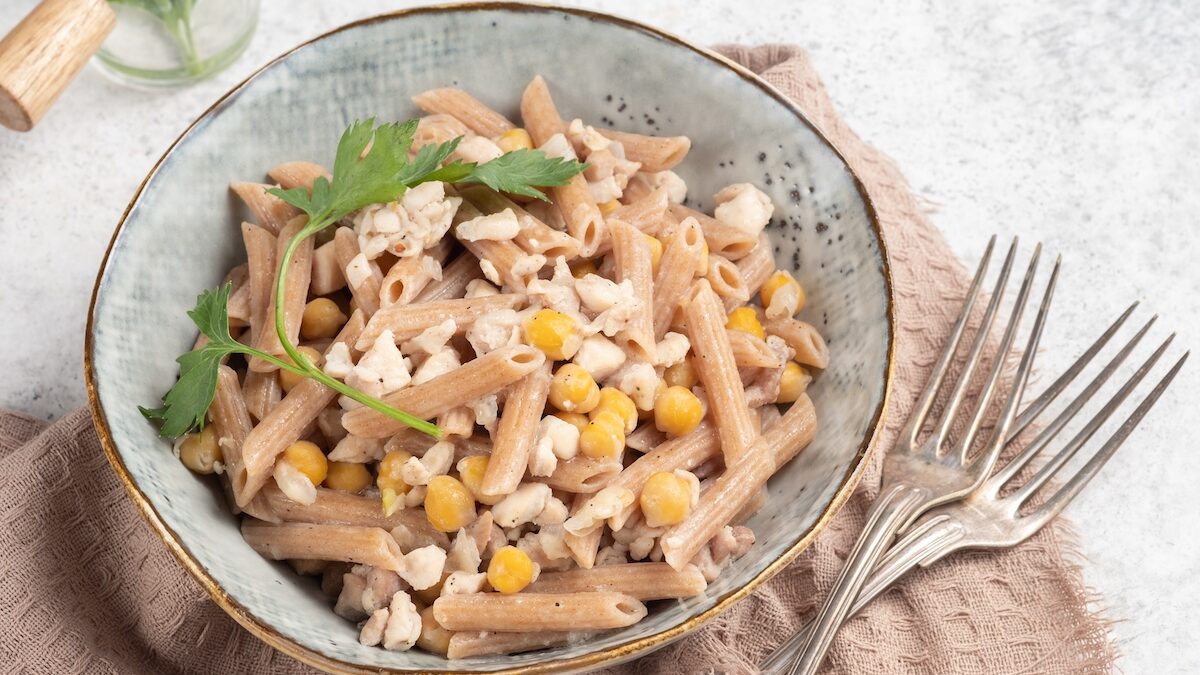
Long unbeatable, white pasta is now seeing its reign challenged by more nutritious alternatives. On the shelves, two options particularly appeal to consumers looking for balance: wholemeal pastas and those made from chickpeas. Rich in fiber, more nutritionally interesting… but not identical. So, which ones to put on your plate?
Wholemeal pasta: daily balance
Wholemeal pasta has an obvious advantage: it looks a lot like classic pasta… only better. Their taste is familiar, their texture reassuring, but their composition is much more interesting.
Unlike refined pasta, they retain the bran and germ of the wheat. Result: more fiber, a little more protein, and above all a lower glycemic index. This means slower digestion and more stable blood sugar levels — a key advantage in avoiding post-meal fatigue.
Another strong argument: consuming around 50 g of whole grains per day is associated with a significant reduction in the risk of type 2 diabetes. Whole-grain pasta therefore fits perfectly into a preventive and sustainable diet.
In summary: wholemeal pasta remains a simple, accessible and ideal choice for improving your diet without disrupting your habits.
Chickpea pasta: the nutritional boost
More recent in our kitchens, chickpea pasta seduces with its impressive nutritional profile.
In fact, they contain:
- More protein (8.5 g / 100 g compared to 5.5 g for wholemeal pasta);
- Twice as much fiber;
- An even lower glycemic index.
In other words: they satisfy you more, for longer. A real advantage if you are monitoring your weight or blood sugar levels.
As Alexandra Murcier explains:
“The proteins in these pastas are interesting for our body because they participate in muscle synthesis, cell renewal and they create satiety.”
According to her, chickpeas also contain a more interesting variety of amino acids than wholemeal pasta, making them a more complete protein. And a great option for athletes or people wanting to increase their muscle mass.
Another strong point highlighted: “Fibers (…) regulate blood sugar and trap part of the cholesterol“, which makes it a relevant choice for cardiovascular health.
In summary, chickpea pasta provides an ideal alternative to boost your protein intake and support your specific nutritional goals.
So, what choice should you make?
Is your heart swinging? Rather than looking for a “best” universal option, you should choose the one that suits your needs.
As Alexandra Murcier points out, it all depends on the context:
“In cases of digestive fragility, irritable bowel syndrome, etc., it is better to favor wholemeal pasta which will be better digested.”
On the other hand, for a higher protein intake (when you are vegetarian or sporty) it is better to opt for chickpea pasta. Same if your goal is satiety and blood sugar regulation: the advantage also goes to chickpeas
But ultimately, perhaps the best answer is to alternate. Each option has its advantages, and integrating them both allows you to benefit from their complementary benefits. The essentials remain on the overall plate: vegetables, good fats, a suitable source of protein… and pasta, yes, but chosen with intention.