
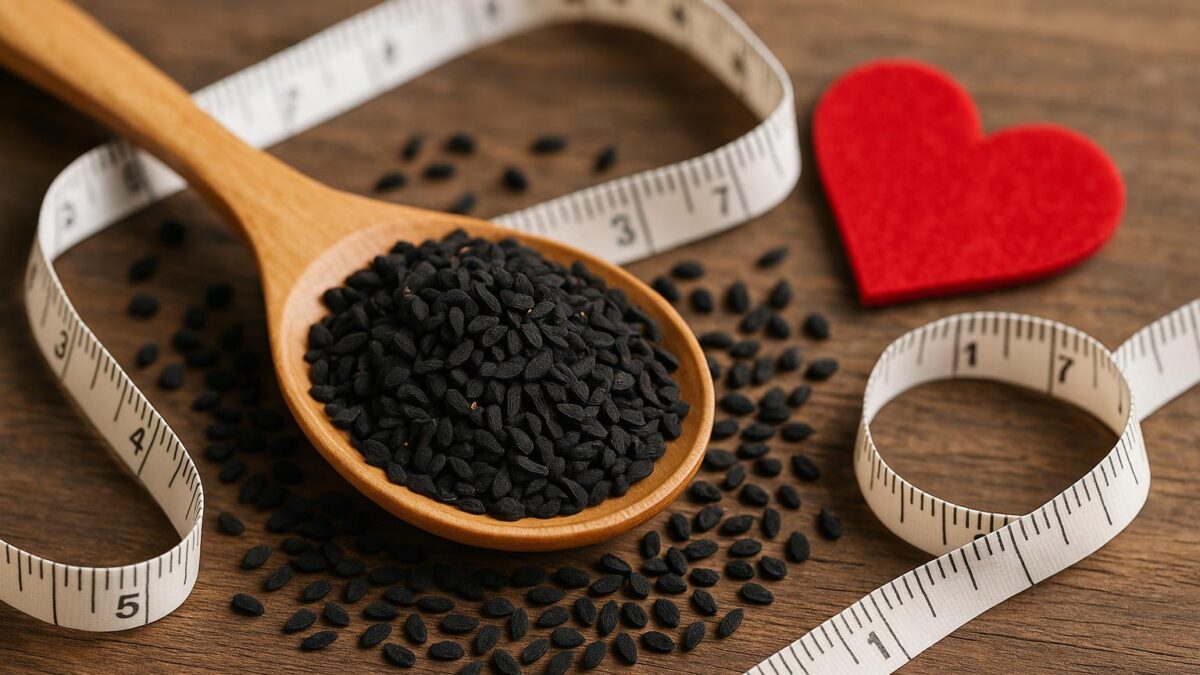
A black spice, prized in cooking and in certain skincare traditions, enters the debate on weight and the heart. We find it on bread, in yogurt or herbal tea; its reputation goes far beyond simple taste.
Researchers at Osaka Metropolitan University tested its effects in humans. Their essay on nigella, also called
black cuminpoints to positive signals on cholesterol and the formation of fat cells in the laboratory. And that’s not all!
Black cumin and cholesterol: what the clinical trial shows
Forty participants were recruited to evaluate the impact of nigella on the lipid profile. Half have integrated 5 g per day of seed powder, about a tablespoon, to his diet for 8 weekswhen the other half hasn’t changed anything. Blood tests took place before and after the intervention, and the results were published in the journal Food Science & Nutrition.
In people who consumed black cumin, analyzes showed a significant drop in triglycerides,
LDL cholesterol and total cholesterol, with an increase in
HDL cholesterol. “Improvements like these in blood lipid profile are associated with a lower risk of heart problems and premature death“, underlined the authors. In the background, the researchers point out that a balanced diet and regular physical activity remain the basis for losing weight and protecting the heart.
Nigella and obesity: what laboratory experiments say
To understand the mechanism, the team carried out additional experiments on seed extracts. She observed an inhibition ofadipogenesis : the formation and maturation of fat cells were slowed down. The differentiation process was blocked, as was the accumulation of lipid droplets. Through a domino effect, this phenomenon could help prevent obesity.
“This study strongly suggests that black cumin seeds are useful as a functional food to prevent obesity and lifestyle diseases,” explains Professor Akiko Kojima-Yuasa, who led the work. “It was so gratifying to see black cumin comprehensively demonstrate real, demonstrable blood lipid lowering effects in a human clinical trial.”
How to use black cumin, and with what precautions
In practice, nigella is consumed in whole seeds (to sprinkle or infuse), in
powder (in yogurt, compote or honey), in oil (taken orally or applied to the skin) or capsules. The usual guidelines for the general public indicate a daily dose of 1 to 2 g for the powder, and for the oil approximately one teaspoon per day. Starting small, checking the source, and storing away from light remain good reflexes. Please note: the clinical trial used 5 g of powder per day, above common doses of food supplements.
Like any active product, nigella can cause side effects and is not suitable for everyone. Here are the points of vigilance resulting from the uses reported:
- Possible digestive disorders: nausea, diarrhea, bloating;
- Allergic reactions in sensitive people;
- Hypotensive effect likely to accentuate already low tension;
- Potential interactions with treatments (anticoagulants, antihypertensives, immunosuppressants); recommended medical advice;
- Avoid in pregnant womenchildren under 12 years old, and in the event of ongoing treatment without medical advice.
In short, black cumin appears to be an interesting dietary support to improve the lipid profile, without replacing treatments or lifestyle measures. Data on weight loss in humans remains to be confirmed over longer periods, although the signals are encouraging.
The researchers plan to continue with larger, longer-term clinical trials. “We hope to conduct longer-term, larger-scale clinical trials to study the effects of black cumin on metabolism. We are particularly interested in its effects on insulin resistance in diabetics and on inflammatory markers.”.