
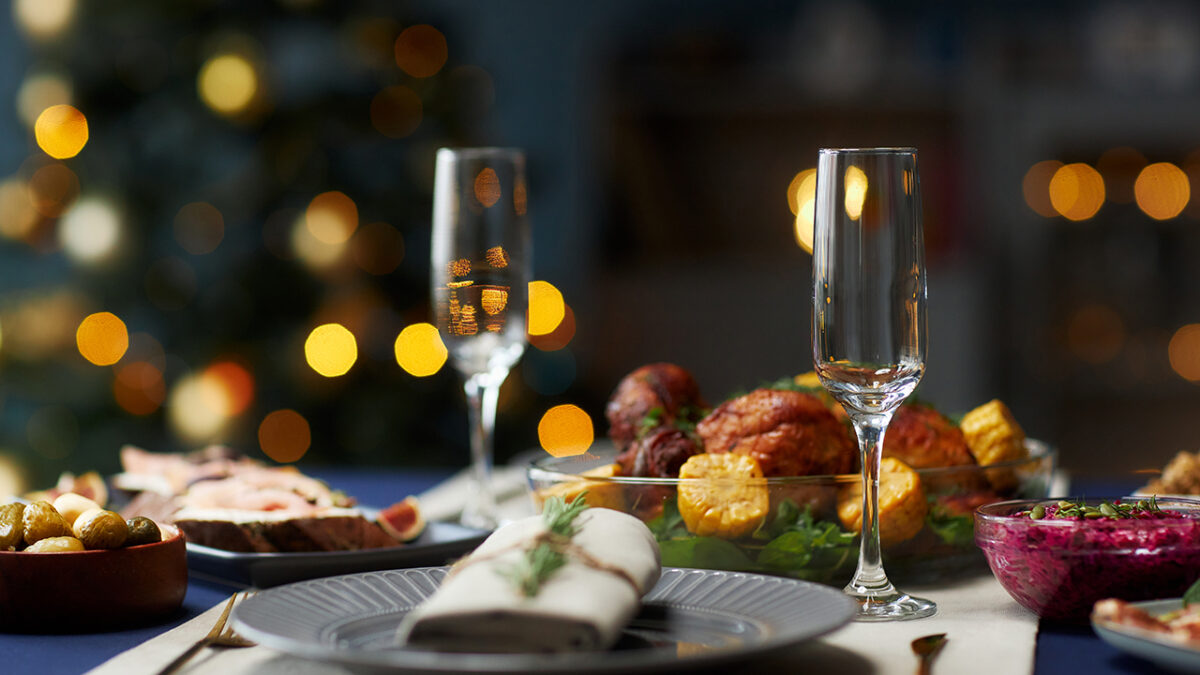
Salt, a silent emergency during Christmas meals
During New Year’s Eve, the danger does not always come from what we believe. Gérald Kierzek clearly underlines this in Télématin:
“And then the other emergency is salt, it seems much more innocuous than the champagne cork.”
A discreet, almost invisible risk that sets in over the course of the meal. Oysters, appetizer cakes, cold meats, bread, sauces, prepared meals to save time. Taken separately, these foods seem innocuous. Together, they quickly increase intakes. “All that adds up to quantities of salt that will exceed the doses.“ A one-off excess, concentrated on a single evening, may be enough to cause decompensation in certain patients.
This situation is part of a broader context.
According to the World Health Organization, the majority of the population consumes too much salt, with daily intakes between 9 and 12 grams, about twice the recommended maximum. In France, average consumption remains high, particularly among men, but also among children and adolescents.
The problem doesn’t just come from the salt shaker. Nearly 80% of salt consumed comes from processed or pre-prepared foods. Often hidden, it is found in unexpected products, including some sweet foods, where it serves to enhance flavors.
Why certain profiles are particularly exposed on New Year’s Eve
Not all guests are exposed in the same way. Gérald Kierzek insists on risk profiles. People with hypertension or heart failure are most vulnerable. All year round, they watch their diet. On Christmas Eve, habits change.
A dozen oysters, a few slices of sausage, a saltier meal than usual. The body sometimes does not have time to compensate. “It creates a hypertensive surge.” The pressure increases in the vessels, the heart forces more.
When the heart muscle struggles to circulate blood properly, the consequences can be rapid.
“It causes acute lung edema, breathing difficulties.” Respiratory difficulty sometimes appears suddenly, leading to emergency treatment, often at night or early in the morning.
Beyond New Year’s Eve, excess salt is recognized as a major cardiovascular risk factor. High blood pressure affects approximately one in three adults in France. It increases the risk of cardiac and cerebrovascular complications, especially when associated with occasional but massive excesses in food.
The prevention message hammered home by the emergency doctor
The message delivered by Gérald Kierzek is deliberately simple and concrete.
“For all those with heart failure, for all people who are hypertensive, be careful, we do not add salt and we do not consume too much salt.”
This is not a strict diet imposed on Christmas Eve, but focused vigilance. Limit very salty products, avoid adding salt at the table, split portions. Simple actions that may be enough to avoid acute decompensation. As the emergency doctor summarizes on the France 2 set:
“Because we can avoid going to the emergency room.”