
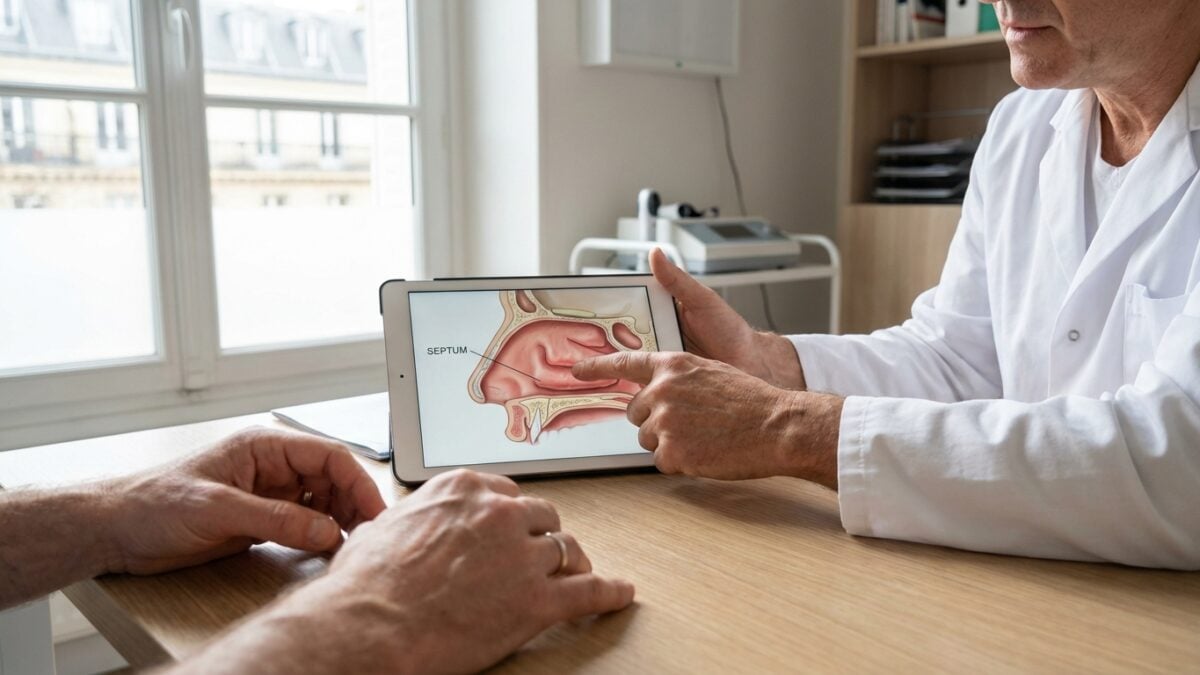
On the operating table of Thomas Jacques, an ENT and plastic surgeon in London, the noses follow one another, but look the same: holed septum, collapsed bridge, necrotic tissue. The cause, always, is the same white powder. In the United Kingdom, adults are said to snort around 117 tonnes of cocaine per year, while in France 2.1 million people aged 11 to 75 have already experimented with it. Behind this success, a long-standing damage underestimated multiplies.
This specialist describes an explosion in cases of “coke nose”, these lesions of the nasal septum linked to sniffing. “You don’t have to be what most people would consider a ‘heavy spender’“, he warns, before adding: “There appears to be some patients in whom this can cause a lot of damage from occasional recreational use“, explained Thomas Jacques to the Daily Mail. Even consumption considered festive can therefore leave irreversible traces. And sometimes, the nose ends up disappearing.
Coke nose: patients of all ages, even occasional
In November, Paris – Michael Jackson’s daughter – revealed on TikTok that she suffered from a perforated nasal septum, following her past drug use. But beyond this rare testimony, this damage is more and more frequent as cocaine consumption increases…

The “coke nose”, or nose cocainecorresponds to holes in the septum caused by a drop in blood flow which causes the tissues to die, describes Thomas Jacques. “Some patients report having pretty nasty inflammation and severe destruction even from small amounts of the drug.“, he observes. He insists on the fact that cocaine affects all social backgrounds and all age groups. In 2023, around 1.1 million French people have used cocaine at least once, which represents almost double compared to 2017, according to a study by the French Observatory of Drugs and Addictive Tendencies (OFDT).
Sometimes irreversible damage
In some people, a few traits result in a simple blocked nose. Others quickly see scabs, repeated bleeding, and difficulty breathing or swallowing. At Slate, Professor Justin Michel, head of the ENT and head and neck surgery department at the Conception University Hospital in Marseille, details the process: “About ten to twenty minutes after snorting cocaine, the mucosa is affected by vasoconstriction and damage caused by the cocaine crystals. The healing process of wounds in the nose is blocked. Then the effect of the cocaine wears off and the person uses again. As soon as you stop taking it, a vasodilation effect is triggered, often with a flow of blood which mixes with the mucus stuck in the nasal passages. This leads to the formation of large crusts. The person has difficulty breathing through the nose and will be tempted to remove the scabs using unsuitable means and maneuvers, which in some cases can cause additional damage..
Nose cocaine: cut products even more dangerous
On a biological level, cocaine violently constricts the vessels. “When snorted, cocaine causes a very strong contraction of the blood vessels and the nasal septum is very sensitive to the reduction in blood flow,” explains Natarajan Balaji, ENT at Hawaii University Hospital and current president of the British Society for Facial Plastic Surgery (BSFPS) in a press release. He also specifies that: “Cocaine is cut with other substances, including levamisole, used in dewormers for dogs and cats, and phenacetin, an analgesic and antipyretic used in veterinary medicine. Cocaine also contains certain types of acids mixed with these ingredients. When snorted, cocaine causes a strong contraction of blood vessels, and the nasal septum is very sensitive to decreased blood flow. After a few doses, the nasal structure may become necrotic, leading to perforations.“.
Professor Justin Michel confirms: “We have, in spades, stories of perforated palates and damaged noses. We even recently saw a case where the bone that separates the nose from the brain had been destroyed, which gave rise to meningitis.“.
Perforated nasal septum: what can surgeons do?
Before any action, complete cessation of cocaine is essential. Small septum perforations are sometimes stabilized with nasal irrigations and creams, associated with weaning. To hide a hole and limit wheezing and crusting, Thomas Jacques sometimes offers a “septal button”, a small silicone disc placed in the septum. When surgery is considered, he points out that even “in the best hands”, the repair of a septal perforation does not show a success rate greater than 70 to 80%.