
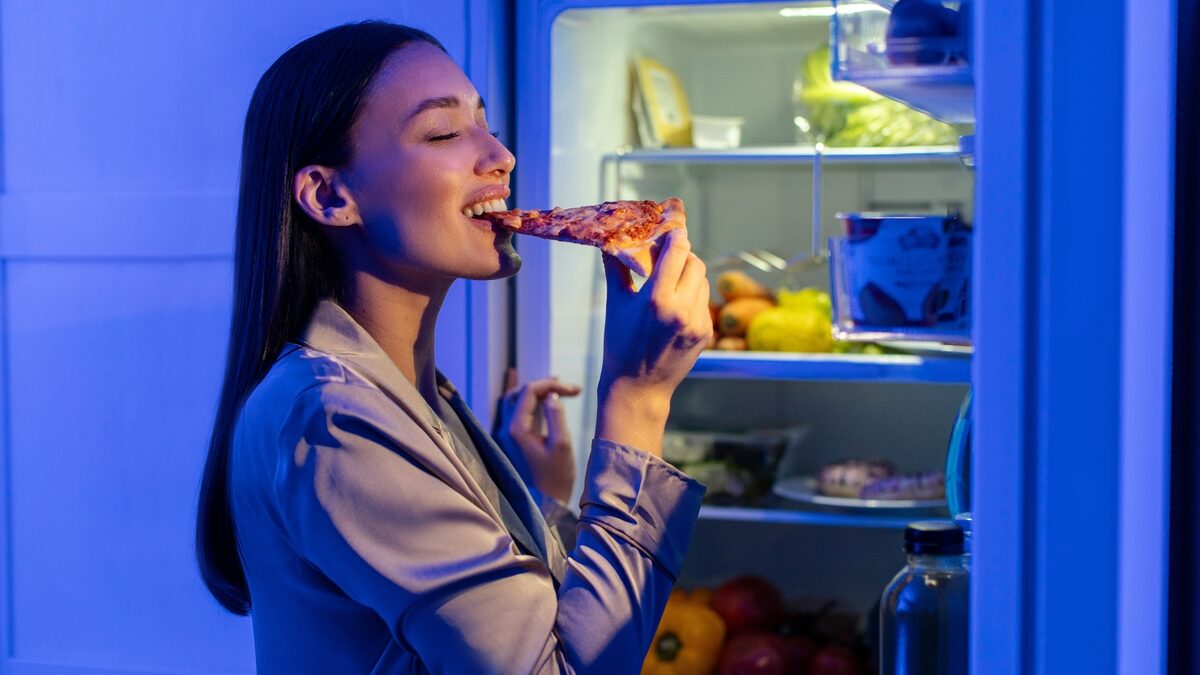
You’ve been paying attention all day. No snacking at the office, plenty of fruits and vegetables at lunchtime. Then comes the evening: finally at home, the pressure drops and a desire for aperitif biscuits arises. So you give yourself this little pleasure… until, an hour later, you empty your entire cupboards. But how can we explain this need to “let go” at the end of the day? Pauline Pied, dietician-nutritionist, deciphers what is happening in your brain.
The brain associates certain foods with pleasure
After a busy day, certain foods – such as sweet or fatty products – are particularly appealing. They can then activate the reward circuit in the brain.
“Concretely, they cause a release of dopamine, often associated with the feeling of pleasure and well-being,” indicates the expert.
Over time, an association can then be created between these foods (crisps, sausage, biscuits, etc.) and certain sensations: the brain learns that these are linked to a pleasant moment.
“We will feel good, happy, etc. And as the brain works a lot automatically, in the evening, in a fairly systematic way, it will push us to consume these foods.”
confirms the dietitian.
This is how a simple square of chocolate can turn into a ritual.
When the meal becomes the relaxing break of the day
After a busy day, dinner often marks a “break”. We finally sit down. We eat without looking at the time. We start a series, we discuss, we breathe.
“Eating then becomes a way to relax. And consuming certain products, particularly those that activate the reward circuit, can reinforce this feeling of well-being. Sometimes, we will continue to eat, with the desire to prolong this moment.”
underlines the nutritionist.
The problem ? Once the plate is finished, the evening is not necessarily over. Sometimes you have to clear out, tidy up the house or return to work: so many tasks that you may want to put off.
“Behind this desire to snack, there may therefore be the need to prolong the moment, not to think about the stress accumulated during the day, or to escape what will happen after the meal,” recognizes the specialist.
Your evening breakdown is therefore not necessarily the real problem… This chocolate bar above all helps you to make this little moment of pleasure last before returning to your obligations.“And it’s something that can be done quite unconsciously,” reveals Pauline Pied.
Metro, work, cake… How to get out of this vicious circle?
Before trying to eliminate chocolate in the evening or forbidding yourself from any “pleasure” food, it may be interesting to observe what is happening. When does the urge appear? Is it a physical hunger or rather the need to breathe? What do you feel just before opening the cupboard? These questions help identify habits that have become established. Only then will you have to occupy your brain doing something else rather than eating (call a loved one, go out for some fresh air, etc.).
“Ultimately, these are automatisms, but it is also a question of tools. If, in our toolbox, we only have food, automatically, we will turn to it. On the other hand, if we start to develop other tools, for example cardiac coherence, listening to a book or even simply becoming aware that we need connection, such as talking with someone, we will gradually take other paths”, underlines the nutritionist.
In the end, the idea here is not to fight against every desire, but rather to find a little perspective in the face of all these automatisms (sometimes, we are really hungry and the meal responds perfectly to this need, other times, we mainly seek to recover after a trying day).
Work that can help people who are gaining weight without understanding why. “This is also one of the main reasons for consultation,” concludes the dietitian.
In the evening, the question is not always “Why am I eating this?” but rather “What do I need?”. By understanding what is behind this desire, you will be able to find a much more peaceful relationship with your evening meal. All without feeling guilty!